
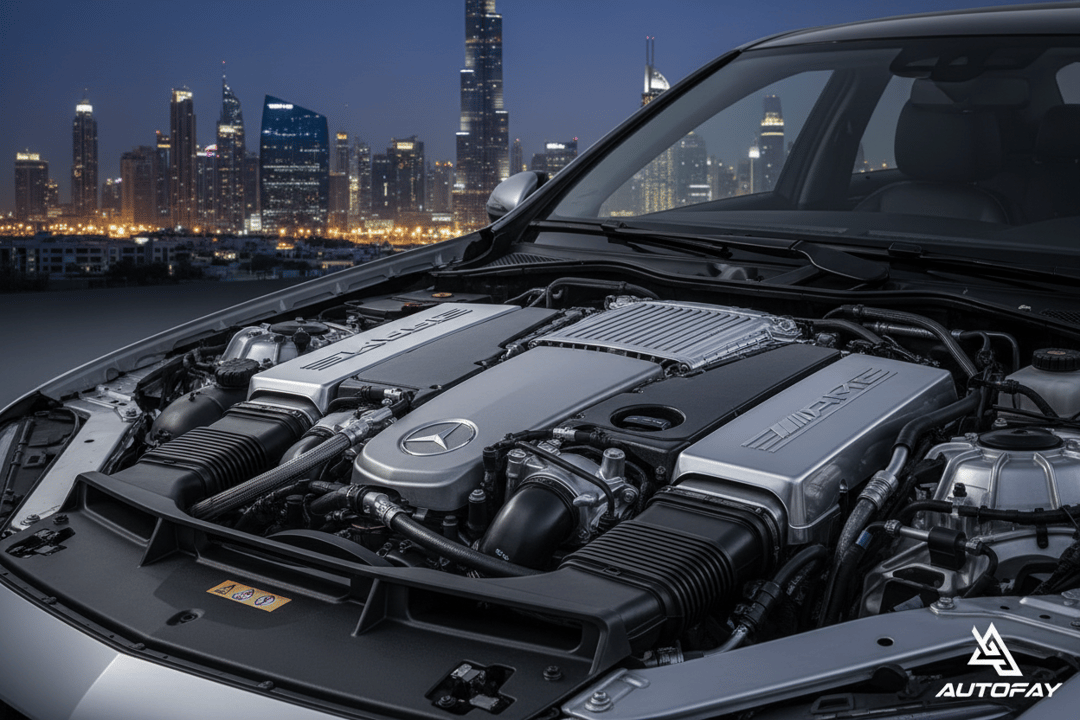
Operating a Mercedes-Benz in the United Arab Emirates requires a maintenance philosophy distinct from that of temperate climates. The region presents unique challenges, primarily centered on extreme ambient temperatures, high humidity, and abrasive dust particulates. Conventional service schedules often fail to account for the accelerated degradation of vehicle fluids and components under these specific stressors. A senior inspector understands that heat is the silent killer of engine longevity and brake performance. Neglecting these environmental factors leads to premature wear, reduced fuel efficiency, and critical safety hazards. To maintain the engineering excellence expected of a Mercedes, owners must adhere to stricter service intervals.
The Critical Role of Engine Oil in High-Heat Environments
Engine oil serves as the lifeblood of the powertrain, but its chemical composition is highly sensitive to thermal stress. In the UAE, ambient temperatures frequently exceed 45 degrees Celsius, causing engine operating temperatures to rise significantly higher than in cooler climates. This heat accelerates the oxidation process, turning clean oil into sludge and varnish. Sludge restricts oil passages, leading to inadequate lubrication and potential bearing failure. Synthetic oils provide a higher viscosity index, meaning they remain fluid longer than conventional oils, but they eventually lose their additive package designed to neutralize acids and protect metal surfaces.
- Viscosity Breakdown: High temperatures thin out the oil, reducing the protective film between moving parts like piston rings and cylinder walls.
- Oil Thickening: Conversely, cold starts followed by rapid warming in the desert sun can cause oil to thicken excessively, increasing engine startup friction.
- Consequences of Delay: Skipping an interval leads to increased metal-on-metal contact, resulting in catastrophic engine failure and loss of warranty coverage.
While Mercedes-Benz often markets its LongLife service intervals, which can extend oil changes to 15,000 kilometers or one year, the harsh reality of the Gulf climate often necessitates adherence to the manufacturer’s severe service schedule. Owners should monitor oil life indicators but remain skeptical if the vehicle is frequently driven in heavy traffic or stop-and-go conditions where the engine does not reach optimal operating temperature.
Transmission Fluid Flushes and Thermal Stress
The dual-clutch and automatic transmissions found in Mercedes-Benz models are complex hydraulic systems that rely on precise fluid pressure. Transmission fluid serves a dual purpose: lubrication and hydraulic fluid transmission. In the UAE heat, transmission fluid degrades at a rapid rate. The fluid absorbs heat from the torque converter and clutches, and if not replaced, it breaks down into a gritty substance that damages the delicate internal seals and gaskets.
- Fluid Contamination: Sand and dust ingress through the transmission vent can mix with old fluid, turning it abrasive.
- Viscosity Loss: As synthetic ATF (Automatic Transmission Fluid) overheats, its ability to transmit pressure diminishes, causing harsh shifting or delayed engagement.
- Overheating Protection: A clogged transmission cooler can cause fluid temperatures to exceed 150 degrees Celsius, leading to fluid boil-over and complete transmission failure.
Technicians generally recommend a transmission fluid exchange every 60,000 kilometers under ideal conditions. However, in the UAE, this interval should be reduced to every 40,000 kilometers. A flush ensures that contaminated fluid is completely removed and replaced with fresh fluid that can handle the thermal load. Failing to perform this service results in transmission slippage, a jerky driving experience, and the high cost of a full transmission rebuild.
| Component | Standard Interval (Ideal Climate) | UAE Adapted Interval (Extreme Heat) |
|---|---|---|
| Engine Oil | higher mileage or 1 Year | higher mileage or 8 Months |
| Transmission Fluid | higher mileage | higher mileage |
| Brake Fluid | 2 Years | 12 to 18 Months |
Brake Service: Managing Fluid Absorption and Fade
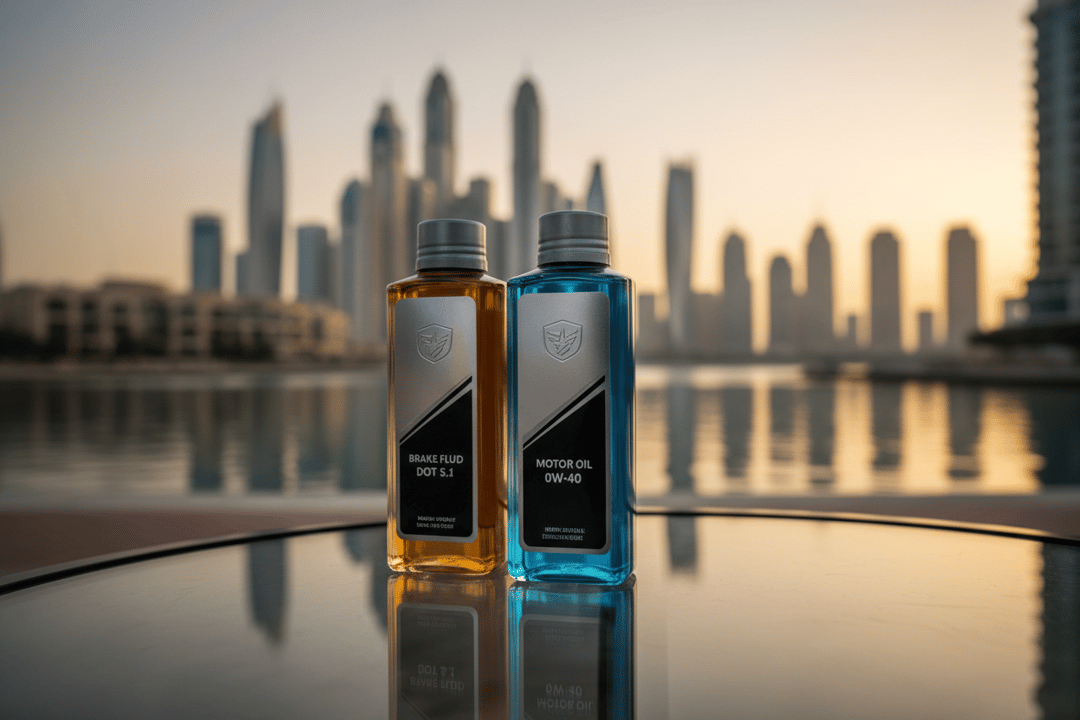
Brake systems in the UAE face a unique combination of intense heat and frequent stop-and-go traffic. The most overlooked component is the brake fluid. Brake fluid is hygroscopic, meaning it naturally absorbs moisture from the air over time. The scorching desert heat accelerates this absorption process. When brake fluid contains more than 3% moisture, its boiling point drops dramatically.
Under normal driving, the heat generated by braking is dissipated through the rotors and calipers. However, in heavy traffic or during mountain driving, the heat generated can exceed the boiling point of contaminated fluid. When fluid boils, it forms air bubbles. Air is compressible, unlike brake fluid, which is not. This leads to a spongy brake pedal feel and a significant reduction in braking efficiency. A brake service must include a complete fluid flush to ensure the fluid meets the DOT specification for the vehicle and can withstand the thermal loads encountered.
Additionally, brake pads degrade faster in the UAE due to the constant friction required to cool down the brakes during long descents in the mountains or city driving. Worn brake pads reduce the vehicle's stopping power and can damage the expensive brake rotors, necessitating a replacement of both components.
Adjusting Maintenance for Extreme Heat Conditions
Service intervals must be viewed as guidelines rather than absolute rules when adapting to the UAE climate. The primary external factor is the air conditioning system. Running the AC at maximum cooling for extended periods places a significant load on the engine, increasing fuel consumption and causing the engine to run hotter. This heat radiates into the engine bay, affecting the oil and transmission fluid.
- AC Load Impact: Heavy AC usage shortens the effective life of engine oil and transmission fluid.
- Dust Exposure: Frequent driving on highways exposes components to sand, which infiltrates filters and bearings.
- Humidity Effects: High humidity can lead to quicker corrosion of suspension components and electrical connections.
Consequently, owners should consider "severe service" intervals during the summer months (May to September). This involves more frequent oil changes and checking coolant levels and condition, as the cooling system works overtime to prevent the engine from overheating. Ignoring these adjustments results in reduced engine performance, higher fuel consumption, and increased risk of roadside breakdowns.
The Importance of Professional Diagnostic Inspections
Preventative maintenance relies on accurate data. Visual inspections are insufficient for detecting early signs of component failure, especially in complex vehicles like Mercedes-Benz models. The consequences of neglecting a diagnostic check can be severe, ranging from a failed MOT test to complete engine or transmission failure.
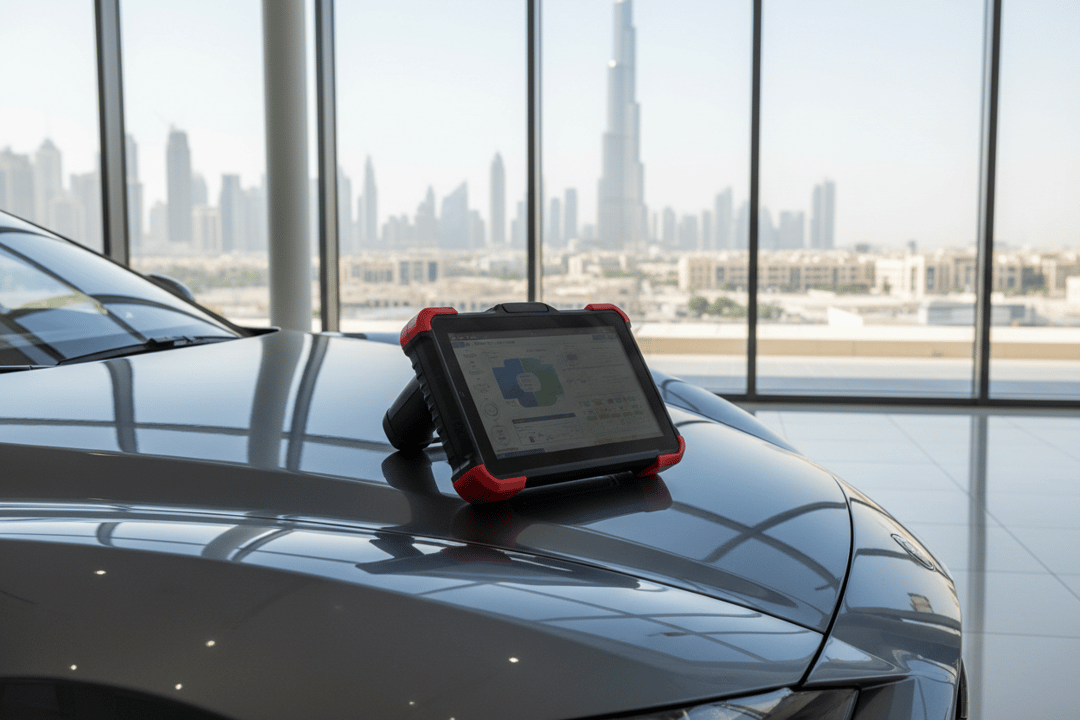
Professional inspection services utilize On-Board Diagnostics (OBD) scanners to read real-time data from the Engine Control Unit (ECU) and Transmission Control Module (TCM). These scans reveal hidden issues such as sensor errors, hydraulic faults, and software glitches that are not yet causing physical symptoms but are on the verge of doing so.
For owners seeking a comprehensive evaluation, a detailed inspection package offers deep insight into the vehicle's health. An AutoFay inspection covers 410+ checkpoints across 25 categories, providing a granular analysis of the vehicle’s condition. This process is vital for verifying the health of critical systems before a major service is performed.
For those requiring a baseline check, a Computer Diagnostic scan for AED 99 provides immediate error codes and system status reports. This service is essential for identifying transmission faults or ABS malfunctions early. For a more thorough overview of the vehicle’s mechanical and structural integrity, the Comprehensive package at AED 299 evaluates the body, frame, engine, suspension, and fluid conditions.
AutoFay inspects 410+ checkpoints with HD photos and PDF report. Book at autofay.ae or call +971542584458.



0 Comments
No comments yet. Be the first to share your thoughts!