

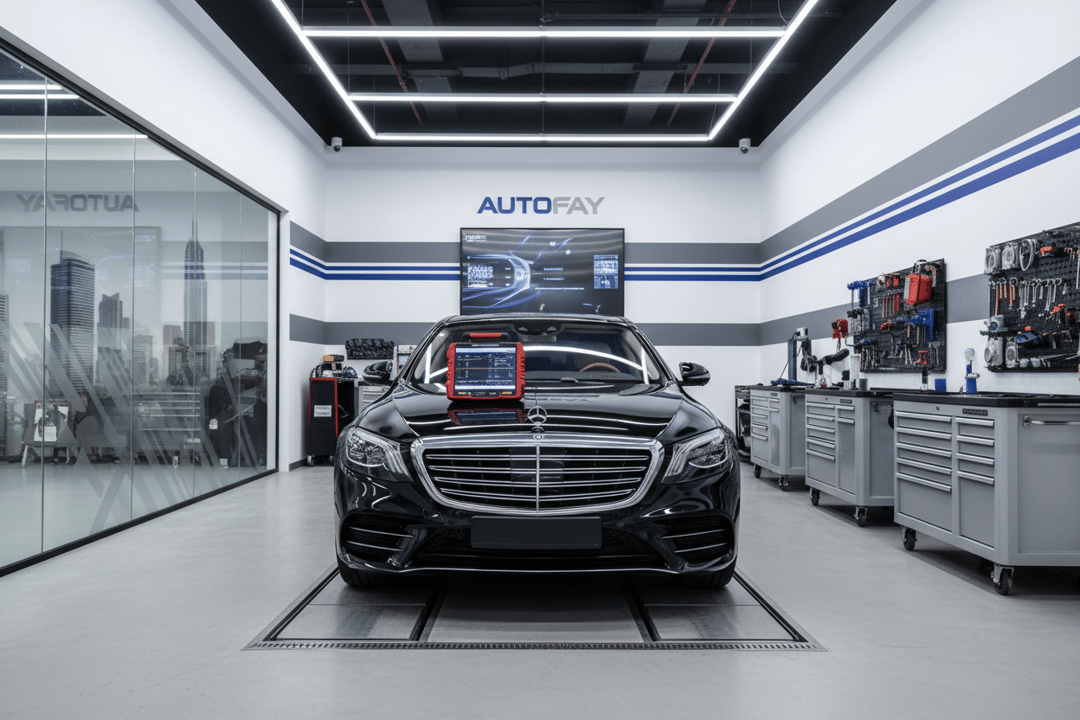
Mercedes-Benz vehicles are engineered for excellence, yet the extreme environmental conditions in the UAE accelerate the degradation of specific components. The intense heat and abrasive desert sand create a hostile operating environment that can lead to premature wear if maintenance is neglected. Understanding which parts are prone to failure allows owners to anticipate needs rather than reacting to breakdowns. A professional inspection bridges the gap between routine maintenance and the complex reality of high-performance engineering.
Engine and Transmission: The Heart of the Machine
The internal combustion engine and transmission are the most complex systems in a vehicle, subjecting bearings and seals to immense stress. In the UAE climate, engine oil breaks down faster due to higher ambient temperatures, leading to reduced lubrication and increased friction. The OBD (On-Board Diagnostics) system alerts the driver to errors, but it often only scratches the surface of a mechanical issue. A experienced inspector looks beyond the error codes to identify the root cause of performance issues, such as misfires or erratic shifting.
Several components within the Mercedes-Benz powertrain require specific attention. The MAF (Mass Air Flow) sensor measures the amount of air entering the engine, and a failing unit causes the engine computer to inject the wrong fuel mixture. This results in reduced fuel efficiency and hesitation during acceleration. Similarly, the air conditioning system works harder in desert heat, placing strain on the compressor and condenser. If these components are allowed to fail, the cost of repairs escalates significantly due to the complexity of accessing engine internals.
- Timing Components: The timing belt or chain ensures valves open and close in sync with pistons. A stretched timing chain can lead to catastrophic engine failure.
- Spark Plugs and Coils: Worn spark plugs cause incomplete combustion, reducing power output and increasing emissions.
- Transmission Fluid: The fluid acts as both coolant and hydraulic fluid. Old fluid loses its viscosity, leading to rough shifting and overheating.
- Coolant Hoses: High temperatures degrade rubber and plastic hoses, leading to leaks that can cause engine overheating.
Suspension Systems: Air Ride and Geometry
Many Mercedes-Benz models utilize air suspension systems to maintain an even ride height and absorb road imperfections. These systems rely on air compressors and struts that are highly sensitive to pressure fluctuations. Over time, rubber seals in the air springs dry out and crack, causing air leaks. When these components fail, the vehicle sags on one side, placing uneven stress on the tires and suspension mounts. This condition creates a bumpy ride and accelerates wear on the shock absorbers.
Addressing suspension issues requires more than visual inspection; it requires road testing to identify vibrations and noise. A technician listens for the distinct hissing sound of a leaking air strut. Ignoring these symptoms results in a compromised ride quality and, eventually, a total suspension failure that leaves the vehicle immobile. Furthermore, misaligned suspension geometry causes tires to wear unevenly, necessitating premature tire replacement and potentially affecting fuel economy.
Brake System Integrity and Safety
The brake system is the primary safety feature of any vehicle, and Mercedes-Benz braking systems are designed to stop heavy, powerful machines. The brake pads and rotors are subject to high friction forces, especially in stop-and-go traffic common in UAE cities. The brake fluid is hygroscopic, meaning it absorbs moisture from the air over time. As moisture content rises, the fluid lowers its boiling point, which can lead to brake fade during heavy braking or prolonged use.
During a comprehensive inspection, technicians measure the remaining thickness of brake pads and check the thickness of brake rotors for scoring or warping. They also flush the brake fluid to ensure optimal hydraulic pressure. Failing to maintain the brake fluid leads to a spongy brake pedal feel and reduced stopping power. Replacing brake components at the first sign of wear prevents damage to the calipers and rotors, which are significantly more expensive to replace.
| Inspection Category | Approximate Timeline | Consequence of Delay |
|---|---|---|
| Brake Fluid Flush | Every 2–3 Years | Moisture absorption lowers boiling point, risking brake fade. |
| Timing Belt/Chain | 80,000–higher mileage | Catastrophic engine failure occurs if tensioner fails. |
| Spark Plugs | 60,000–higher mileage | Reduced engine efficiency and misfire codes. |
| Air Suspension Struts | 80,000+ km | Uneven ride height, tire wear, and suspension noise. |
Preventative Inspection: The Foundation of Ownership
Relying solely on a dashboard warning light is insufficient for maintaining a high-performance vehicle in the UAE market. A comprehensive inspection covers 410+ checkpoints across 25 specific categories, ensuring no component is overlooked. This detailed approach identifies latent issues that are not yet critical but are moving toward failure. By catching these early, owners avoid the inconvenience of being stranded and the expense of emergency repairs.
AutoFay offers specialized on-location inspection services across all 7 Emirates, bringing the inspection facility to the vehicle’s location. The service packages are designed to address specific concerns while providing a holistic view of the vehicle's health. The Computer Diagnostic package costs AED 99 and retrieves engine, transmission, ABS, and airbag codes. For a more detailed analysis, the Body & Computer package is priced at AED 250, covering external body damage and underlying computer faults. The Comprehensive package, priced at AED 299, provides the deepest level of scrutiny.
- Body and Paint Inspection: This involves a panel-by-panel assessment to determine if panels are original, repainted, or repaired. This is crucial for assessing vehicle history and structural integrity.
- Frame and Structure Check: Inspectors analyze the rails, pillars, and floor pan to identify past collisions or frame damage that may affect the vehicle's safety and alignment.
- Tire and Suspension Audit: Tires are checked for manufacturing date and wear patterns, while the suspension system is tested for noise, vibration, and ride quality.
- Fluid Analysis: Technicians check fluid levels and condition, ensuring the engine, transmission, and coolant systems are free of contaminants.
Conclusion
Maintaining a Mercedes-Benz in the UAE requires a proactive approach to vehicle care. The combination of extreme weather and complex engineering means that small issues can escalate into major failures if left unchecked. A professional inspection provides a clear roadmap of the vehicle's current condition, highlighting areas that require immediate attention and those that can wait. This transparency allows owners to budget appropriately and ensures the vehicle remains safe and reliable on the road.
AutoFay inspects 410+ checkpoints with HD photos and PDF report. Book at autofay.ae or call +971542584458




0 Comments
No comments yet. Be the first to share your thoughts!