

Kia has solidified its position as a competitive contender in the UAE automotive market, offering vehicles that balance affordability with durability. However, the allure of a new vehicle often overshadows the critical importance of the warranty structure that supports it. For both prospective buyers and current owners, understanding the nuances of warranty coverage, exclusions, and the value of due diligence before a policy expires is essential for asset protection.
The Standard Manufacturer Warranty Landscape
The standard warranty offered by Kia in the UAE typically spans five years or 100,000 kilometers, whichever comes first. This comprehensive package is designed to shield owners from the financial burden of unexpected mechanical failures and structural defects. The coverage generally extends to the powertrain components, including the engine, transmission, and drivetrain, ensuring that the vehicle retains its core functionality for the majority of its lifecycle.
Beyond the mechanical components, the warranty also covers body and paint defects, as well as corrosion. This is particularly relevant in the UAE, where environmental factors can sometimes accelerate the degradation of protective coatings. Understanding that the warranty is not indefinite is the first step in managing expectations and planning for the eventual handover of ownership.
Acknowledging Warranty Exclusions
While the manufacturer warranty provides a safety net, it is not a catch-all solution. It is vital to recognize that routine maintenance items are almost always excluded from the coverage. Items such as brake pads, brake discs, tires, batteries, and consumables like engine oil and filters are considered wear and tear items.
- Modifications: Altering the vehicle's electrical system or installing non-approved accessories can void the warranty entirely.
- Accident History: Vehicles that have been in accidents, particularly those involving the frame or unibody, may have compromised the integrity of the factory warranty.
- Third-Party Repairs: Using unauthorized repair centers for routine maintenance can lead to disputes regarding future claims.
Failing to adhere to these exclusions can result in significant out-of-pocket expenses. For instance, neglecting a minor suspension issue that causes premature wear on tires is a consequence that falls entirely on the owner, as the warranty does not cover related wear-and-tear damage.
The Risk of Warranty Expiry
The expiration of a manufacturer warranty marks a significant turning point in the vehicle's ownership lifecycle. A vehicle that has just crossed the 100,000-kilometer mark or the five-year threshold enters a phase of increased vulnerability. Without the buffer of a warranty, the owner becomes solely responsible for the cost of repairs, which can escalate rapidly with age.
For buyers considering a pre-owned Kia, timing is everything. Purchasing a vehicle with the remaining balance of the manufacturer warranty can provide substantial financial relief. Conversely, buying a vehicle immediately after the warranty expires transfers the risk to the buyer. Therefore, conducting a thorough inspection prior to purchase—especially if the vehicle is near the warranty limit—is a strategic necessity.
Pre-Purchase Inspection: The Critical Strategy
Before committing to a purchase, engaging a professional inspection service is the most effective way to verify the vehicle's health. This step is crucial when the vehicle is approaching the end of its warranty period. An inspection provides a granular view of the car's condition, revealing issues that might not be visible during a casual test drive.
Automotive experts emphasize that a pre-purchase inspection should not be viewed as an optional add-on but as a mandatory safeguard. It uncovers hidden defects that could otherwise result in thousands of dirhams in repairs shortly after purchase. By identifying potential failures early, buyers can negotiate the vehicle's price down or walk away from a lemon.
Understanding Inspection Categories and Process
A competent inspection service evaluates the vehicle across multiple dimensions to ensure a holistic assessment. Key areas of focus include the structural integrity of the frame, the condition of the engine and transmission, and the functionality of the braking and suspension systems.
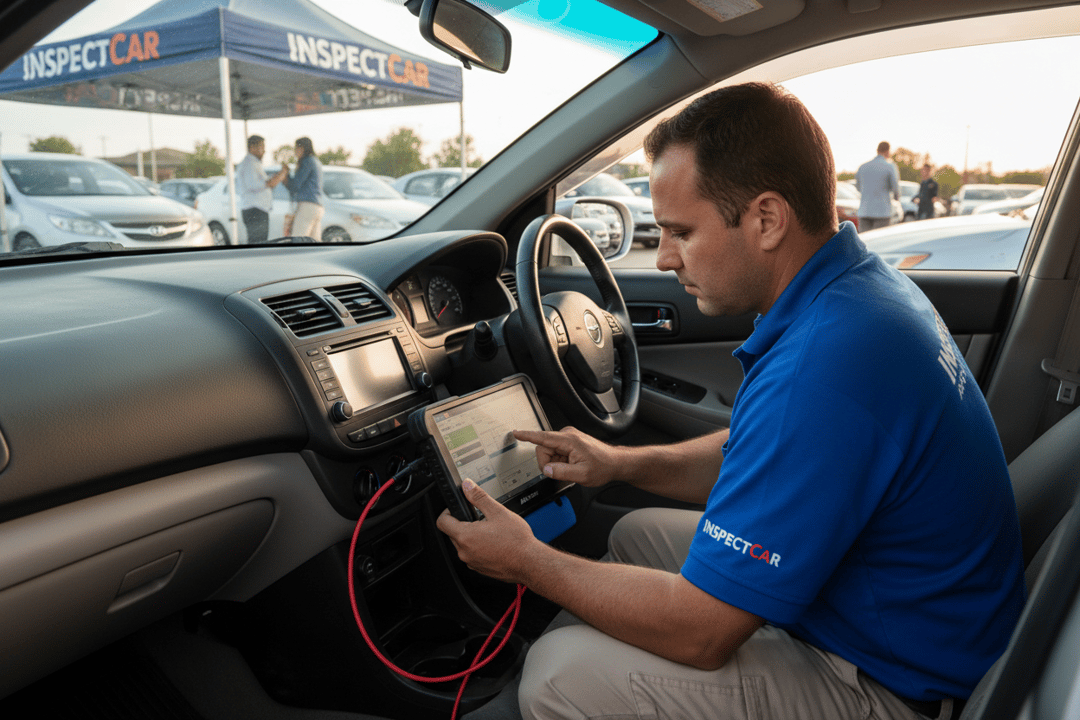
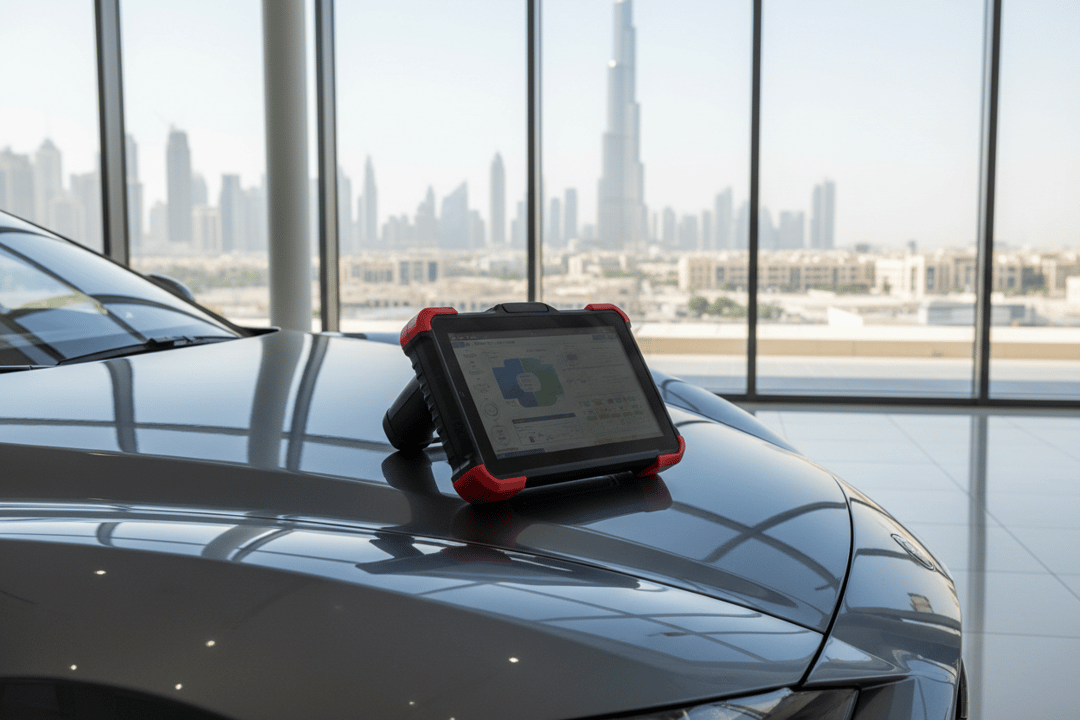
Modern diagnostic tools are essential for this process. An On-Board Diagnostics (OBD) scan reveals error codes stored in the engine, transmission, ABS, and airbag systems. These codes can indicate history of accidents or component failures that may not be apparent to the naked eye. Furthermore, road tests are conducted to evaluate acceleration, braking performance, and the presence of abnormal noises or vibrations.
Pricing Packages and Value Proposition
Investing in professional inspection services is far more cost-effective than facing unexpected repair bills. Specialized inspection companies offer tiered packages designed to address different levels of scrutiny. The value lies in the detail, not just the price.
| Inspection Package | Diagnostic Focus | Service Value |
|---|---|---|
| Computer Diagnostic | OBD scan for engine, transmission, ABS, and airbag codes. | AED 99 |
| Body & Computer | Visual inspection of body panels and computer diagnostics. | AED 250 |
| Comprehensive | Full 410+ checkpoint inspection including frame, engine sounds, mounts, smoke, brakes, suspension, tires, fluid levels, and road test. | AED 299 |
The Comprehensive package offers the highest level of scrutiny, covering panel-by-panel body assessments, frame integrity checks, and engine sound analysis. It ensures that even minor issues like manufacturing defects in tires or fluid contamination are documented. By utilizing a service that sends inspectors to the vehicle across all seven Emirates, owners ensure that no matter where the vehicle is located, a professional assessment is accessible.
AutoFay inspects 410+ checkpoints with HD photos and PDF report. Book at autofay.ae or call +971542584458

0 Comments
No comments yet. Be the first to share your thoughts!