

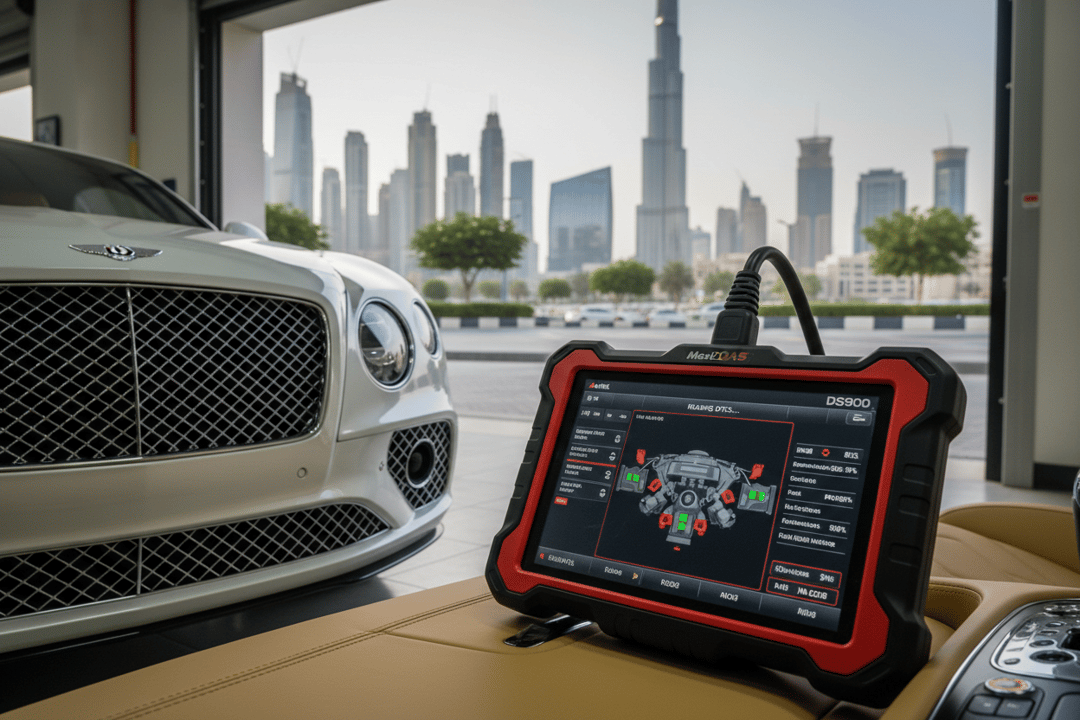
Preparing a vehicle for a long-distance pilgrimage or holiday requires a systematic approach to vehicle health. The roads to Oman, Hatta, or the vast sands of Liwa present unique challenges that standard daily driving does not encounter. While a vehicle may run smoothly in city traffic, the thermal stress, terrain variations, and load capacity required for these destinations reveal latent defects. A professional assessment before departure identifies these hidden weaknesses to prevent mechanical failure in remote areas.
The Risk Profile of Long-Distance Travel
The journey from the UAE to Oman involves high-speed highways, border formalities, and varying road conditions. Vehicles must maintain stability at high velocities for extended periods. Hatta demands steep inclines and sharp turns, placing immense stress on the suspension and braking systems. Liwa presents a completely different set of challenges, requiring vehicles to traverse deep sand and withstand extreme ambient temperatures.
Ignoring the specific demands of these routes can lead to dangerous consequences. A vehicle with compromised suspension may fail to navigate steep dunes safely. Overheating engines cannot handle the idling required at border crossings. Therefore, a pre-trip inspection must go beyond a visual check and address the specific mechanical stresses imposed by these terrains.
Engine and Fluid Dynamics
The engine is the primary propulsion unit and must function without interruption. Oil lubricates critical components to prevent metal-on-metal friction. Low oil levels or degraded oil viscosity lead to increased friction, resulting in overheating and potential engine seizure. Coolant regulates the engine temperature to prevent boiling over, especially during the summer months in the UAE and Liwa.
Transmission fluid is equally vital for gear shifting. Old transmission fluid loses its ability to transmit hydraulic pressure, causing delayed or harsh gear changes. This delay can be dangerous during high-speed maneuvers on Omani highways. Furthermore, brake fluid absorbs moisture over time, reducing its boiling point. On steep descents in Hatta, brake fade can occur rapidly if the fluid is contaminated, compromising the vehicle's ability to stop.
- Check engine oil level and condition to ensure adequate lubrication for all moving parts.
- Inspect coolant levels and the integrity of hoses to prevent leaks during thermal cycling.
- Verify transmission fluid condition to ensure smooth gear shifts under load.
- Test brake fluid for moisture content to guarantee hydraulic pressure during steep descents.
Chassis and Structural Integrity
The chassis acts as the skeleton of the vehicle, connecting all mechanical components. Off-road terrain in Liwa or the rocky paths in Hatta can displace chassis rails and pillars. A damaged frame alters the vehicle's geometry, leading to uneven tire wear and poor handling. Even minor bends can accumulate stress over time, eventually leading to component failure.
Paint inspection provides a visual history of the vehicle. Original paint indicates a vehicle that has not been involved in major collisions. Repainted panels often hide structural repairs or rust issues that are not visible to the naked eye. Detecting panel-by-panel abnormalities allows an inspector to identify vehicles that may have been salvaged or poorly repaired, ensuring the structural safety of the vehicle for passengers.
Electronic Systems and Diagnostics
Modern vehicles rely on complex electronic control units to manage safety and performance. The On-Board Diagnostics (OBD) system monitors the engine, transmission, antilock braking system (ABS), and airbags. A malfunctioning sensor triggers a warning light, but the underlying error code often remains hidden until a diagnostic scan is performed.
A faulty ABS sensor can prevent the vehicle from modulating brakes during hard stops, increasing stopping distances significantly. Transmission error codes can cause the vehicle to default to a limp mode, limiting speed and preventing gear selection. These electronic failures are often intermittent, making them difficult to detect during a short test drive. A comprehensive scan reveals these dormant errors, ensuring the vehicle's safety systems are fully operational.
Tires and Suspension Systems
Tires are the only contact point between the vehicle and the road surface. In deep sand, tire pressure must be adjusted to increase the surface area of the footprint, preventing the vehicle from sinking. Tires with low tread depth struggle to dig into the sand, causing the vehicle to lose momentum. Sidewall damage from curbs in city driving can go unnoticed until the sidewall ruptures under the stress of off-road driving.
The suspension system absorbs the shock of varying terrain. Worn shock absorbers reduce the vehicle's ability to maintain traction on loose surfaces. Shock absorbers that are too soft allow the vehicle body to bounce excessively, leading to loss of control. Broken springs or worn bushings increase the risk of component detachment. Inspecting these systems ensures that the vehicle can handle the impact of potholes, rocks, and sand dunes without sustaining damage.
Professional Inspection Packages
While visual checks are beneficial, a professional inspection provides a technical baseline of the vehicle's condition. On-location inspection services eliminate the need to transport the vehicle to a workshop, reducing the risk of additional wear during transit. Three specific service tiers address different levels of inspection depth, catering to various needs and budgets.
The Computer Diagnostic package is the most affordable entry point. It focuses specifically on engine and transmission error codes using specialized scanning equipment. The Body & Computer package extends this analysis to include a visual examination of the exterior and interior, checking for damage and wear without dismantling the vehicle. The Comprehensive package offers the highest level of scrutiny, thoroughly examining the entire vehicle from the frame to the fluids.
| Inspection Package | Price (AED) | Scope of Service |
|---|---|---|
| Computer Diagnostic | 99 | Engine and transmission error code scanning and interpretation. |
| Body & Computer | 250 | Visual inspection of body, paint, and electronics combined with diagnostic scanning. |
| Comprehensive | 399 | Full 410+ checkpoint inspection including frame, suspension, tires, fluids, and road test. |
Strategic Preparation for the Journey
Understanding the limitations of a vehicle before departure prevents unexpected delays. A vehicle with known defects can be serviced before the trip, ensuring reliability throughout the journey. Relying on a visual check alone misses the hidden mechanical issues that manifest under load. Professional inspection data provides a factual record of the vehicle's condition.
The roads to Oman, Hatta, and Liwa require a vehicle that is mechanically sound and structurally sound. Ignoring minor defects leads to cascading failures that render a vehicle immobile. Investing in a professional inspection identifies these risks early. The cost of a diagnostic service is negligible compared to the potential costs of a breakdown in a remote location.
AutoFay inspects 410+ checkpoints with HD photos and PDF report. Book at autofay.ae or call +971542584458.




0 Comments
No comments yet. Be the first to share your thoughts!