

Crossing the higher mileage milestone transforms a vehicle from a standard daily commuter into a high-mileage asset. In the UAE, extreme ambient temperatures and abrasive desert sand significantly accelerate internal component degradation. Routine maintenance schedules become insufficient at this mileage; proactive inspection is now mandatory for continued reliability and driver safety. This phase demands a forensic look at every system, moving beyond basic oil changes to detailed structural and mechanical analysis.
Engine internals and fluid degradation
The internal health of the engine dictates the vehicle's remaining lifespan. Over higher mileage, engine oil viscosity degrades, losing its capacity to protect moving parts against metal-on-metal friction. Sludge accumulation in the crankcase can block oil galleries, leading to catastrophic engine seizures. Transmission fluid darkens and loses its lubricating properties, increasing the risk of gear slipping, harsh shifting, or complete transmission failure. Coolant systems often develop microscopic cracks or corrode internal radiators, leading to overheating in high ambient temperatures.
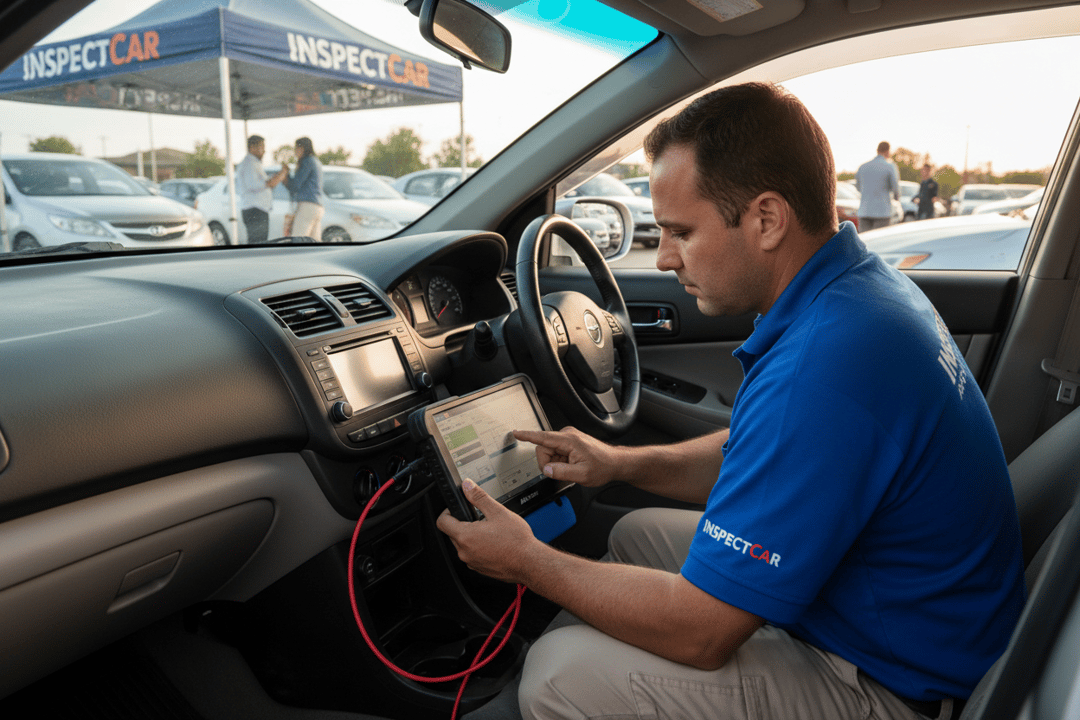
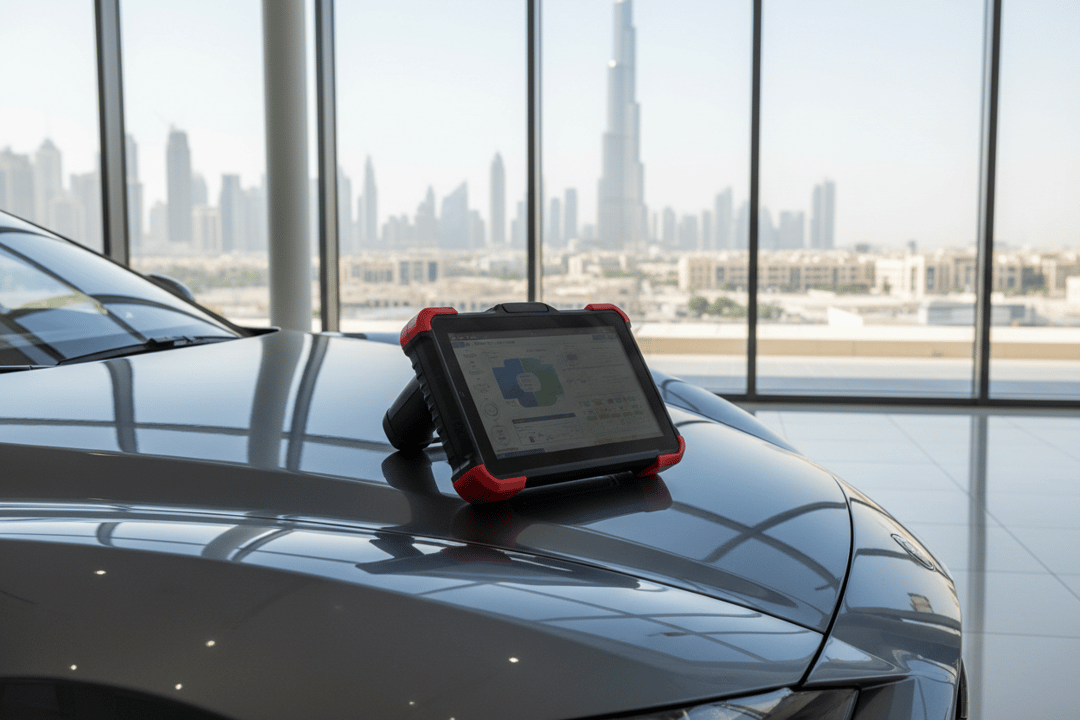
A comprehensive scan is essential to identify errors stored in the Engine Control Unit (ECU) or Transmission Control Unit (TCU). An Computer Diagnostic AED 99 scan reveals hidden errors that prevent the vehicle from starting or causing erratic behavior. Technicians check for ABS, airbag, and transmission codes that indicate underlying hardware failure before it results in a breakdown.
Braking system reliability
Brake components endure the highest physical stress in a vehicle. at higher mileage, brake pads degrade significantly, often leaving only a fraction of the material left. Worn rotors develop ridges and warpage, causing pulsation through the brake pedal during deceleration. Brake fluid absorbs moisture over time, lowering its boiling point and increasing stopping distance during heavy braking or high-speed descents.
Metal-on-metal contact between pads and rotors can permanently score the brake discs, necessitating expensive resurfacing or replacement. A professional inspection provides a pad percentage rating to determine exactly when replacement is imminent, preventing the dangerous scenario of a seized brake caliper.
Suspension and chassis integrity
The suspension system absorbs road imperfections to maintain tire contact and driver comfort. Shock absorbers and struts lose their damping efficiency after constant compression cycles, leaving the vehicle prone to nose-diving during hard braking and excessive body roll during cornering. Rubber bushings crack and disintegrate due to UV exposure and temperature fluctuations, creating distinct clunking noises over bumps.
Worn suspension components alter wheel alignment, accelerating tire wear and reducing fuel efficiency. Hidden fatigue or corrosion in the vehicle frame rails and pillars can compromise structural safety, especially after minor accidents that were never professionally repaired. Inspecting the suspension ensures the chassis responds predictably to road inputs.
Tire condition and manufacturing age
Tires with higher mileage of service likely have sidewall hardening and reduced elasticity, increasing the risk of blowouts at highway speeds. The internal steel belts may fatigue, causing tread separation even if the tread depth appears adequate. Even tires with deep tread often fail structurally after six to ten years regardless of mileage due to dry rot and oxidation.
Uneven tire wear patterns indicate immediate alignment or suspension issues that must be addressed. Inspectors check manufacturing dates to ensure tires meet safety standards, as old tires lose their grip on wet or sandy roads. Replacing tires is non-negotiable at this mileage to ensure the vehicle remains controllable in emergency braking situations.
Body, frame, and paint assessment
High-speed driving generates significant heat, causing undercarriage panels to rust or crack. Previous accidents may have repaired panels that now show signs of stress, mismatched paint, or uneven panel gaps. The vehicle frame rails and pillars can suffer from hidden fatigue or corrosion that compromises the structural integrity of the car in the event of a collision.
A detailed inspection includes a panel-by-panel assessment of the body and frame to identify original paint versus repairs. This is crucial for verifying accident history. The Body & Computer AED 250 package provides a high-definition visual record and a PDF report of the vehicle's condition, highlighting any discrepancies between the odometer reading and the physical state of the car.
Electrical system diagnostics
Electrical components are prone to failure due to heat and vibration over long distances. The battery's internal cells degrade, reducing its ability to hold a charge, which can leave the driver stranded. Alternator output may drop, failing to recharge the battery while driving. Sensors, including the O2 sensor and MAF sensor, can become clogged or fail, triggering the Check Engine Light and reducing engine efficiency.
The electrical system connects the vehicle's safety features; a faulty crankshaft sensor can prevent the engine from starting, while a failing ABS sensor increases stopping distance during emergency maneuvers. A full electrical check ensures all critical systems are functioning within manufacturer specifications.
Comprehensive inspection packages
Assessing a vehicle at higher mileage requires a systematic approach covering all mechanical and structural aspects. A road test evaluates acceleration, braking response, and noise levels under real-world conditions. Vibration through the steering wheel or floorboards often indicates worn wheel bearings or flywheel issues. This phase confirms that the vehicle drives as expected before a purchase or long-term usage.
| Package | Price | Includes |
|---|---|---|
| Computer Diagnostic | AED 99 | OBD Engine, Transmission, ABS, Airbag codes scan. |
| Body & Computer | AED 250 | Panel-by-panel Paint/Body check + Computer Diagnostic. |
| Comprehensive | AED 299 | Full 410+ checkpoint (Body, Frame, Engine, Fluids, Tires). |
AutoFay inspects 410+ checkpoints with HD photos and PDF report. Book at autofay.ae or call +971542584458


0 Comments
No comments yet. Be the first to share your thoughts!