
Transparency matters when you are paying for a service that affects a major purchase decision. Here is exactly what happens during an AutoFay inspection, from start to finish, with no ambiguity about what is checked and how the results are delivered.
Step 1: Booking and Scheduling
You book through autofay.ae or by calling +971-54-258-4458. You provide the car's location — it can be anywhere in the seven Emirates. You share basic vehicle details: make, model, year. The inspection is scheduled at a time that works for you and the person providing access to the car. You do not need to be present during the inspection — only the car needs to be accessible.
Step 2: Static Exterior Inspection
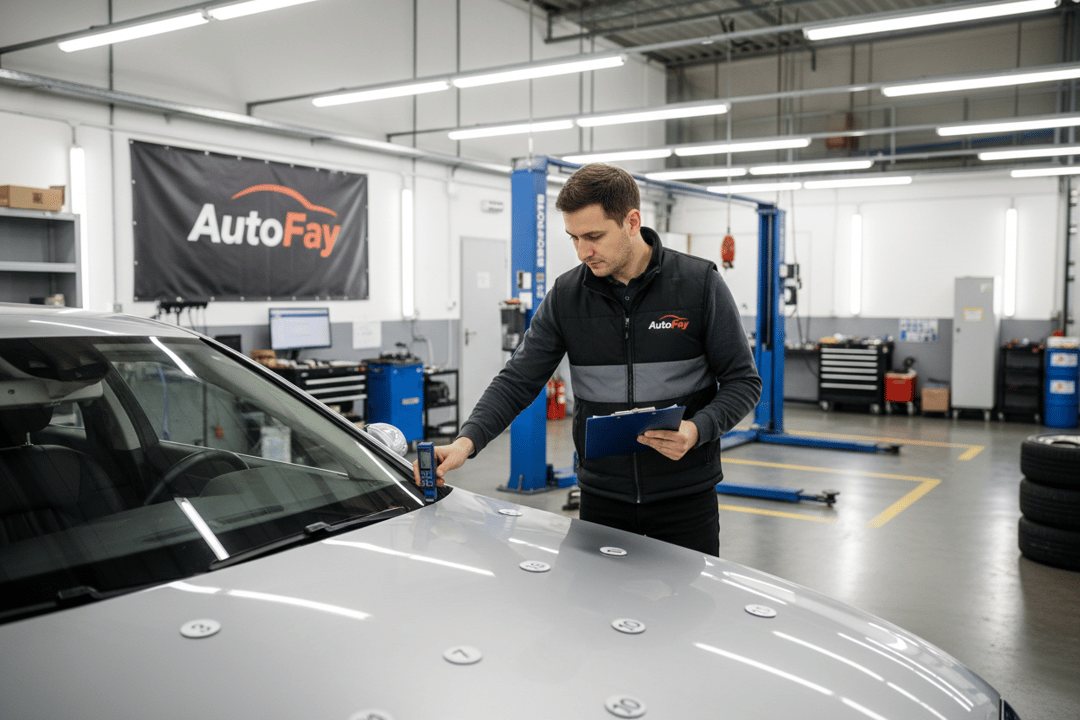
The inspector begins with the car parked and the engine off. Every exterior body panel is assessed individually — front bumper, hood, both fenders, all four doors, both quarter panels, trunk lid, rear bumper, roof, rocker panels, and all pillars (A, B, and C on both sides). Each panel gets two ratings: condition (No Visible Fault, Dent, Repainted, Repaired, Scratch, Multiple Scratches, Replaced, Damaged) and paint quality (Original, Repainted, Total Repainted). Body panel alignment, corrosion, trim pieces, and paint chips are documented.
All glass is inspected — windshield, rear window, all side windows, both mirror glasses, and sunroof glass. Every exterior light is tested: headlights on low and high beam, daytime running lights, turn signals, tail lights, brake lights, reverse lights, fog lights, hazard lights, and license plate lights. Headlight lens condition is noted.
Step 3: Interior and Electronics
The inspector moves inside. Dashboard, steering wheel, all seats, headliner, sun visors, center console, door panels, carpet, floor mats, and pedal condition are each assessed. Seat belt function is verified for every position. Power features are tested individually — windows, locks, mirrors, seats, sunroof. The infotainment system, navigation, Bluetooth, Apple CarPlay/Android Auto, speakers, and any rear entertainment system are each checked.
HVAC testing follows: AC compressor engagement, cooling performance (Very Cold to Not Working), heating, blower motor at all speeds, front and rear defrosters, climate control display, dual-zone function, rear AC, and blend door actuators.
Step 4: Engine Bay and Under-Hood
With the hood open, the inspector checks hood shocks, engine air filter, drive belts, battery (terminals, cables, mount, capacity), starter, alternator, power steering pump, MAF sensor, air intake system, fuse box, throttle body, and engine bay cleanliness. Engine overall condition, sound, mounts, vibration, valve cover gasket, oil seals, and wiring are assessed. The turbocharger or supercharger is checked if equipped.
All fluids are inspected — engine oil level and condition, coolant level and condition, brake fluid, power steering fluid, transmission fluid, and windshield washer fluid. Each gets both a level rating and a condition rating.
Step 5: Underneath and Structure
The underside inspection covers the frame at every structural point: bumper support, bulk head, radiator frame, cross member, front and rear rails, chassis, floor pan, front aprons, firewall, all pillars, rocker panels, roof rail, rear bumper support, rear panel, and trunk floor. The cooling system (radiator, water pump, hoses, fans), fuel system (tank, lines, pump, injectors), and exhaust system (manifold, catalytic converter, muffler, pipes, hangers) are each inspected component by component.
Step 6: Wheels, Brakes, Suspension
Each tire is assessed individually for manufacturing year and condition. Tire wear pattern, pressure, TPMS sensors, valve stems, rim condition, lug nuts, wheel center caps, hubs, and bearings are all checked. Brakes get a full assessment: front and rear pads (with percentage ratings), rotors, calipers, master cylinder, brake booster, lines, hoses, parking brake, and ABS. Suspension covers shocks, springs, control arms, ball joints, tie rods, sway bars, bushings, subframe, steering rack, power steering, steering play, and wheel alignment.
Step 7: OBD Scan and Road Test
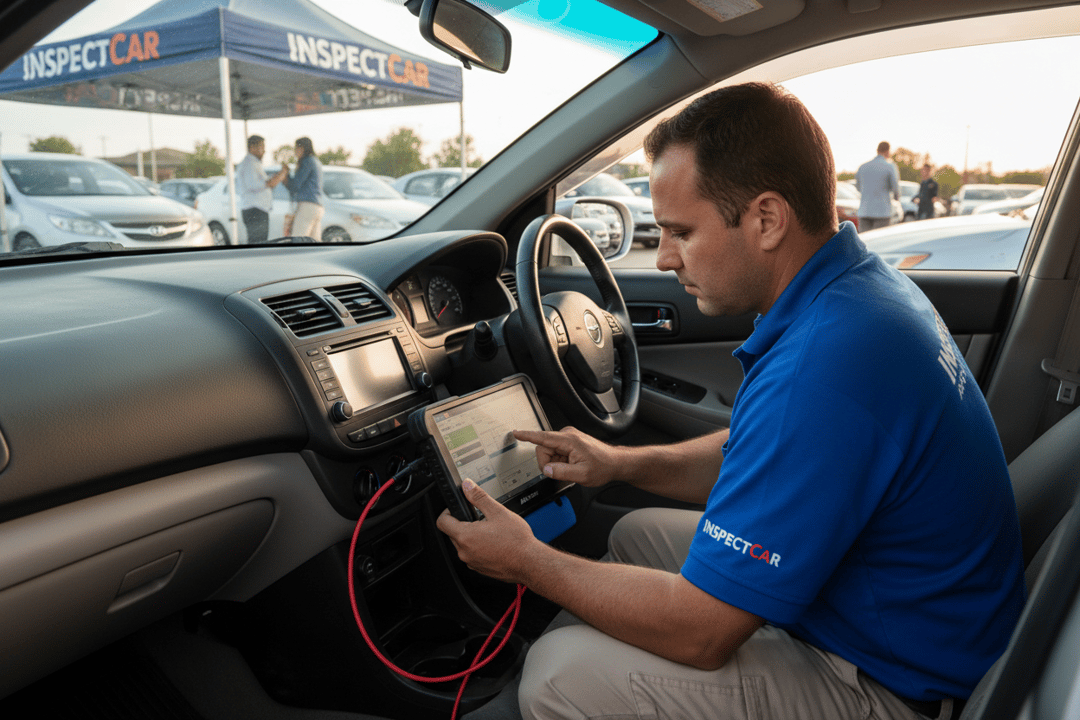
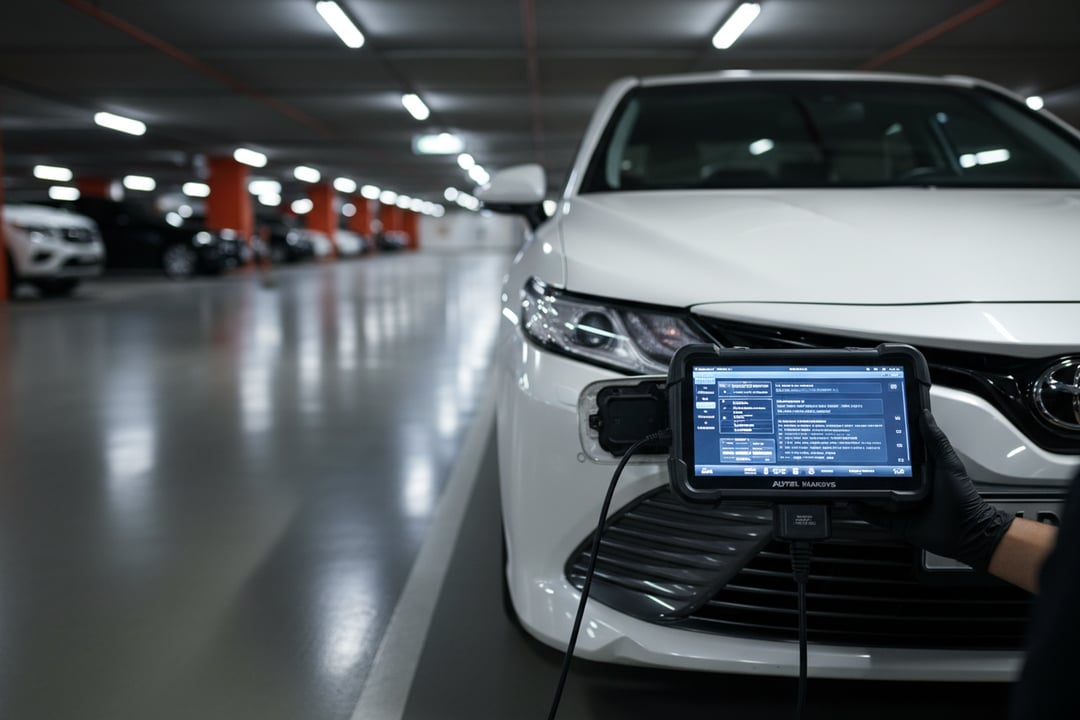
The OBD scanner connects to the car's diagnostic port and reads fault codes across engine, transmission, ABS, airbag/SRS, and body control module systems. Each is rated as No Faults, Stored Codes, or Active Faults. The road test covers engine performance, acceleration, transmission shifting, braking, steering feel, ride comfort, road and wind noise, vibrations, pulling tendency, unusual noises, and overall driving experience.
Step 8: Report Delivery
The complete report is compiled with all findings, ratings, and HD photographs. Results are color-coded for quick understanding. The report is delivered digitally — a detailed PDF that you can review, share with your mechanic, or use as a negotiation tool with the seller.
AutoFay — 410 checkpoints, HD photos, detailed PDF report, on-location inspection across all 7 Emirates. Book at autofay.ae or call +971-54-258-4458.


0 Comments
No comments yet. Be the first to share your thoughts!