

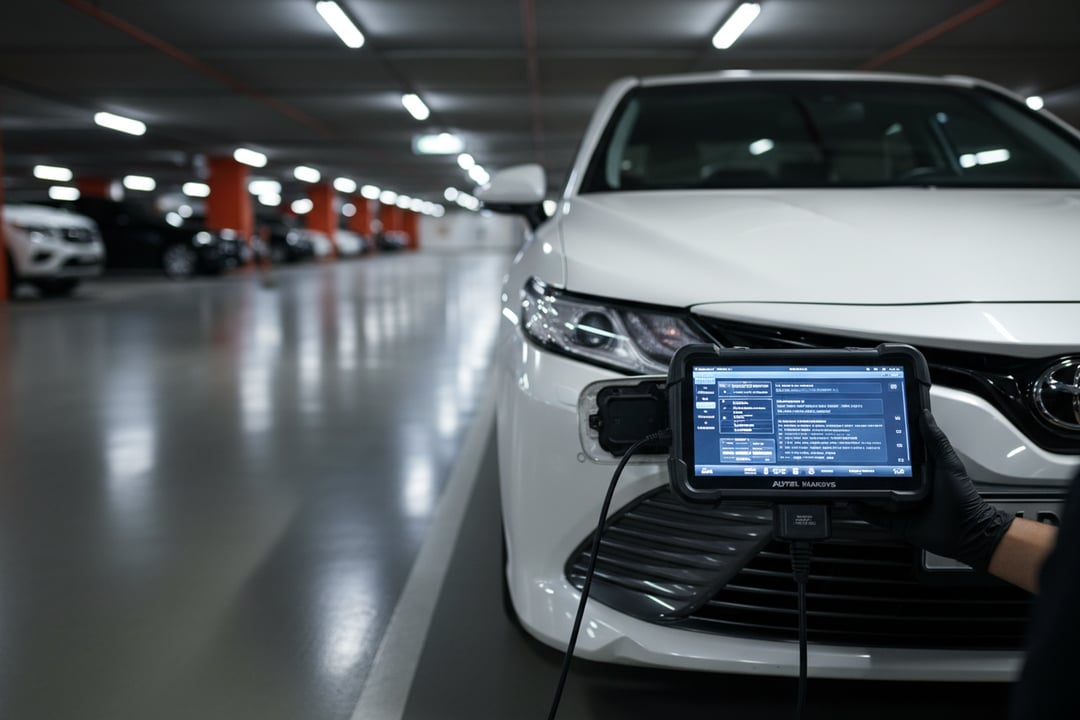
The UAE market frequently sees vehicles that have remained stationary for extended periods due to importation, seasonal usage, or business closure. While a Toyota is generally considered a robust vehicle, long-term storage introduces specific mechanical risks that are not immediately visible during a casual visual inspection. A vehicle that has sat idle for five to ten years requires a rigorous evaluation of dormant systems that have decayed while disconnected from daily use. The following analysis details the critical failure points to prioritize when inspecting a stored Toyota.
Electrical Systems and the 12-Volt Battery
The primary point of failure in a stored vehicle is almost invariably the 12-volt electrical system. Even with the negative terminal disconnected, parasitic drain can deplete the battery over time, leaving the car unable to start. A battery that has been discharged for prolonged periods can suffer from sulfation, which permanently reduces its capacity. When a storage vehicle is finally connected to a charger, the alternator must work significantly harder to replenish this energy, placing undue stress on the voltage regulator and the rectifier diodes.
You must check the battery terminals for white, blue, or green corrosion. This conductive buildup prevents the flow of electricity even if the battery itself is fully charged. Failure to address a corroded electrical system often results in immediate stalling after the engine is running, as the sensors cannot communicate with the Engine Control Unit (ECU). If the battery is more than five years old, it is a high-risk component regardless of its physical appearance.
Fluid Degradation and Contamination
Fluids in a stationary engine do not remain stable indefinitely. Engine oil that has been sitting idle for months can separate into base oil and sludge, particularly if the vehicle was not started regularly to circulate the lubricants. This separation creates a lack of lubrication during the initial startup, potentially causing bearing wear or cylinder scoring. Furthermore, moisture can condense inside the oil pan and mix with the oil, creating an acidic environment that leads to internal rust and corrosion.
Brake fluid is equally susceptible to degradation during storage. Hydraulic fluid is hygroscopic, meaning it absorbs moisture from the air. Over time, this moisture lowers the fluid's boiling point. When a stored vehicle is finally driven aggressively, the heated pads can cause the contaminated fluid to vaporize, leading to brake fade or a complete loss of braking power. Coolant systems also suffer from stagnation, which allows rubber hoses to harden and coolant to lose its anti-corrosive properties, risking overheating and engine block damage.
Fuel System and Storage Stagnation
Fuel is not a permanent solution for energy storage; it degrades over time. In a vehicle that has sat for years, the gasoline or diesel fuel will evaporate, leaving behind sticky residues and varnish. These deposits migrate to the fuel injectors, clogging the tiny nozzles that atomize fuel for combustion. A clogged injector results in an uneven fuel-air mixture, causing the engine to run rough, misfire, or fail to start altogether.
For diesel vehicles, the storage period is critical due to the breakdown of biodiesel components found in modern fuel blends. The fuel can form gums and solids that block the fuel filter and injectors. A stored engine may crank for an extended period without firing because the fuel lines are effectively clogged with aged hydrocarbons. Addressing this requires a thorough injection cleaning and fuel system flush before the engine can operate safely.
Rubber and Tire Integrity
Tires subjected to long-term static load are at high risk of flat-spotting, where the weight of the vehicle compresses the rubber permanently. When the vehicle is moved, these flat spots can cause a rhythmic thumping or vibration that persists until the tires warm up and the rubber re-expands. Additionally, the rubber compounds in tires dry out and crack when exposed to high UAE desert temperatures for years. A cracked sidewall or tread separation poses a catastrophic safety risk and should be immediately rejected.
Hoses and belts are also vulnerable to the drying effects of the sun and heat. Rubber hoses can become brittle and crack, leading to coolant leaks or power steering failure. A serpentine belt may fray or lose its teeth during the first start, causing critical accessories like the alternator and water pump to stop functioning immediately.
Common Model-Specific Faults
Toyota models have specific vulnerabilities when they exit a state of hibernation. The Toyota Hilux, a staple in the UAE market, often suffers from injector issues after long storage. Diesel injectors, which rely on precise spray patterns, can become gummed up, leading to hard starting and white smoke. The fuel filter on these models is often clogged with sediment that settled during the years of inactivity.
Land Cruisers, particularly older models, frequently exhibit suspension issues after storage. The rubber bushings in the upper and lower control arms dry out and crack, causing a loose or clunky ride quality. The ball joints can seize due to lack of lubrication, leading to dangerous steering play. For the Toyota Camry, the automatic transmission fluid can sludge significantly, causing harsh gear shifts or delayed engagement when the transmission is cold.
The Inspection Protocol
Accurately assessing a stored vehicle requires a systematic approach that goes beyond external appearance. A professional inspection must verify the manufacturing year of the tires, as a tire older than five years poses a significant safety hazard regardless of tread depth. The inspector should perform a road test to identify vibrations, strange noises, or hesitation during acceleration, which indicate hidden mechanical faults.
A computer diagnostic scan is essential to reveal history codes that may not trigger the Check Engine light. This scan checks for issues with the engine, transmission, ABS, and airbag systems. Professionals should also inspect the frame rails and pillars for rust, as water intrusion in a stored vehicle can accelerate corrosion in hard-to-reach areas. The condition of the spark plugs and oxygen sensors should be assessed, as these components degrade rapidly when the engine is not running regularly.
| AutoFay Package | Price (AED) | Key Focus Areas |
|---|---|---|
| Computer Diagnostic | 99 | OBD scan for engine, transmission, ABS codes |
| Body & Computer | 250 | Panel-by-panel paint check, computer diagnostic, suspension check |
| Comprehensive | 399 | Full mechanical check, road test, frame integrity, 410+ checkpoints |
Conclusion
Inspecting a used Toyota that has undergone long-term storage demands a focus on dormant systems like the battery, fluids, and fuel pump. The risks range from immediate non-start conditions to long-term engine damage caused by sludge and corrosion. Prioritizing a professional inspection ensures that hidden flaws do not compromise the vehicle's safety or longevity.
AutoFay inspects 410+ checkpoints with HD photos and PDF report. Book at autofay.ae or call +971542584458





0 Comments
No comments yet. Be the first to share your thoughts!