
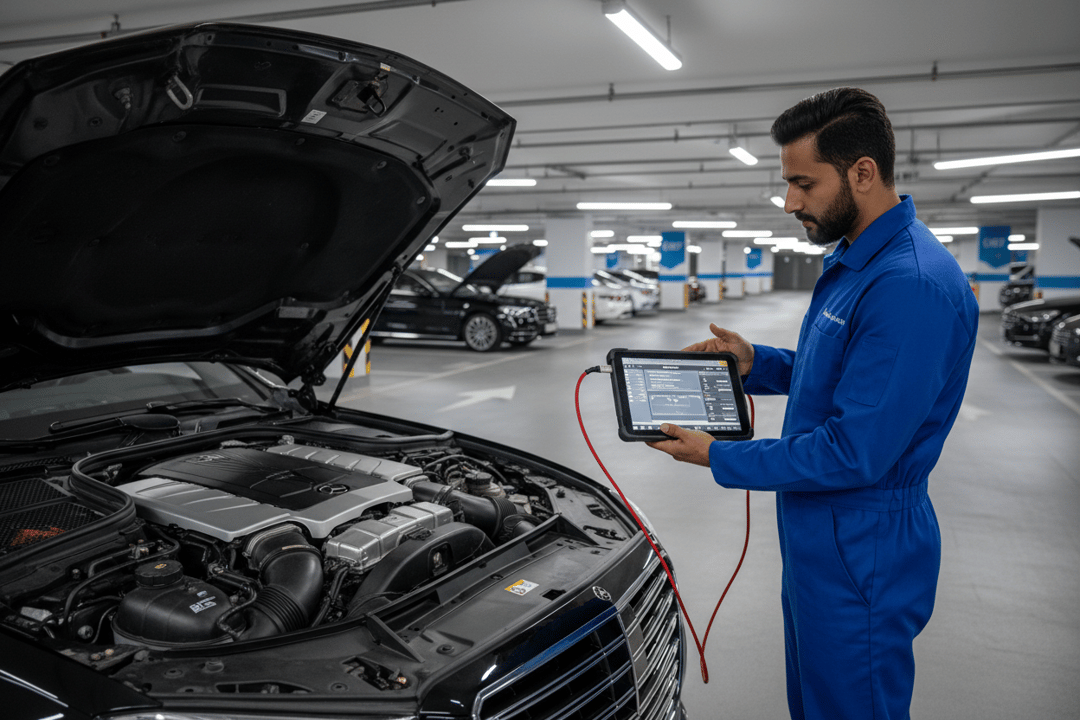
Inspecting a used sedan requires a forensic approach to the under-hood compartment. In the UAE's demanding climate, the engine compartment endures extreme heat and abrasive dust. A visual check under the hood reveals more than just engine condition; it indicates how well the previous owner maintained the vehicle. Ignoring these specific areas often leads to unexpected breakdowns in the desert heat or heavy traffic. Professionals examine the engine air filter for blockages, inspect drive belts for structural integrity, and test battery health to ensure reliability. These checks form the backbone of a robust pre-purchase inspection.
The Critical Role of Under-Hood Inspection
The engine bay is the mechanical heart of any sedan. Unlike the body, which shows surface wear, the engine bay tells a story of long-term usage and environmental exposure. In the UAE, where roads carry significant sand, an engine air filter quickly degrades. A compromised filter allows contaminants to enter the combustion chamber. This leads to accelerated wear on piston rings and cylinder walls, significantly shortening the engine's lifespan. Furthermore, dust accumulation on sensors can trigger false readings, confusing modern electronic control units. Therefore, a thorough inspection of the engine bay is non-negotiable for verifying a vehicle's true condition.
Engine Air Filter: The First Line of Defense
The engine air filter acts as a barrier, preventing dust, insects, and debris from entering the air intake system. In a sedan, which is designed for longevity and efficiency, a blocked filter disrupts the air-fuel mixture. This disruption results in a lean burn condition, which can damage spark plugs and catalytic converters over time. Inspectors visually assess the filter by checking its color and texture. A clean filter appears white or light gray and is dry. Conversely, a used filter in the UAE often appears dark gray or black, indicating heavy loading.
- Visual Degradation: Look for oil saturation on the filter element. This usually signals a vacuum leak or a failing PCV (Positive Crankcase Ventilation) valve.
- Physical Damage: Inspect the housing for tears or gaps where unfiltered air might bypass the filter entirely.
- Filter Element Texture: A brittle or crumbling filter element suggests age and neglect, potentially releasing particles directly into the engine.
A clogged air filter reduces airflow, causing the engine to work harder to maintain power. This reduction in efficiency manifests as sluggish acceleration and higher fuel consumption. Replacing this component is a low-cost maintenance item, yet its failure to be replaced signals a lack of general maintenance discipline by the previous owner.
Drive Belts: The Heartbeat of Engine Accessories
Drive belts transfer power from the engine crankshaft to essential components such as the alternator, power steering pump, water pump, and air conditioning compressor. In a sedan, these belts must operate silently and flawlessly under high heat. The inspection focuses on three specific conditions: cracks, fraying, and glazing. Hairline cracks are common in rubber belts, but large chunks missing or deep splits indicate imminent failure. Glazing occurs when the belt surface becomes shiny and smooth due to heat and friction.
- Serpentine Belt Review: This single, long belt powers multiple systems. A snapped serpentine belt disables the alternator, power steering, and water pump simultaneously. This renders the vehicle undriveable and risks overheating within minutes.
- Timing Belt Assessment: Inspectors look for "teeth" missing from the timing belt teeth or looseness in the belt tensioner. A broken timing belt in an interference engine can cause catastrophic internal damage to the pistons and valves.
- Belt Tension Check: Pressing on the belt with a suitable tool tests for proper tension. A belt that is too loose slips, causing squealing noises, while one that is too tight strains the pulleys and bearings.
Driving with a compromised drive belt poses a safety risk. Loss of power steering makes steering difficult, especially at low speeds. Loss of the water pump function leads to rapid engine overheating. Replacing these belts is a mechanical necessity, but discovering them in a degraded state suggests that other rubber components, such as hoses or mounts, may also be aged and brittle.
Battery Condition: Reliability in High Heat
The battery is the electrical nerve center of the vehicle. In the UAE, high ambient temperatures accelerate the chemical reactions within the battery, leading to faster water loss and plate corrosion. Sedan owners rely heavily on electrical accessories, including advanced infotainment systems, automatic climate control, and start-stop technology. A failing battery cannot handle the electrical load required to start the engine in the morning or power these systems.
Inspectors examine the battery casing for physical damage, such as bulging or cracks, which indicate internal pressure buildup. The terminals must be clean and free of white or blue-green corrosion, which impedes electrical connectivity. A visual inspection of the battery date code is also crucial to determine if it is approaching the end of its typical service life. Even a visually perfect battery may have a low Cold Cranking Amps (CCA) rating.
| Battery Voltage (Open Circuit) | Estimated Condition | Implications |
|---|---|---|
| 12.6 Volts or Higher | Good / Fully Charged | Capable of starting the engine and powering loads effectively. |
| 12.4 Volts | Partially Discharged | May struggle in cold starts; indicates recent usage or internal degradation. |
| 12.2 Volts or Lower | Low Charge / Failing | Capacity is reduced; high probability of failure during hot weather start attempts. |
Corroded terminals create high resistance, causing voltage drops that trigger warning lights on the dashboard. A battery with high internal resistance struggles to deliver the sudden surge of energy needed to turn the engine over. In a region where temperatures regularly exceed 45 degrees Celsius, a battery with a marginal charge can fail completely, leaving the driver stranded.
Beyond Visuals: The Value of Professional Diagnostics
Visual inspection of these components provides a snapshot, but a computer diagnostic reveals the engine's digital health. Modern sedans use sensors to monitor airflow, belt tension (via the alternator load), and battery load. An OBD scan connects to the vehicle's computer to read these sensor data streams. Inspectors use this data to confirm that the air filter is not triggering a Mass Air Flow (MAF) error code and that the alternator is charging correctly.
Relying solely on a visual check misses the nuances of the engine's electronic management system. For instance, a drive belt might look okay visually, but if the alternator is failing to regulate voltage, the battery will degrade rapidly. A computer diagnostic cuts through these variables to provide an objective assessment of the powertrain's status.
Comprehensive Inspection Packages in UAE
Professional inspection services aggregate these individual checks into a holistic report. A full assessment covers 410+ checkpoints across categories like Body/Paint, Frame integrity, Engine mechanics, Brakes, and Suspension. While a visual check of the air filter takes minutes, a professional service validates the entire system's health.
Services typically offer tiered packages tailored to specific needs. For a quick snapshot of engine and computer health, the Computer Diagnostic package is available for AED 99. For a detailed overview that includes body and computer checks, the Body & Computer package is priced at AED 250. To uncover every detail, including structural and mechanical faults, the Comprehensive package covers all areas for AED 299. These services are conducted by experienced inspectors who provide HD photos and a detailed PDF report.
Why a Sedan Requires Specific Attention
Sedans are designed for comfort and fuel efficiency, often utilizing tighter tolerances and complex electronic systems compared to larger SUVs. The specific checks for Air Filters, Belts, and Batteries are critical because these components directly impact fuel economy and comfort. A sedan owner expects smooth acceleration and quiet operation. A failing serpentine belt induces a screeching noise that compromises the cabin environment. A dirty air filter causes the engine to run rough, affecting the ride quality.
Furthermore, sedans often have less engine space for cooling, making the condition of the radiator and belts even more vital. The electrical load in modern sedans is higher due to extensive comfort features. Therefore, the battery must be robust to support these systems. AutoFay inspections cover these nuances, ensuring that the sedan's mechanical systems align with the manufacturer's original specifications.
Inspecting the under-hood components of a used sedan in the UAE requires expert eyes and specialized tools. The Engine Air Filter protects against dust, Drive Belts ensure the flow of power, and the Battery provides the electrical spark. Neglecting these areas leads to mechanical failure. AutoFay inspects 410+ checkpoints with HD photos and PDF report. Book at autofay.ae or call +971542584458.





0 Comments
No comments yet. Be the first to share your thoughts!