
The acquisition of a used SUV in the United Arab Emirates requires a rigorous evaluation of the vehicle's critical components, particularly the tires and wheels. As the only physical points of contact between the heavy chassis and the road surface, tires directly dictate the safety, handling, and fuel efficiency of high-riding vehicles. A comprehensive inspection goes beyond surface appearance; it delves into the manufacturing age, tread integrity, and structural health of the rubber and alloy components. This analysis provides the necessary technical insight to identify potential liabilities before transferring ownership.
Decoding the Sidewall: Manufacturing Year and DOT Codes
Every tire manufactured in the United States is required to have a Department of Transportation (DOT) code on its sidewall. This alphanumeric string begins with "DOT," indicating the tire complies with federal safety standards. The final four digits of this code represent the week and year the tire was produced. For example, the code "2520" indicates the 25th week of 2020.
In the context of a used SUV purchase, identifying the manufacturing year is critical. Rubber degrades over time, regardless of tread depth, due to oxidation and environmental exposure to UV radiation and extreme heat. A tire that is six years old may appear new with deep tread but will lack the structural resilience required to withstand high-speed cornering in UAE conditions. Inspectors must reject or heavily discount tires that exceed ten years of age, as the risk of significant failure increases exponentially with time.
- DOT Code Location: The code is usually embossed on the inner sidewall facing the wheel or the outer sidewall facing away.
- Week vs. Year: The first two digits denote the week (1-52), while the last two denote the year.
- Age-Related Failure: Beyond ten years, the internal steel belts can weaken, leading to blowouts on highways.
Tread Depth: The Legal and Safety Threshold
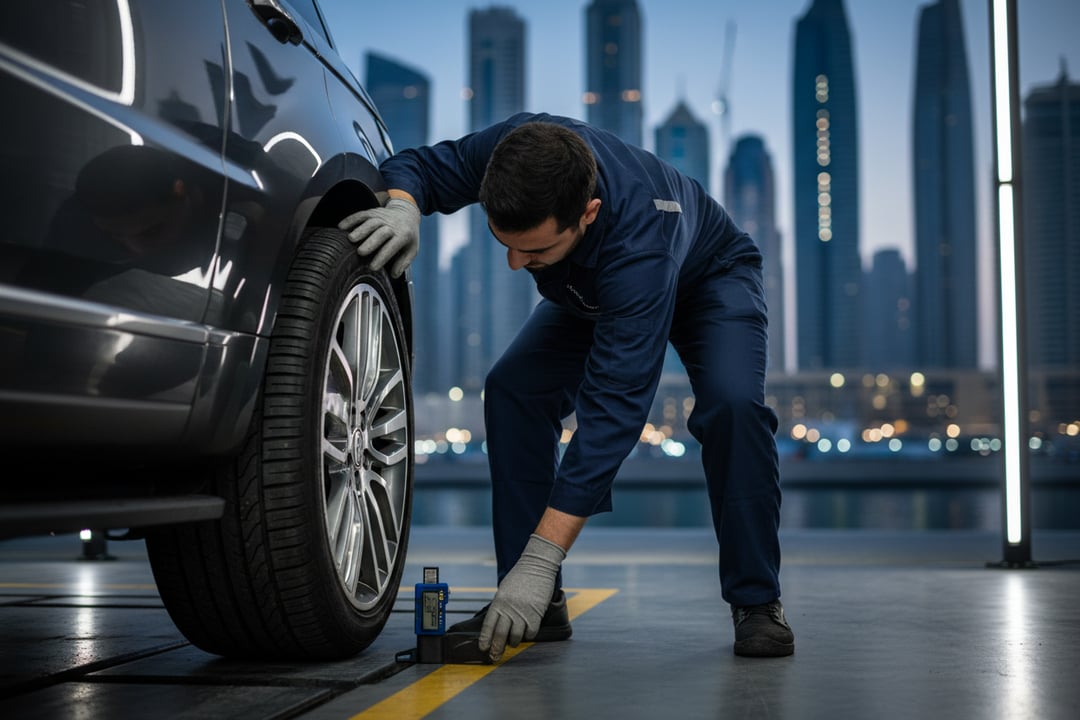
Tread depth is the primary metric for measuring a tire’s ability to disperse water and maintain grip. In the UAE, the legal limit for tread depth is 1.6 millimeters (approximately 2/32 of an inch). Vehicles found with tires below this limit face immediate legal penalties and are considered unsafe for public roads.
Inspectors must use a tread depth gauge to ensure accuracy. For SUVs, which possess a higher center of gravity and greater weight, adequate tread is even more vital to prevent hydroplaning during sudden downpours. Insufficient tread reduces the contact patch, compromising braking distances and increasing the likelihood of the vehicle veering off course during cornering maneuvers.
| Tread Depth (mm) | Legal Status | Risk Factor |
|---|---|---|
| 3.0 mm and above | Safe & Legal | Optimal wet traction and braking performance. |
| 1.6 mm to 3.0 mm | Borderline | Acceptable in dry conditions, but dangerous in wet weather. |
| Below 1.6 mm | Illegal | Immediate fines, increased stopping distance, and blowout risk. |
Identifying Uneven Wear Patterns
Uneven wear patterns are diagnostic indicators of underlying mechanical issues within the vehicle's suspension or alignment systems. A thorough inspector analyzes the contact patch to determine if the vehicle is driving straight or if it is compensating for mechanical faults.
- Center Wear: This pattern indicates the tires are over-inflated. While this increases fuel economy slightly, it reduces the tire's lifespan and handling capabilities.
- Edge Wear: If the outer or inner edges of the tire are worn down significantly, the vehicle likely has under-inflated tires or negative camber issues common in lowered suspension setups.
- Cupping (Scalloping): This wave-like pattern suggests worn-out shock absorbers or struts. If the suspension system is compromised, the tire will bounce excessively, causing irregular contact with the road.
Structural Damage: Cracks, Bulges, and Curb Rash
Visual inspection must focus on the structural integrity of the tire and the wheel itself. A bulge on the sidewall is a sign that the inner steel belts have separated from the rubber casing due to impact. Driving on a bulging tire is perilous, as the sidewall flexes excessively under load, often resulting in a sudden blowout.
Conversely, wheel damage such as curb rash or bends can alter the tire's seating on the rim. Even a slight bend can cause slow air leaks due to vibration, leading to under-inflation over time. Furthermore, severe curb damage often requires wheel straightening or replacement, which can significantly impact the vehicle's alignment geometry if not addressed correctly.
The AutoFay Inspection Standard for Tires and Wheels
Expert evaluation of a used SUV requires a systematic approach that integrates tire health with the broader mechanical condition of the vehicle. AutoFay provides a licensed inspection service covering the entire UAE, focusing on over 410+ checkpoints across 25 distinct categories. This on-location inspection ensures a thorough examination without the need for the buyer to transport the vehicle to a workshop.
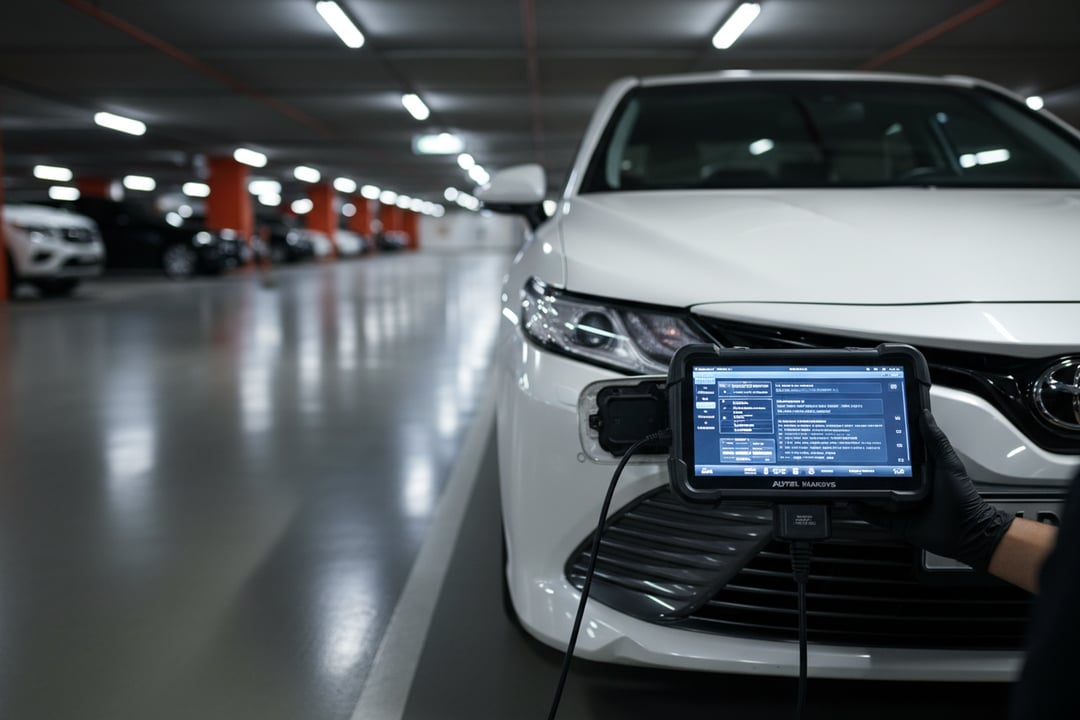
When evaluating SUVs, inspectors cross-reference tire condition with the Brake and Suspension categories. The "Comprehensive" inspection package is recommended for high-value SUVs, as it covers the Computer Diagnostic AED 99, Body & Computer AED 250, and the complete Comprehensive AED 299 scope. This level of detail reveals whether tire wear is merely cosmetic or a symptom of a larger mechanical failure.
The inspection process includes a rigorous Road Test to monitor for vibrations, noise, and handling anomalies that may not be visible during a static inspection. By identifying mismatched tires, illegal tread depths, or structural defects, the inspection provides a clear picture of the vehicle's true value and safety profile.
AutoFay inspects 410+ checkpoints with HD photos and PDF report. Book at autofay.ae or call +971542584458



0 Comments
No comments yet. Be the first to share your thoughts!