
The condition of a vehicle’s tires is the single most critical factor in determining road safety. Tires serve as the only point of contact between the vehicle and the road surface, directly influencing braking distance, handling, and acceleration. When purchasing a pre-owned vehicle, visual inspection of the tires is often insufficient. A comprehensive assessment requires understanding the hidden variables that inspectors evaluate. At AutoFay, our inspection protocol goes beyond surface appearances to ensure the tires on the vehicle are safe for immediate use.
Tire Manufacturing Year and Age Considerations
Tires degrade over time due to exposure to environmental factors such as UV radiation, ozone, and heat, regardless of the vehicle’s mileage. Inspectors must verify the manufacturing date to assess the tire's remaining lifespan. This information is found on the sidewall within the Department of Transportation (DOT) code. The last four digits represent the week and year of production. For example, "2721" indicates the 27th week of 2021.
Tires older than six years are generally considered unsafe for high-speed driving in the UAE's climate. As rubber compounds harden with age, they lose their elasticity and ability to absorb shock. This degradation increases the likelihood of catastrophic tire failure, such as a blowout, at highway speeds. AutoFay inspectors strictly record these dates to highlight the risk of aging rubber to the buyer.
Tread Depth and Wear Patterns
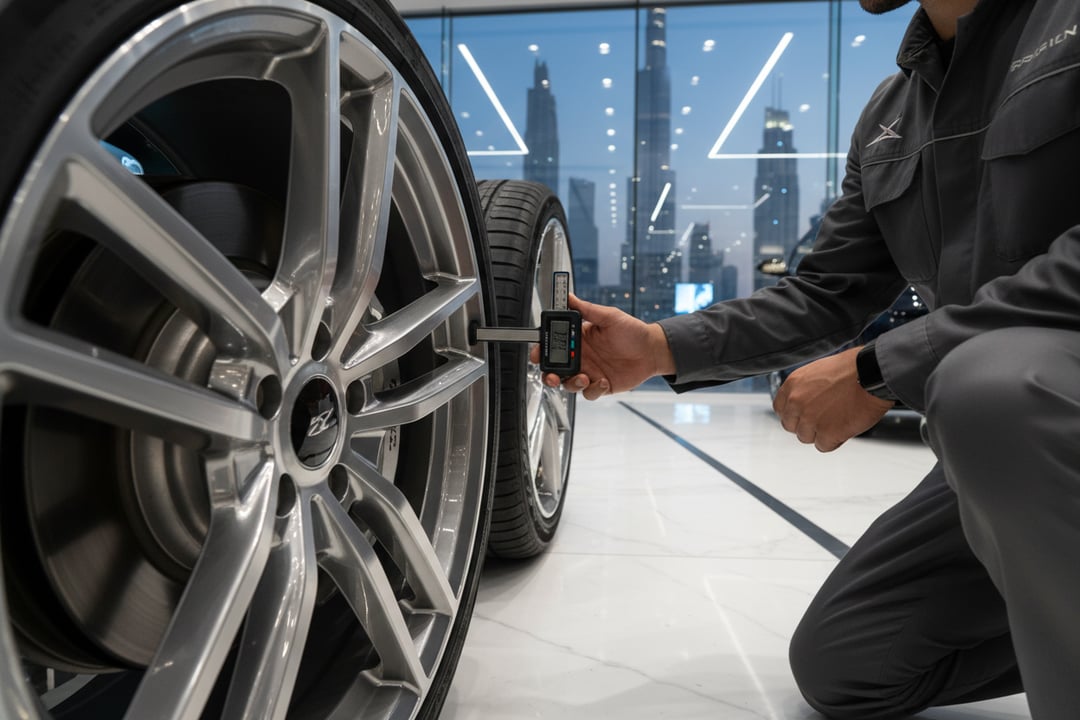
Legal tread depth limits vary by jurisdiction, but safety standards recommend replacement before the tread wears down too thin. The primary function of tread is to evacuate water from the contact patch, preventing hydroplaning. Inspectors measure tread depth using specialized gauges. A tread depth below 3mm significantly reduces the tire's ability to grip wet surfaces. This reduction extends braking distances, particularly during the monsoon season or in the mornings when roads are damp.
Uneven wear patterns serve as a diagnostic clue for mechanical issues. Cupping, a scalloped dip on the tread, usually indicates worn suspension components like shock absorbers or struts. Feathering, where the tread edges are smooth on one side and sharp on the other, suggests incorrect wheel alignment or worn ball joints. Identifying these patterns allows the buyer to understand that replacing the tires may not be the only required repair.
Physical Condition: Cracks, Bulges, and Damage
Inspectors meticulously examine the sidewalls and tread area for physical anomalies. Sidewall bulges, also known as "blowouts," occur when the internal structure of the tire is damaged. This damage compromises the tire's ability to hold air pressure. Even if the tire appears inflated, the internal air pockets can rupture under load or aerodynamic stress, leading to sudden loss of vehicle control.
Cracks in the sidewall or tread grooves indicate dry rot or oxidative damage. This is common in vehicles stored outdoors. Small cuts or gouges in the tread can expose the steel belts or fabric cords to moisture and debris. Once the internal structure is exposed, the tire becomes prone to rapid deterioration. AutoFay inspectors document these defects to provide a clear picture of the tire's structural integrity.
The Functionality of TPMS Systems
The Tire Pressure Monitoring System (TPMS) is designed to alert the driver when tire pressure drops below a safe level. A malfunctioning sensor or dead battery can lead to a false warning, giving the driver a false sense of security. Conversely, a failed sensor can fail to alert the driver to a dangerous pressure drop, increasing the risk of a blowout.
Inspectors check the dashboard warning light and verify the operation of the sensors during the road test. A lack of response from the sensors often indicates that the battery within the sensor has reached the end of its life. Since these sensors are integrated into the valve stem, replacement requires dismounting the tire. This adds to the total cost of ownership that the buyer must factor in immediately after purchase.
AutoFay’s Inspection Standards and Methodology
Accurate vehicle inspection requires a standardized checklist to eliminate personal bias. AutoFay employs a rigorous 410+ checkpoint system covering 25 distinct categories. The Tire & Wheel category is analyzed alongside the Suspension and Brakes categories to determine if uneven wear is caused by mechanical faults rather than simply poor maintenance.
We operate a fully on-location inspection, bringing the inspection to the vehicle at the buyer's or seller's location. This convenience is available across all 7 Emirates. Our technicians do not just look; they measure tread depth, check manufacturing dates, and assess the condition of the alloy wheels for curb damage or bends. This holistic view ensures that the decision to purchase is based on factual data rather than guesswork.
| Inspection Finding | Implication for Buyer |
|---|---|
| Manufacturing Year > 6 years | Rubber has hardened; risk of sudden blowout increases significantly. |
| Tread Depth < 3mm | Reduced grip on wet roads; extended braking distance essential. |
| Sidewall Bulges | Internal structural damage; tire is unsafe for driving. |
| Uneven Wear (Cupping) | Worn suspension components (shocks/struts) requiring repair. |
| TPMS Malfunction | Dead sensor battery; requires replacement and reprogramming. |
Understanding the Value of a Detailed Report
Purchasing a used vehicle involves navigating a complex landscape of hidden costs. The cost of replacing four tires can be substantial, ranging from a notable sum to a notable sum depending on brand and quality. However, the cost is not the only factor; labor and alignment corrections must also be considered. The AutoFay inspection report categorizes these findings clearly. It distinguishes between wear that requires immediate attention and cosmetic issues that are less critical.
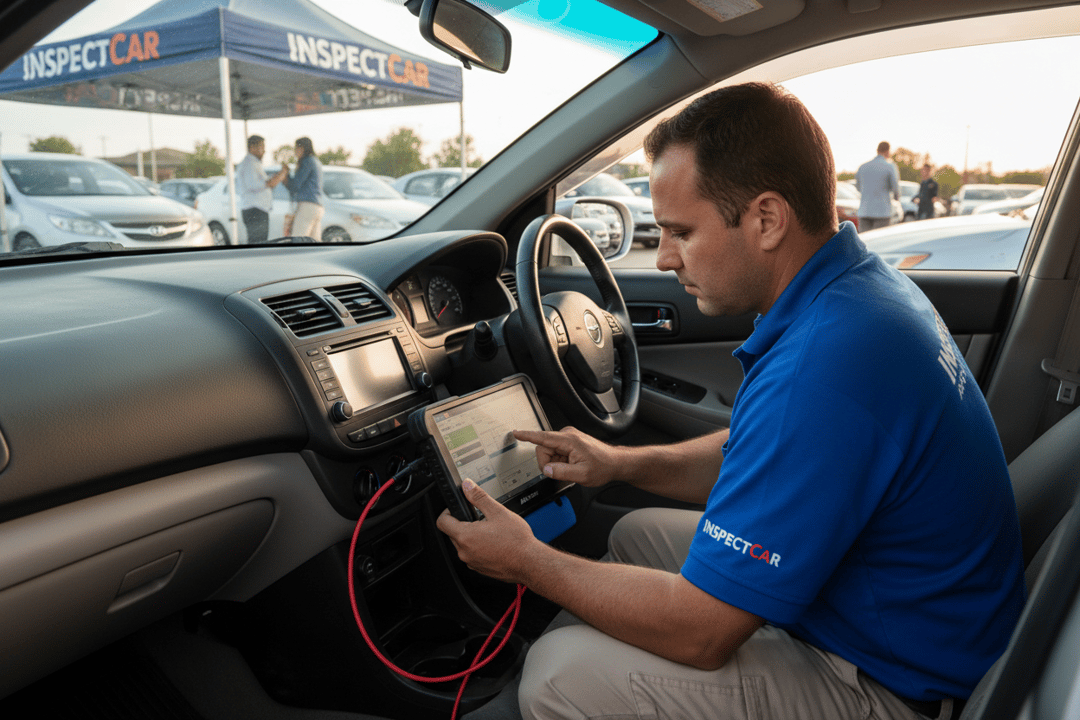
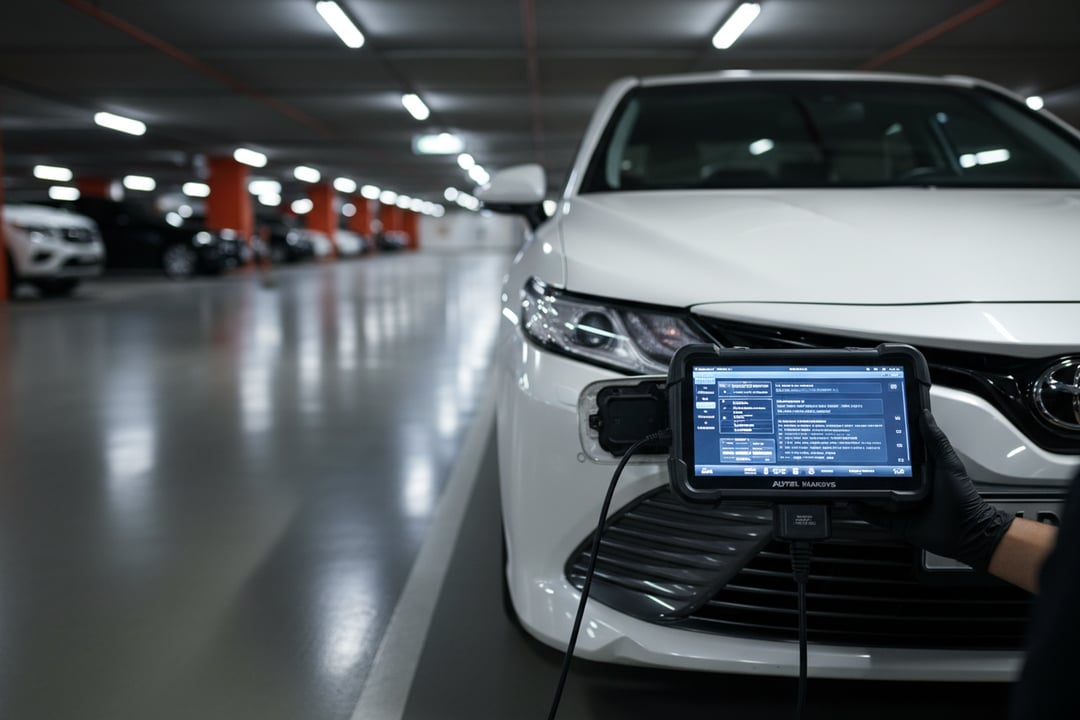
Our comprehensive package provides detailed HD photos of the tires, allowing the buyer to inspect the condition remotely. We also integrate an OBD scan to rule out any engine or transmission faults that might affect the vehicle's performance. This ensures that the tires are the only variable under consideration. A clear report prevents disputes regarding the vehicle's condition after the purchase is finalized.
Why Choose AutoFay for Your Inspection?
- On-Location Convenience: We come to you, saving you time and travel costs.
- Transparent Pricing: Clear packages starting from AED 99 for computer diagnostics.
- Expertise: experienced inspectors with years of experience in the UAE market.
- Comprehensive Coverage: Detailed analysis of tires, brakes, engine, and bodywork.
Owners of used cars can also utilize these services to verify the condition before reselling. A clean inspection report increases the vehicle's resale value and builds trust with potential buyers. For sellers, it provides documented proof of the vehicle's current state.
Whether buying or selling, understanding the true condition of the tires is non-negotiable. Do not rely on a visual glance or the seller's verbal assurance. Trust the data provided by a professional inspection. The difference between a safe investment and a costly repair bill lies in the details.
AutoFay inspects 410+ checkpoints with HD photos and PDF report. Book at autofay.ae or call +971542584458


0 Comments
No comments yet. Be the first to share your thoughts!