
Vehicle fluids are the blood of the mechanical systems. Just as a blood test reveals health conditions before symptoms appear, checking engine oil, coolant, and transmission fluid reveals mechanical problems before they become expensive failures. AutoFay's fluid inspection covers 11 checkpoints, and three fluids in particular provide the most diagnostic value during a pre-purchase inspection.
Engine Oil: Color, Level, and What Milky Means
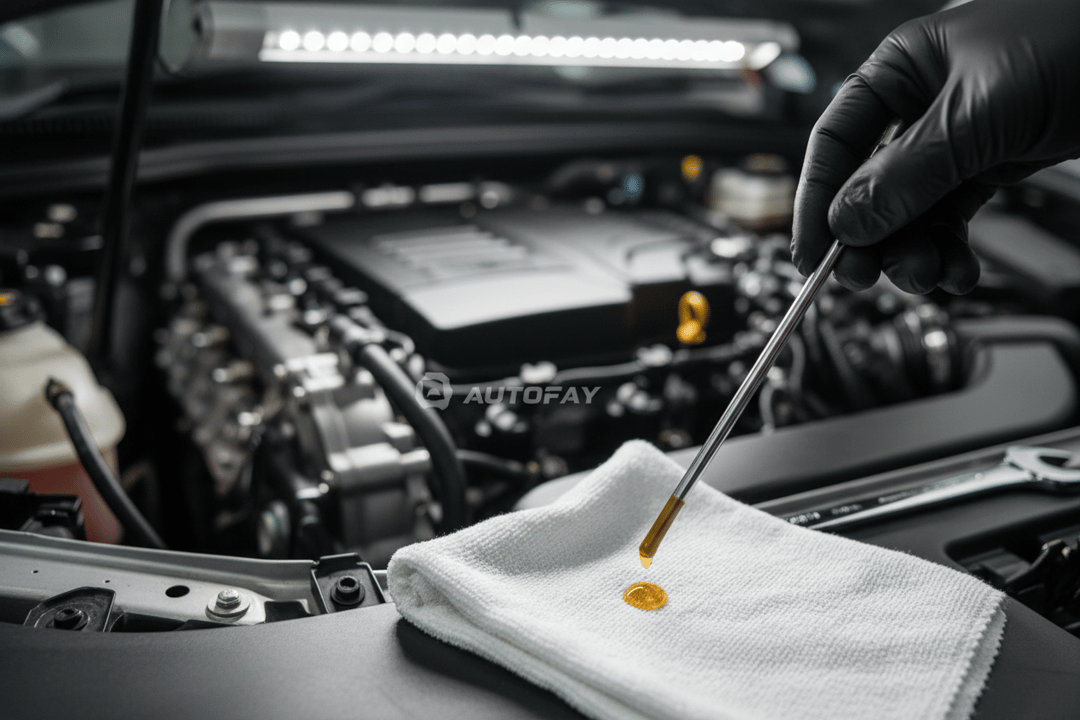
Engine oil level is rated Full, Low, Overfilled, Empty, or Sealed Unit (No Dipstick). Engine oil condition is rated Clean, Dark, Dirty, Milky, or Sealed Unit. Fresh oil is amber-colored and translucent. As oil circulates through the engine, it collects microscopic metal particles, combustion byproducts, and heat — turning progressively darker. Dark oil is normal and simply means the oil has been working. Dirty oil — thick, gritty, and nearly opaque — indicates the oil has not been changed in far too long and has lost its ability to lubricate properly.
Milky oil is the most alarming finding. When engine oil takes on a milky, coffee-with-cream appearance, it means water or coolant has entered the oil system. The most common cause is a failed head gasket — the seal between the engine block and cylinder head that keeps oil and coolant in separate passages. A blown head gasket allows coolant to mix with oil, destroying the oil's lubricating properties and causing accelerated engine wear. In the UAE, head gasket failure can result from chronic overheating in summer traffic.
Low oil level on a car presented for sale raises questions. Either the car burns oil — which indicates worn piston rings or valve seals — or the owner has neglected basic maintenance. Overfilled oil can cause foaming, which introduces air into the lubrication system and can damage the crankshaft seals. The oil drain plug is also checked — Good, Stripped, or Leaking — because a stripped drain plug indicates the oil has been changed many times, possibly by shops that overtightened it.
Coolant: The Head Gasket Indicator
Coolant level is rated Full, Low, or Empty. Coolant condition is rated Clean, Dirty, Contaminated, or Oily. Clean coolant is typically bright green, orange, or pink depending on the type, and it is clear and free of debris. Dirty coolant has become cloudy with age and particulate matter. Contaminated coolant may contain rust particles from internal corrosion of the engine block or radiator.
Oily coolant is the mirror image of milky oil — it indicates the same head gasket failure from the cooling system side. When oil enters the coolant, it floats as a film on the surface of the overflow tank and creates a brownish sludge. This finding, combined with milky oil, is definitive proof of head gasket failure. Either finding alone is sufficient reason to walk away from a purchase unless the price reflects a major engine repair.
Low coolant level can indicate a leak anywhere in the cooling system — radiator, hoses, water pump, or heater core. The cooling system inspection checks each of these components independently. Coolant leaks are rated None, Minor, or Major. A car with a low coolant level and no visible leak may have an internal leak — coolant entering the combustion chamber through a failed head gasket, where it is burned off as white exhaust smoke.
Transmission Fluid: Smell Tells Everything
Transmission fluid level is rated Full, Low, Overfilled, or Sealed Unit (No Dipstick). Many modern vehicles have sealed transmissions with no user-accessible dipstick, which limits this check. For vehicles with accessible fluid, the condition rating is the most diagnostic: Good, Acceptable, Dirty, Burnt Smell, Contaminated, Low Level, Needs Replacement, or Sealed Unit.
Good transmission fluid is typically red or pink and has a slightly sweet smell. As the fluid ages and the transmission works harder, it darkens. Acceptable fluid is darker but still functional. Dirty fluid is brown and has lost most of its lubricating additives. Burnt smell is the critical finding — transmission fluid that smells burnt indicates the transmission has been overheated, which damages the friction surfaces inside the torque converter and clutch packs.
In the UAE, transmission fluid degrades faster because of the heat. Stop-and-go traffic in summer pushes transmission temperatures well above normal operating range. A transmission that has been towing or carrying heavy loads in these conditions will show burnt fluid earlier. The transmission operation check during the road test — rated Smooth, Slight Delay, Hard Shifting, or Slipping — provides the behavioral evidence that matches the fluid condition. Burnt fluid combined with hard shifting or slipping during the road test indicates a transmission approaching failure.
What These Three Fluids Together Reveal
Checking all three fluids creates a diagnostic picture that no single check provides alone. Clean oil, clean coolant, and good transmission fluid indicate a well-maintained vehicle with no internal problems. Dark oil with clean coolant and good ATF suggests the car is due for an oil change but is mechanically sound. Milky oil with oily coolant is a head gasket failure regardless of how well the car drives. Burnt transmission fluid with a car that shifts smoothly means the transmission is compensating for damage that will eventually cause failure.
AutoFay checks 410+ checkpoints including 11 fluid checkpoints covering level and condition, with HD photos and a detailed PDF report. On-location inspection across all 7 Emirates. Book at autofay.ae or call +971-54-258-4458.




0 Comments
No comments yet. Be the first to share your thoughts!