
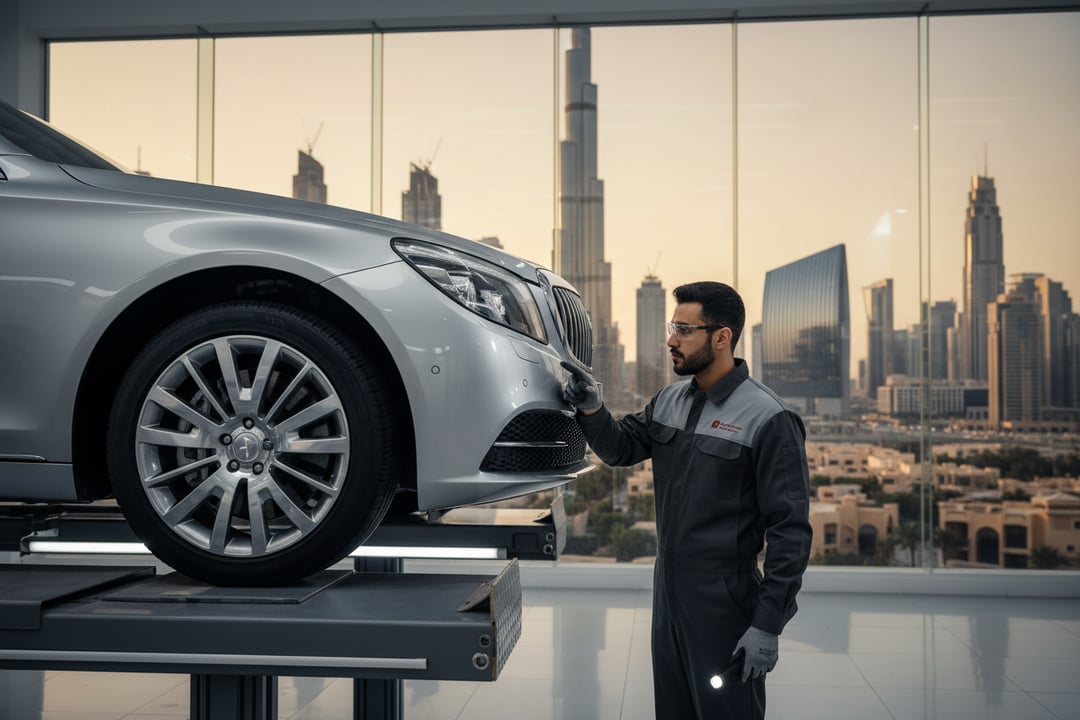
The suspension system acts as the intermediary between the vehicle chassis and the road surface. For a sedan, which typically carries a heavier load and demands superior high-speed stability, this system is non-negotiable. In the UAE environment, where highways span vast distances and speed bumps are ubiquitous, suspension components endure extreme stress. Inspecting a pre-owned sedan requires a forensic approach to the chassis, specifically focusing on the vertical dampening and lateral stability provided by the suspension and steering geometry.
The Critical Role of Shock Absorbers and Struts
Shocks and struts perform the essential function of controlling spring oscillation and damping road impact energy. While many drivers conflate the two, a strut integrates the shock absorber into the structural support of the suspension, common in most modern sedans. The hydraulic fluid inside these units resists the flow of gas or liquid to slow down the spring’s rebound.
A experienced inspector must look for visual signs of internal failure before the vehicle even moves. Leaking fluid on the exterior of the strut or shock body indicates that the internal seals have failed. This fluid loss creates aeration in the oil, rendering the damper ineffective. Consequently, the suspension will no longer control the spring’s movement, causing the vehicle to bounce excessively or "float" over bumps.
When a strut or shock fails completely, the consequences are immediate and dangerous. The vehicle lacks the ability to transfer weight during cornering, leading to body roll (the chassis leaning too far). This instability compromises tire grip on wet roads, a common hazard in the region. Without functional dampers, the front wheels may lose contact with the pavement during hard braking, increasing braking distance and stopping distance unpredictably.
Diagnostic Indicators
- Nose Diving: Excessive forward weight transfer when braking.
- Roof Sag: Visual indication that the struts are unable to support the vehicle weight.
- Vibration: Shuddering transmitted through the steering wheel or seat.
Coil Springs and Ride Height Maintenance
Coil springs store potential energy to support the weight of the vehicle. Over time, and especially in vehicles with high mileage, these springs can lose their temper or experience fatigue. A sagging suspension alters the vehicle's factory ride height. This change immediately affects the suspension geometry, including the camber angle of the wheels.
When a sedan’s ride height drops, the control arms and tie rods are forced into positions they were not designed for. This misalignment causes uneven tire wear, often resulting in scalloped edges on the tire tread. Furthermore, a lowered front end can interfere with the steering knuckle, causing a phenomenon known as "bump steer," where the steering wheel suddenly jerks when hitting a bump.
Inspectors must measure the distance between the wheel well and the hub center to verify factory ride height. If the springs are broken or have "coil bind" (the coils are compressed together too tightly), the suspension travel is compromised. A broken spring can jounce violently, potentially damaging the strut mount or the wheel well liner.
Control Arms, Bushings, and Ball Joints
The control arm connects the chassis to the steering knuckle and is pivotal in maintaining suspension geometry. This connection is buffered by rubber bushings that absorb vibration and allow for slight movement. In the UAE climate, these rubber components degrade rapidly due to exposure to heat and salt from the coast. Once the rubber cracks, the metal-to-metal contact begins.
Excessive play in the control arm bushings leads to vague steering response. The driver cannot predict how the vehicle will react to steering inputs. Furthermore, worn ball joints at the ends of the control arms allow the suspension to move up and down loosely. When the ball joint wears out, it creates a metallic clunking sound, particularly noticeable over speed bumps or when turning the steering wheel while the vehicle is stationary.
A failed ball joint is a catastrophic safety issue. If the joint separates, the wheel can detach from the vehicle entirely. This inspection requires the inspector to grasp the wheel at the 12 and 6 o'clock positions and rock the vehicle vigorously to feel for looseness. Any play indicates immediate replacement is necessary to prevent total suspension failure.
Steering Components: Precision Handling
While the suspension handles the vehicle's movement, the steering system dictates its direction. For a sedan, the steering rack is a precision instrument. Inspectors must check the tie rods and tie rod ends for play. The tie rod connects the steering rack to the steering knuckle. If the rubber boot on the tie rod end is torn, dirt and grit enter the joint, causing the internal threads to wear out.
Worn tie rods result in a "loose" steering feel. The vehicle may wander down the highway, drifting toward the center line or the shoulder without driver input. This instability is exacerbated by the high speeds common on UAE interstates. Additionally, inspectors check the steering rack boots for leaks. Power steering fluid leaks into the boot indicate a failure in the internal seals of the steering rack, which can render the power steering inoperable.
The steering box or rack mount bolts must also be inspected. If these bolts are loose or missing, the entire steering assembly can shift, causing misalignment that damages tires and makes the steering wheel difficult to center.
Professional Inspection Methodology
Visual inspection is only the first step. A comprehensive assessment requires a dynamic road test. At AutoFay, the inspection process goes beyond simple observation. The "Road Test" category within our inspection protocols evaluates the vehicle's behavior under acceleration, braking, and cornering.
During the road test, technicians listen for the specific sounds generated by worn suspension parts. A "clicking" noise when turning often indicates a worn constant velocity joint. A "clunking" noise over bumps suggests worn ball joints or control arm bushings. These auditory cues are as critical as visual evidence.
For sedans, the alignment of the chassis is paramount. A standard visual check of the tires can reveal alignment issues caused by worn suspension parts. Uneven tread wear patterns provide a roadmap of the suspension's health. An inspector looks for cupping, feathering, or scalloping on the tire tread surface.
| Component | Visual Inspection Focus | Functional Consequence of Failure |
|---|---|---|
| Shock Absorber / Strut | Hydraulic fluid leaks, dust boot damage, mounting plate corrosion. | Loss of vehicle control, nose dive on braking, tire cupping wear. |
| Coil Spring | Broken coils, sagging ride height, rust on the wire surface. | Altered alignment, improper suspension geometry, potential wheel bearing stress. |
| Control Arm | Bushing cracks, ball joint play, mounting bracket damage. | Vague steering, uneven tire wear, metal-on-metal noise. |
| Steering Rack | Rack boots for fluid leaks, tie rod end play, play in steering wheel. | Wandering steering, poor road feedback, rapid tire tread degradation. |
Why You Need a professional inspection
Attempting to diagnose suspension issues in a used sedan without professional tools is difficult. The symptoms of worn springs mimic worn shocks, and vice versa. A professional inspection service provides a holistic view of the vehicle's dynamics. Relying on a visual check alone can miss internal hydraulic failure that is not yet leaking externally.
AutoFay provides a detailed report documenting the condition of these critical components. The report includes HD photos of any identified defects, such as torn boots or leaking struts. This documentation is vital when negotiating the price of a used vehicle. If a seller is unaware of the extent of the suspension wear, the buyer can use the inspection findings to negotiate a fair price.
Investing in a professional inspection prevents the costly repercussions of purchasing a vehicle with hidden structural issues. A vehicle that handles poorly is unsafe to drive and difficult to resell. By identifying suspension faults early, the buyer avoids the immediate expense of repairs and the safety risks associated with compromised chassis integrity.
AutoFay inspects 410+ checkpoints with HD photos and PDF report. Book at autofay.ae or call +971542584458



0 Comments
No comments yet. Be the first to share your thoughts!