


Inspecting a pre-owned sedan in the United Arab Emirates requires a forensic approach to vehicle safety. While mileage and cosmetic condition are visible, the structural integrity of safety systems often hides behind dashboard panels and under plastic trim. A compromised airbag system or a malfunctioning parking sensor can transform a routine drive into a catastrophic event. Professional inspection services provide the technical depth required to uncover these latent failures before a vehicle enters traffic.
The Critical Role of Passive Safety Systems in Sedans
Sedans are designed with a specific safety envelope that relies on the interaction between seatbelts and restraint systems. Passive safety devices, primarily airbags, deploy within milliseconds of a collision to cushion occupants. However, these systems are not infallible and require precise electronic calibration to function correctly. A vehicle with a history of accidents may have airbag modules that are mechanically intact but electronically unrecoverable.
Inspectors must verify the deployment status of the driver, passenger, and side curtain airbags. A cracked airbag cover or missing foam padding often indicates a previous deployment event. Visual inspection alone cannot determine if the internal sensors within the airbag module have been triggered. This requires advanced diagnostic tools to read the Vehicle Identification Number (VIN) history stored within the module's memory. If the system detects a previous impact, the airbag may refuse to deploy in a future accident, rendering the safety feature useless.
Diagnostics for Airbag Integrity
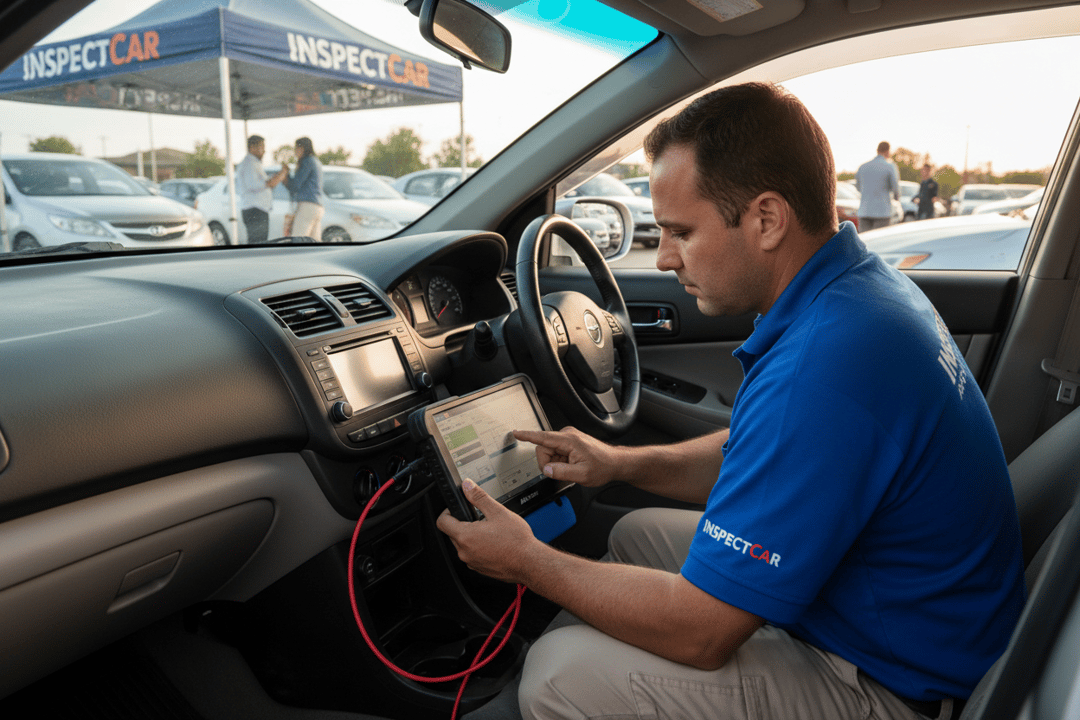
The On-Board Diagnostics (OBD) system is the interface for interrogating the vehicle's electronic control units. For airbags, specifically known as Supplemental Restraint Systems (SRS), the diagnostic check looks for stored fault codes. These codes can range from loose connectors to a completely failed module. A common failure point in older sedans is the degradation of the airbag clock spring, which allows the steering wheel to rotate while maintaining an electrical connection. This component is often overlooked during a standard walk-around but is essential for the deployment of the frontal airbag.
Parking Security: Cameras and Sensors in Tight Spaces
Modern sedans in the UAE rely heavily on auxiliary parking aids due to the prevalence of high walls, barriers, and tight parking configurations. The backup camera and parking sensors work in tandem to provide a comprehensive view of the rear quadrant. A visual obstruction or a sensor malfunction increases the likelihood of rear-end collisions, which are common in urban driving environments.
When inspecting a used sedan, technicians verify the functionality of the rearview camera display. A distorted or grainy image suggests a faulty camera lens or a damaged wiring harness. In some cases, the camera may display static noise, indicating a sensor malfunction. More critically, the system must be calibrated after any windshield replacement or suspension work, as the camera relies on specific mounting points and reference points.
The Risks of Phantom Parking Sensors
Parking sensors provide auditory or visual warnings based on ultrasonic waves. A faulty sensor can send false signals, causing the driver to brake unnecessarily, or conversely, fail to alert the driver of an obstacle. This phenomenon, known as phantom vibration, can lead to driver frustration and a false sense of security. Inspectors test these sensors by placing a specific object at various distances behind the vehicle to ensure accuracy. A single faulty sensor on a sedan can compromise the detection of pedestrians or small objects that the camera might miss.
Structural Integrity and Airbag Deployment Angles
The effectiveness of an airbag is inextricably linked to the structural rigidity of the sedan. If the vehicle's frame has been compromised in a prior accident, the impact energy may not be directed away from the occupants as designed. The roof rails and the "B-pillars" are critical structural components that support the roof and house the curtain airbag modules. If these pillars have been repaired using glue or filler rather than welding, the structural safety is significantly reduced.
Frame damage, even if hidden by body filler, affects the geometry of the seatbelts and the trajectory of the airbags. An inspector using a frame measuring machine checks for deviations in the unibody structure. If the vehicle’s frame rails are twisted, the airbag may deploy at an incorrect angle or fail to deploy with sufficient force. This is a fundamental safety violation that cannot be identified by a casual visual inspection.
Why Visual and Electronic Checks Are Separate Processes
Reliance on a visual inspection of a used sedan is a gamble. A car may look pristine from the outside, yet the wiring for the backup camera could have been chewed by rodents, or the airbag module could have a loose connection. These issues are silent killers that do not show up until a crash occurs. Professional services separate the visual assessment from the electronic diagnosis to ensure that no potential failure point is overlooked.
The Importance of Scan Tools
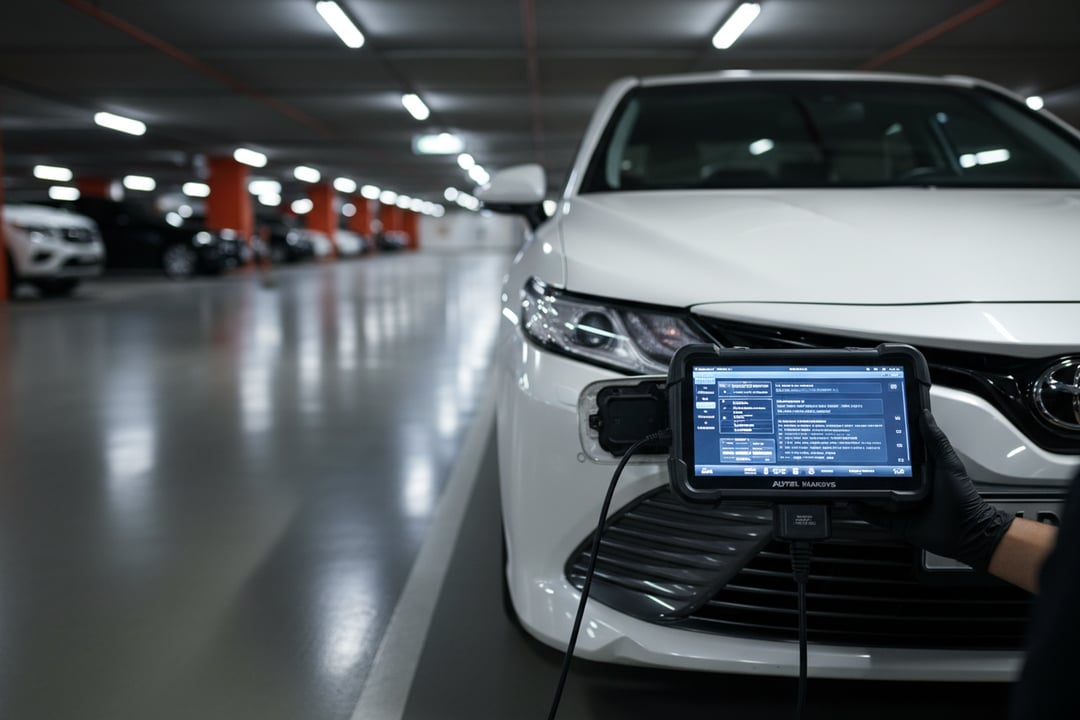
While a human inspector can identify a broken sensor, only a computer diagnostic tool can confirm that the sensor is communicating with the Central Control Unit. The diagnostic software reads the data stream from the parking sensors to verify their sensitivity levels. Similarly, the OBD scanner checks the communication between the airbag module and the car's computer. This electronic verification ensures that the safety system is not only physically present but also electronically active and ready for deployment.
Selecting the Right Inspection Package for Sedans
Inspection packages vary based on the depth of analysis required. For sedans, a basic computer scan is often insufficient if the vehicle has a history of accidents or bodywork. Choosing the correct package ensures that all safety systems, from the engine to the electrical architecture, are scrutinized without unnecessary expense.
| Package Name | Price (AED) | Inclusions |
|---|---|---|
| Computer Diagnostic | 99 | Engine and transmission codes, ABS and Airbag system check. |
| Body & Computer | 250 | Includes the Computer Diagnostic package plus panel-by-panel body inspection. |
| Comprehensive | 399 | Full vehicle assessment including fluids, brakes, suspension, tires, and road test. |
The Computer Diagnostic package is the baseline for uncovering electronic faults in airbag modules and parking sensors. The Body & Computer package adds a layer of scrutiny to the vehicle's exterior, ensuring that bodywork has not masked frame damage or sensor placement issues. The Comprehensive package is the most thorough option, integrating a road test to physically verify the functionality of the brakes, steering, and suspension, which are all interconnected with the vehicle's safety architecture.
For a sedan purchaser, the cost of an inspection is a fraction of the potential cost of a collision or a stolen vehicle. It provides a factual record of the vehicle's condition. Without this data, a buyer risks inheriting a vehicle with a history of hidden accidents that compromise the occupant safety cell.
AutoFay inspects 410+ checkpoints with HD photos and PDF report. Book at autofay.ae or call +971542584458



0 Comments
No comments yet. Be the first to share your thoughts!