
Purchasing a pre-owned vehicle requires a critical eye, particularly regarding the active safety systems that protect occupants during a collision. Modern vehicles rely on an intricate web of electronics to prevent accidents and mitigate damage, yet these systems often go untested during a standard visual walkaround. A professional inspection provides the necessary data to uncover potential failures in critical safety modules before you sign the transfer of ownership papers. At autofay.ae, our on-location inspection service covers all seven Emirates, examining over 410+ checkpoints across 25 distinct categories to ensure the vehicle meets safety standards.
The Critical Importance of Airbag Integrity
The Supplemental Restraint System (SRS) is the primary defense against severe impact injuries. Airbags must deploy with precision and force to cushion the occupant against the steering wheel or dashboard. A malfunction in this system leaves the driver and passengers vulnerable to trauma that modern safety design intended to prevent.
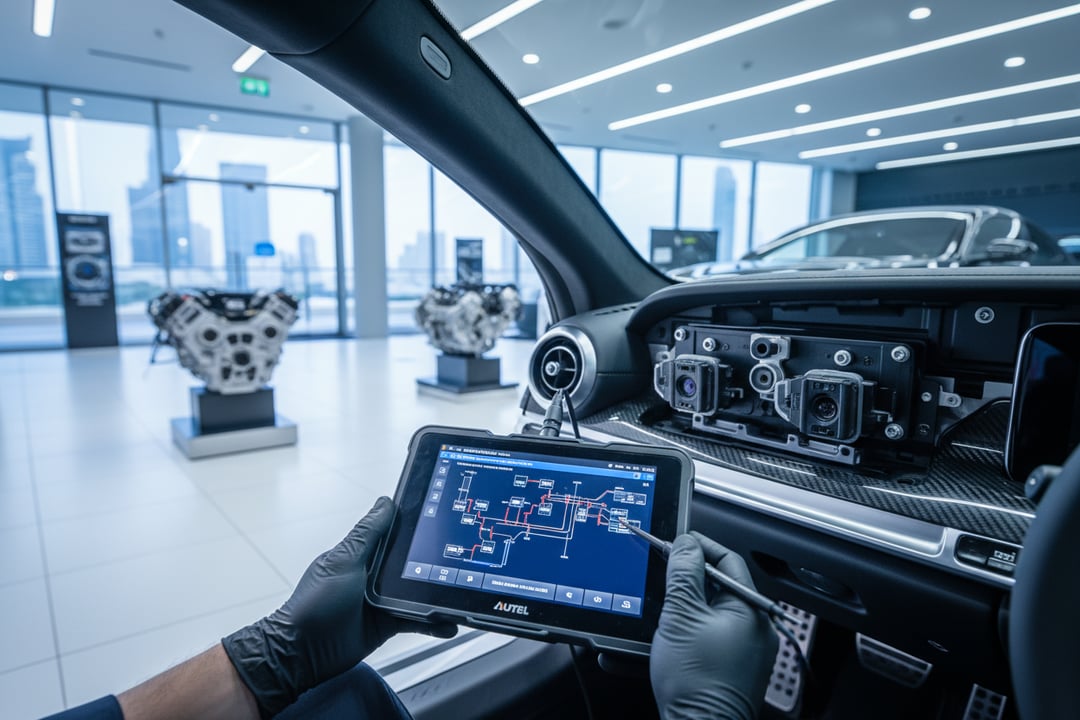
Inspectors verify the readiness status of all airbags, including front, side, curtain, and knee bolsters. A fault in this circuit can stem from a faulty sensor, a disconnected wiring harness, or a computer error within the Airbag Control Module. If an airbag fails to deploy during a high-velocity impact, the force of the collision can cause serious or fatal injuries. An AutoFay inspector uses an OBD scan to retrieve specific fault codes related to the SRS, revealing whether a safety feature is dormant or completely inoperative.
- Front Airbags: Checked for deployment readiness and impact sensor functionality.
- Side Airbags: Verified for seat-mounted sensors and curtain deployment mechanisms.
- Knee Bolsters: Inspected for connection to the steering column electronics.
Backup Camera and Parking Sensor Functionality
The backup camera has become a standard feature in almost all modern models, serving as the driver's eyes when reversing. It provides a live feed of the area behind the vehicle, compensating for blind spots that mirrors cannot cover. A degraded or non-functional camera renders this safety aid useless, forcing the driver to rely solely on physical mirrors and rear visibility.
Inspectors test the camera's resolution and clarity, checking for internal damage to the lens or sensor. If the camera feed is grainy, delayed, or frozen, the driver may misjudge the distance of the vehicle from walls or pedestrians. Similarly, the parking sensors—usually located in the bumpers—emit ultrasonic pulses to detect obstacles. When these sensors are damaged or covered in debris, the system fails to alert the driver to objects in tight parking spaces. This failure significantly increases the risk of ground damage and, in urban environments, colliding with other vehicles or pedestrians.
Blind Spot Detection (BSD) and Lane Assist
Blind Spot Detection systems use radar or cameras to monitor the areas alongside the vehicle that the side mirrors cannot see. These systems alert the driver via a visual indicator on the side mirror or a physical warning if a vehicle enters the blind zone during a lane change attempt. Reliance on this technology is dangerous; if the system malfunctions, the driver remains unaware of changing traffic conditions.
A malfunction in the Blind Spot Detection module can result from a failed radar sensor, a software glitch, or a fuse issue. If the warning light illuminates but the system does not detect a vehicle, the driver may initiate a dangerous lane change. Furthermore, if the system is overly sensitive and triggers false alarms, the driver may ignore valid warnings in the future. A professional inspection confirms whether the radar sensors are calibrated correctly and responding to external objects as designed.
Diagnostic Connectivity and Warning Lights
Safety systems do not operate in isolation; they are integrated into the vehicle's central computer, the Engine Control Unit (ECU). When a sensor fails, the computer logs a specific code that defines the fault. Ignoring these codes can lead to cascading failures, where the breakdown of one safety system compromises the entire vehicle's operational integrity.
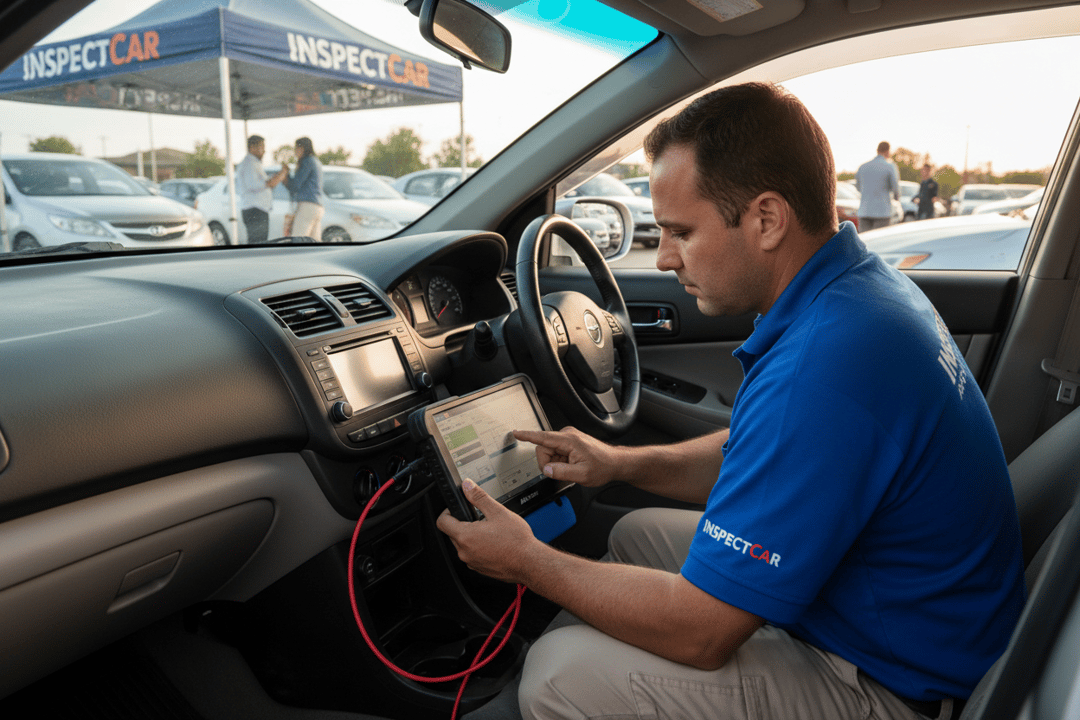
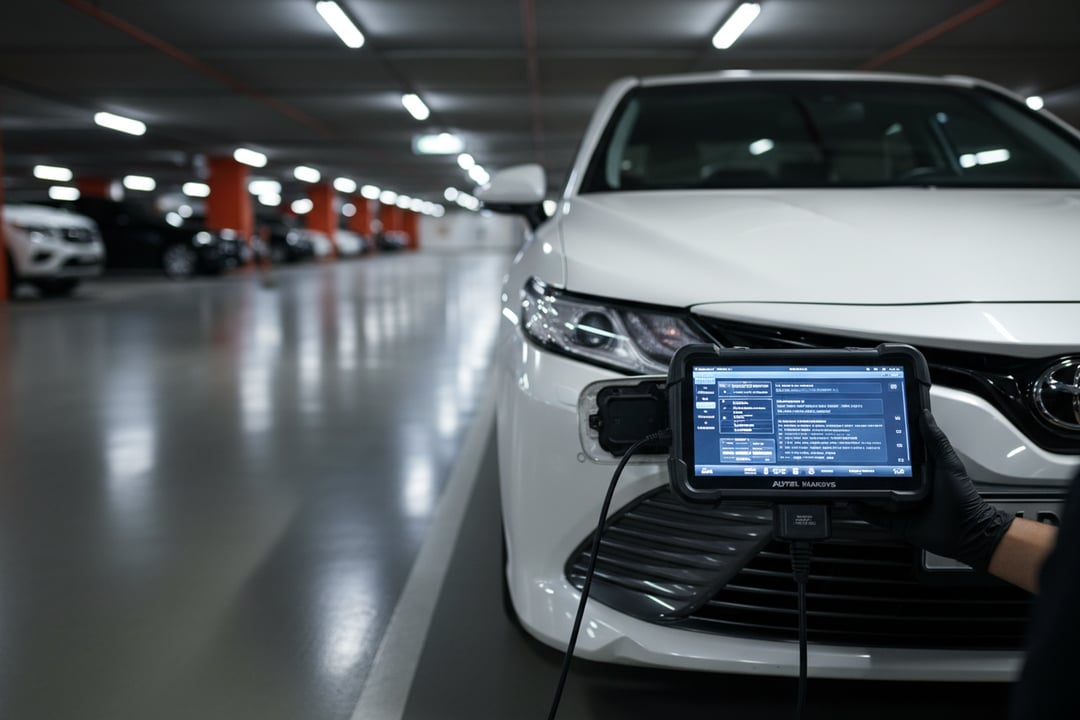
Our inspectors connect a diagnostic scanner to the vehicle's OBD port to read these hidden error logs. This process is essential for uncovering issues that are not immediately visible under the hood. The scan reveals whether the check engine light is on for a minor emissions issue or a critical safety fault. AutoFay offers a Computer Diagnostic service for AED 99, providing a snapshot of the vehicle's electronic health and ensuring that no safety-related codes have been cleared by a previous seller.
The Comprehensive Safety Assessment
While electronics are vital, physical safety components are equally important. A vehicle with perfect airbags and cameras but worn tires or a compromised braking system is a liability on the road. A comprehensive inspection looks beyond the dashboard to evaluate the mechanical health of the vehicle.
Our inspections evaluate the braking system by measuring the thickness of the brake pads and rotors, which determines the stopping distance. We also examine the tires for manufacturing age and tread depth, as hard tires lose grip on wet roads. Additionally, the suspension system is checked for leaks and play, which affects the vehicle's stability. For a full picture of the vehicle's condition, the Comprehensive package at AED 299 covers all these mechanical points alongside the electronic safety systems, providing a detailed report with HD photos.
| Inspection Package | Core Focus | Safety & Electronics Check |
|---|---|---|
| Computer Diagnostic (AED 99) | Engine & Transmission Codes | Checks airbag readiness, ABS faults, and sensor malfunctions. |
| Body & Computer (AED 250) | Structure & Paint Quality | Detects frame damage that may have triggered sensor errors. |
| Comprehensive (AED 299) | Full Mechanical Overview | Verifies brakes, tires, suspension, and all active safety modules. |
Trust in a vehicle's safety features requires professional verification. A malfunctioning backup camera or blind spot detector is not just an inconvenience; it is a potential liability that can result in insurance claims or personal injury. Relying on visual checks alone is insufficient in the complexities of modern automotive engineering. Don't leave these critical systems to chance.
AutoFay inspects 410+ checkpoints with HD photos and PDF report. Book at autofay.ae or call +971542584458


0 Comments
No comments yet. Be the first to share your thoughts!