

The UAE landscape, ranging from coastal highways to desert dunes, places unique mechanical stress on vehicles. A used BMW purchased for a road trip represents a blend of luxury and performance, but it also carries a history of ownership that might include harsh climates and specific driving habits. Before embarking on a long-distance journey, a vehicle must withstand sustained high speeds and fluctuating temperatures. Skipping a thorough pre-trip inspection risks mechanical breakdown in remote areas, resulting in towing fees and extended downtime. Proper preparation ensures the vehicle meets the demands of the open road while protecting the driver from unexpected mechanical failures.
Common BMW Faults in the UAE Climate
BMW engines are renowned for their performance, but they are susceptible to specific failures in the Gulf region. The intense summer heat accelerates the degradation of rubber components, such as cooling hoses and belts. A cracked coolant hose during a desert drive can lead to immediate engine overheating, forcing a roadside stop. Additionally, transmission fluid (ATF) breaks down faster under high loads, leading to slipping or harsh shifting. Independent mechanics often report a high frequency of high-pressure fuel pump failures in BMWs from the F30 and F35 generations, especially those driven in stop-and-go traffic.
- Transmission Leaks: Oil and transmission fluid leaks are prevalent in older BMWs. A slow drip may seem harmless, but a sudden loss of fluid in the middle of a journey renders the vehicle undrivable.
- High-Pressure Fuel Pump (HPFP) Failure: This component is critical for the fuel rail pressure. Failure often results in a sudden loss of power while accelerating or a check engine light, leading to a tow truck rather than a roadside fix.
- Cooling System Degradation: Radiator hoses and water pumps in the GCC market often fail prematurely. A burst hose results in coolant loss, leading to engine overheating and potential cylinder head damage if not addressed immediately.
Model-Specific Road Trip Risks
Different BMW generations possess distinct vulnerabilities that influence road trip safety. The E60 5 Series is famous for its cooling system complexity, specifically the plastic thermostat housings that can crack under thermal stress. For the E90 3 Series, the oil pan gasket and the carbon buildup on intake valves are common issues that affect engine performance. Drivers of M-Sport models often encounter premature wear on the adaptive suspension bushings, which alters the handling characteristics of the car.
- E60 (5 Series): Inspect the thermostat housing and coolant pipes. These components are prone to cracking due to thermal cycling, causing coolant leaks that lead to overheating.
- E90 (3 Series): Pay close attention to the oil pan gasket and the heat shields. Oil leaks can be difficult to spot and may drip onto the hot exhaust, creating a fire hazard.
- F30/F35 (3 Series): These models frequently suffer from high-pressure fuel pump failures. Check for error codes related to fuel rail pressure during the pre-trip diagnostic.
- F10/F15 (5 Series): The dual-mass flywheel can fail, causing a vibration through the steering wheel. This noise is a precursor to drivetrain failure requiring immediate repair.
AutoFay Inspection Categories
A professional inspection covers the vehicle from bumper to bumper to identify hidden defects. Technical knowledge is required to differentiate between normal wear and structural damage. Inspectors look for signs of previous accidents that may compromise the vehicle's safety or structural integrity. Understanding the specific checkpoints helps buyers identify the true value of a pre-owned luxury vehicle before it hits the highway.
| Category | Inspection Focus |
|---|---|
| Body & Paint | Panel-by-panel analysis to determine if panels are original, repainted, or repaired. Checks for overspray and paint thickness variations. |
| Frame & Structure | Examination of the unibody rails, pillars, and floor pan for collision damage or rust corrosion affecting structural rigidity. |
| Engine | Visual assessment of engine mounts, oil leaks, and exhaust sound. Checks for blue smoke indicating burning oil. |
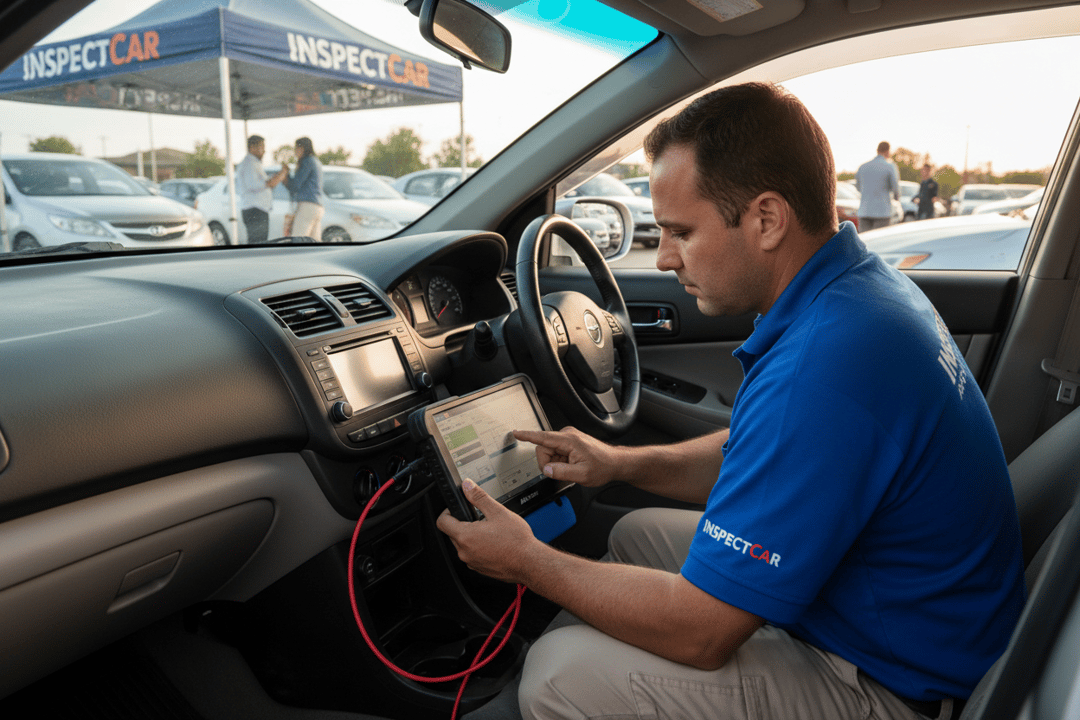
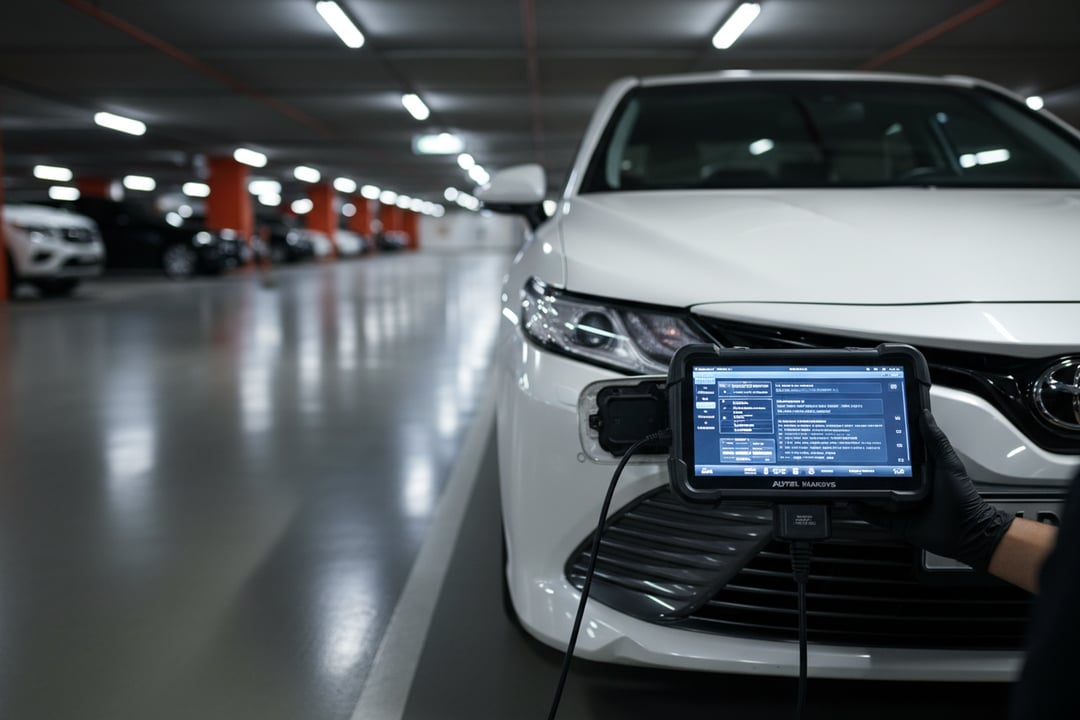
| OBD Scan | Connects to the vehicle's computer to read error codes for the engine, transmission, ABS, and airbag systems. |
| Brakes | Measures brake pad thickness and checks disc condition. Rates the wear level to ensure stopping distance meets safety standards. |
| Suspension & Tires | Checks tire manufacturing age (rubber degrades over time) and inspects shocks and struts for leakage or failure. |
| Fluids | Checks the level and physical condition of engine oil, coolant, brake fluid, and steering fluid. |
| Road Test | Live driving assessment evaluating acceleration, braking performance, gear shifts, and road noise/vibration. |
Prioritizing the Road Test
The road test provides real-world data that static inspection cannot reveal. It highlights suspension behavior on uneven terrain and transmission response during acceleration. A silent vehicle on a lot may develop a noise or vibration once the load is applied during a highway cruise. Inspectors must listen for abnormal bearing noises and feel for steering pull or clunking over speed bumps.
- Transmission Performance: Verify the transmission shifts smoothly between gears without hesitation or jerking. Slipping gears indicate deep transmission failure.
- Steering Precision: Test the alignment and steering components. A wandering steering wheel indicates worn tie rods or bushings.
- Braking Response: Assess the brake pedal feel. A soft or spongy pedal indicates air in the lines or worn brake fluid, compromising stopping power.
- Engine Sound: Listen for ticking noises at startup, which may indicate a failing low-pressure fuel pump or valvetrain issues.
Diagnostic Packages for Peace of Mind
Choosing the correct level of inspection depends on the vehicle's condition and the buyer's budget. A comprehensive evaluation uses advanced tools to uncover hidden electronic faults. These packages provide a detailed report with HD photos and a PDF document outlining every finding.
- Computer Diagnostic (AED 99): Connects to the vehicle’s onboard computer to read and clear error codes related to the engine, transmission, ABS, and airbag systems. This identifies electrical faults preventing the car from starting or running correctly.
- Body & Computer (AED 250): Combines a visual inspection of the bodywork and paint quality with a full engine diagnostic scan. This covers panel-by-panel checks for repaints and underlying engine electronic issues.
- Comprehensive (AED 299): The most thorough option including a structural frame check, engine sound analysis, brake pad percentage rating, fluid condition, and a live road test.
Ensuring a used BMW is roadworthy requires a systematic approach to inspection. Addressing common faults like cooling system leaks and transmission issues before departure prevents stranded situations. For a detailed evaluation, AutoFay inspects 410+ checkpoints with HD photos and PDF report. Book at autofay.ae or call +971542584458.


0 Comments
No comments yet. Be the first to share your thoughts!