

The driving dynamics of an SUV differ significantly from sedans or hatchbacks. High center of gravity, increased weight, and complex drivetrain configurations mean that the road test is the most critical phase of any pre-purchase inspection in the UAE. Unlike a static visual scan, a road test reveals the vehicle's true mechanical health under load. Skipping this step can lead to purchasing a vehicle with hidden suspension wear or transmission defects that are not visible to the naked eye.
The Criticality of a Road Test in the UAE Desert Climate
The UAE environment presents unique challenges for vehicle components, particularly heat, dust, and vibration. An SUV subjected to daily highway commutes and occasional off-road excursions undergoes immense stress on its chassis and drivetrain. A professional road test must simulate real-world driving conditions to ensure the vehicle can handle the load without compromising safety. A vehicle may look pristine in the showroom lot, but if the steering wheel shakes or the brakes fade after a short distance, the vehicle is unsafe for operation.
During the inspection, the inspector evaluates how the vehicle interacts with the road surface. This includes checking for abnormal noises, vibrations, and pull to one side. These symptoms often indicate underlying issues with the suspension geometry or tire alignment, which are common after hitting speed bumps or potholes on UAE highways.
Acceleration Dynamics: Assessing Power Delivery
Acceleration is the first indicator of engine and transmission health. A used SUV should deliver power smoothly and consistently. When the accelerator pedal is pressed, the vehicle should respond immediately without hesitation, jerking, or "slipping." Jerky acceleration often points to worn clutch packs in manual transmissions or slipping bands in automatic transmissions, which can lead to costly repairs if not identified early.
Listen for unusual sounds during acceleration, such as a whining or grinding noise from the engine bay. This may indicate a failing turbocharger or worn bearings. Additionally, the inspector checks for excessive smoke from the exhaust. Blue smoke suggests burning oil, while black smoke indicates a rich fuel mixture or sensor failure. Addressing these issues early prevents further damage to the catalytic converter and oxygen sensors.
- Hesitation or Stuttering: Indicates potential transmission slippage or fuel injector clogging.
- Knocking Sound: Suggests internal engine damage, such as worn piston rings or rod bearings.
- Excessive Smoke: Blue smoke = burning oil; Black smoke = fuel delivery issues.
Braking Performance: Stopping Power Under Load
Braking is the most critical safety system in any vehicle, especially heavier SUVs. The test involves assessing pedal feel, stopping distance, and brake balance. A firm, responsive brake pedal indicates healthy brake lines and a functioning master cylinder. If the pedal sinks to the floor or feels spongy, it could indicate air in the brake lines or a leaking master cylinder, which poses an immediate safety hazard.
In a heavy SUV, the brakes work harder to decelerate the vehicle. Inspectors check for vibrations in the brake pedal or steering wheel, which usually signify warped rotors. They also measure brake pad thickness. If pads are worn below 3mm, replacement is necessary immediately to prevent damaging the rotors. A dragging brake can cause the vehicle to overheat, leading to brake fluid boil-over and complete loss of stopping power.
Steering Feel and Handling: The Center of Control
Effective steering is essential for maintaining control, particularly at highway speeds. A road test evaluates "play" in the steering wheel. Excessive play—where the wheel moves several inches before the tires respond—indicates worn tie rod ends, pitman arms, or ball joints. This condition makes the vehicle difficult to maneuver and can lead to the steering wheel suddenly snapping in the opposite direction.
Inspectors also test for "pulling," where the vehicle drifts to the left or right even on a straight road. This is often caused by uneven tire pressure, mismatched tire tread depth, or worn suspension components like struts or control arms. Understeer (the front wheels sliding) is common in front-wheel-drive SUVs, while rear-wheel-drive variants may exhibit oversteer. Identifying these handling traits helps the buyer understand the vehicle's stability characteristics.
Integration with Comprehensive Inspection Packages
A road test does not exist in isolation; it must be correlated with static inspection data. For instance, a vibration felt in the steering wheel during acceleration might be caused by a worn engine mount, which is a separate category in the inspection checklist. To ensure all variables are considered, a comprehensive approach to inspection is necessary.
Professional inspection services categorize checks into 25 distinct areas to cover every aspect of vehicle health. The road test results are cross-referenced with fluid levels, tire condition, and frame integrity. If the road test reveals suspension issues, the inspector checks the corresponding mount points and bushings to confirm the extent of the damage.
| Inspection Category | Relevance to Road Test |
|---|---|
| Engine & Drivetrain | Directly affects acceleration and gear shifting smoothness. |
| Brakes | Primary safety metric; determines stopping power and pedal feel. |
| Suspension | Affects steering response, ride comfort, and handling stability. |
| Tires | Impact noise and traction during acceleration and braking. |
The "AutoFay" Process: On-Location Expertise
Conducting a thorough road test requires specialized equipment and an on-location setup that brings the inspection to the seller. Relying on a seller’s word regarding performance is risky. A professional inspection ensures an unbiased assessment of the vehicle's condition. The process involves over 410+ checkpoints, covering everything from body paint integrity to computer diagnostics.
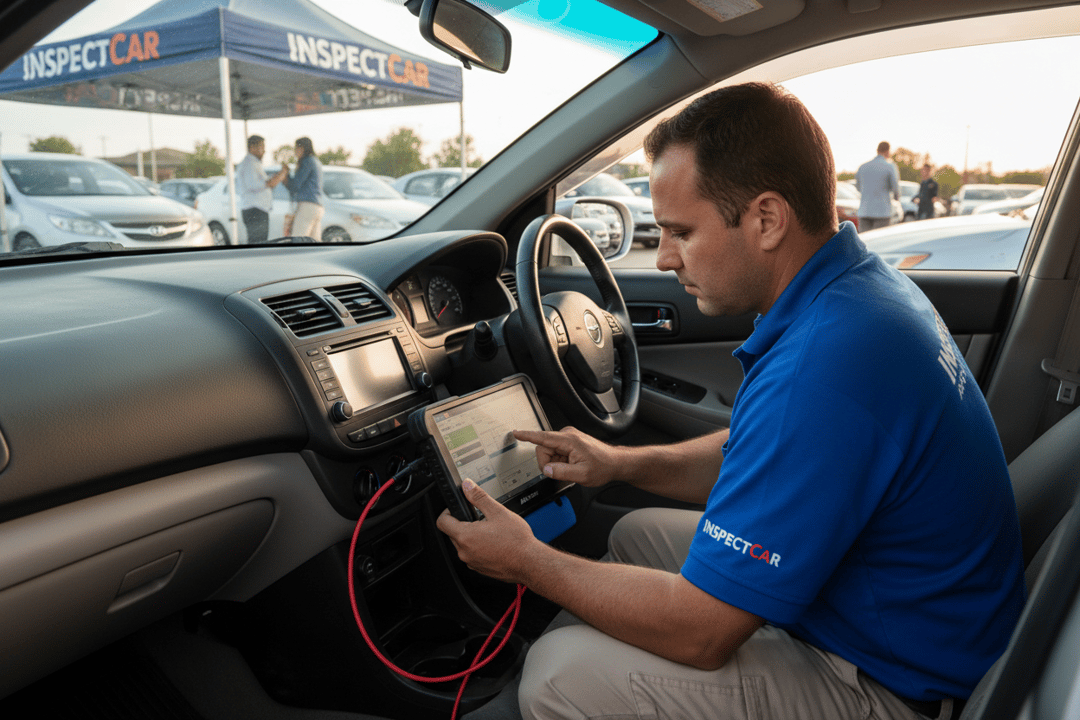
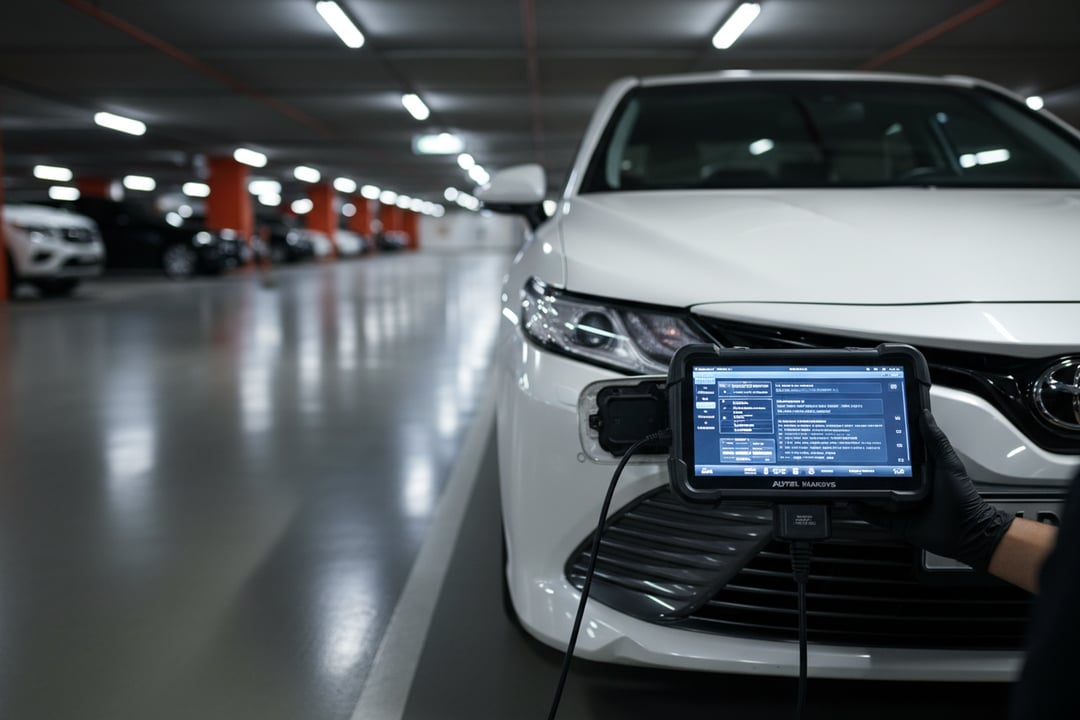
Modern inspection goes beyond the physical test drive. Utilizing an OBD scan tool is essential to read hidden error codes in the engine, transmission, ABS, and airbag systems. These codes often illuminate the check engine light on the dashboard, masking underlying faults that only a scan can reveal. Combining the road test data with this digital report provides a complete picture of the vehicle's history.
Different inspection levels cater to specific needs. For a quick engine check, a Computer Diagnostic service costs AED 99. For a detailed review of the vehicle's condition, a Body & Computer inspection is available for AED 250. For the most thorough assessment, a Comprehensive package at AED 299 covers every major system and provides a detailed report suitable for negotiation or warranty claims.
Conclusion
The road test is the ultimate litmus test for a used SUV. It exposes the realities of vehicle wear that a visual inspection cannot. From the immediate feedback of acceleration and braking to the subtle nuances of steering feel, every movement of the vehicle tells a story about its mechanical heritage. Ignoring these signs leads to unexpected breakdowns and safety risks.
Engaging a professional on-location inspection service ensures that every checkpoint, including the road test, is conducted with rigor and expertise. The resulting HD photos and detailed PDF report serve as an objective record of the vehicle's findings. Do not leave the safety of your journey to chance; verify the performance of the vehicle before you drive it off the lot.
AutoFay inspects 410+ checkpoints with HD photos and PDF report. Book at autofay.ae or call +971542584458


0 Comments
No comments yet. Be the first to share your thoughts!