


When evaluating a pre-owned sedan in the UAE market, the visual inspection of panels and paint often dominates the conversation. However, the true mechanical integrity of a vehicle is revealed during the road test. Acceleration, braking, and steering feel serve as vital indicators of the drivetrain, chassis, and chassis control systems. A sedan's stability relies heavily on the synchronization of these three systems. Failure in one area often compromises the safety and longevity of the others. Therefore, a rigorous road test is indispensable for identifying latent defects before they escalate into hazardous failures or expensive structural repairs.
Measuring Acceleration: The Engine-Transmission Interface
Acceleration is not merely about speed; it is a gauge of internal combustion efficiency and drivetrain synchronization. During a road test, acceleration reveals the health of the catalytic converter, the exhaust oxygen sensors, and the transmission’s torque converter. A sedan that hesitates to build speed or stumbles under light acceleration typically indicates an issue with the engine management system or a clogged catalytic converter.
- RPM Lag: Noticeable delay between pressing the accelerator and engine response suggests transmission slippage or a failing torque converter.
- Exhaust Smoke: Visual inspection during acceleration helps distinguish between normal condensation and unburnt fuel or oil burning, which indicates engine wear.
- Transmission Hesitation: Vehicles with automatic transmissions should upshift smoothly. Scudding or jerking movements indicate clutches or bands within the transmission are worn.
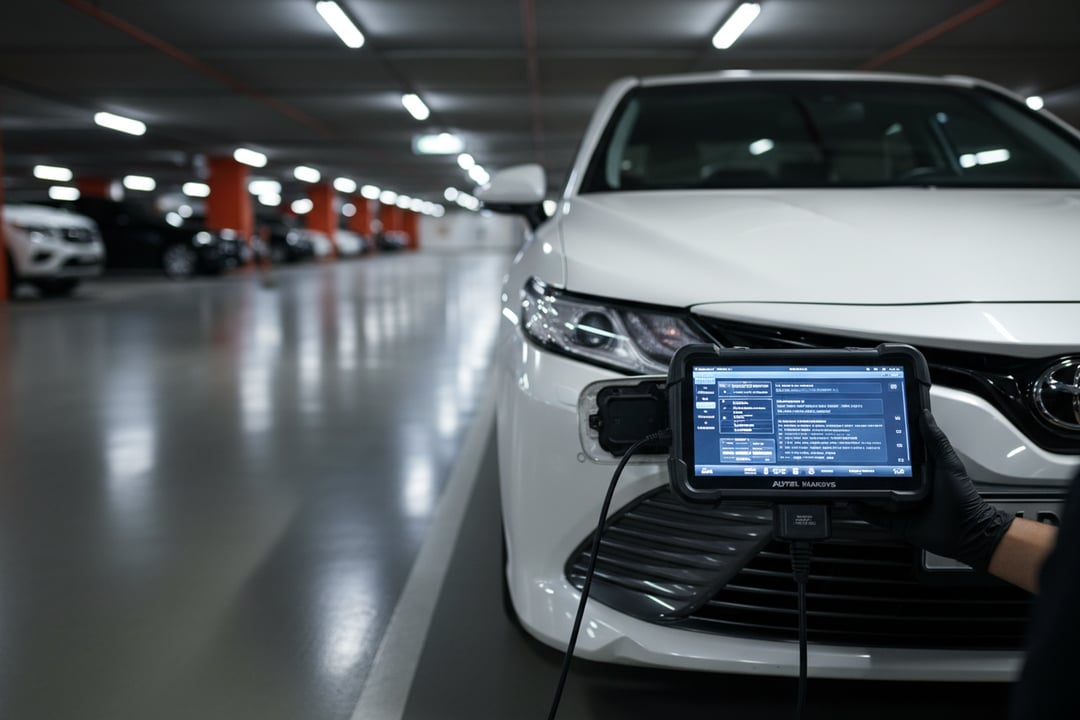
Ignoring acceleration anomalies can lead to catastrophic transmission failure and safety hazards at highway speeds. The cost of a transmission rebuild or replacement far exceeds the cost of a diagnostic check. When conducting a comprehensive inspection, technicians analyze these responses alongside an OBD scan to pinpoint sensor faults before physical damage occurs.
Braking Performance: Pedal Feel and Stability
Braking performance dictates the margin between safety and collision. In a sedan, the braking system must handle the vehicle's mass with precision and predictability. A road test evaluates the hydraulic pressure, the ABS module function, and the condition of the brake pads and rotors. The driver must assess three specific characteristics during the test: pedal firmness, stopping distance consistency, and noise levels.
- Pedal Sponginess: A brake pedal that sinks slowly to the floor indicates air bubbles in the lines or a master cylinder seal failure.
- Brake Fade: If the pedal becomes hard or soft after repeated braking in stop-and-go traffic, the brake fluid may be boiling due to overheating or moisture contamination.
- ABS Activation: During an emergency stop, the pedal should pulse slightly; however, a constant vibration or lack of response from the ABS module suggests a malfunction.
Compromised brakes can result in extended stopping distances, increasing the risk of rear-end collisions in dense traffic. Inspectors specifically check the brake pad percentage rating, as worn pads not only reduce braking efficiency but can also damage the calipers and rotors instantly. A lack of braking power is a safety violation that renders a vehicle roadworthy for sale under UAE regulations.
Steering Feel and Vibration Analysis
The steering wheel is the primary interface between the driver and the vehicle’s handling dynamics. Steering feel is judged by on-center stability, return-to-center response, and the presence of vibration or noise. Sedans, with their longer wheelbases, are particularly sensitive to alignment issues such as camber and caster wear. A vehicle that drifts or requires constant steering correction indicates a misalignment or worn suspension components.
Vibrations transmitted through the steering column at highway speeds usually point to wheel balancing issues or wheel bearing wear. Clunking noises when turning the steering wheel at low speeds suggest worn ball joints or tie rod ends. If these components fail, the front wheels can detach from the vehicle, leading to total loss of control. A professional inspection checks the suspension bushings and ball joints for play, which is impossible to detect without physical road testing.
The Suspension’s Role in Dynamics
Suspension components do not operate in isolation; they directly influence acceleration, braking, and steering. Worn shock absorbers or struts can cause the vehicle to "squat" excessively during acceleration, reducing traction and stability. Similarly, bad shocks can cause the brake pedal to pulse during hard braking due to uneven weight transfer. Inspectors examine the shock absorbers for leaking fluid and the springs for rust or sagging.
Uneven tire wear patterns, often discovered during the road test, provide a roadmap of the suspension's health. Feathered edges or cupping patterns indicate misalignment or worn shocks. Addressing suspension issues promptly ensures that the driver maintains optimal contact with the road surface, which is critical for both fuel economy and safety.
The Professional Approach: Why DIY Fails
While a layperson can observe whether a car accelerates or stops, they lack the technical training to diagnose the root cause. For example, a steering pull could be caused by a simple tire pressure imbalance or a complex front-end alignment issue. Distinguishing between these requires specialized equipment and experience. Home inspections often miss nuances like "dead spots" in the steering rack or delayed transmission engagement.
Professional inspection services utilize a standardized framework to assess these variables. They map out the vehicle's performance against 250+ specific checkpoints across 25 categories. This structured approach ensures that no mechanical defect goes unnoticed. By leveraging professional data, buyers can understand the severity of a vehicle's mechanical state rather than relying on subjective impressions.
| Road Test Observation | Potential Mechanical Cause | Risk Assessment |
|---|---|---|
| Hesitation during acceleration across all gears | Clogged catalytic converter or transmission slippage | Engine failure or expensive transmission rebuild required |
| Spongy brake pedal with low fluid levels | td>Master cylinder failure or air in hydraulic linesComplete loss of braking ability in an emergency | |
| Steering wheel vibration at highway speeds+ | Unbalanced wheels or worn wheel bearings | Tire blowout or loss of steering control at speed |
| Vehicle pulls strongly to the left or right | Front-end alignment issues or tire separation | td>Accident risk due to inability to drive in a straight line
Investing in a professional inspection is the most effective way to mitigate these risks. While a basic computer diagnostic scan for engine and transmission faults can be performed for AED 99, it does not cover the physical road dynamics of the chassis. For a more thorough assessment of body structure, frame integrity, and comprehensive road performance, the Body & Computer package at AED 250 is recommended.
For full assurance, the Comprehensive inspection package at AED 299 covers all critical systems. This includes a full-body scan, frame inspection, suspension checks, fluid analysis, and the detailed road test required to certify the vehicle's safety. This service is the inspector arrives at the vehicle across all seven Emirates.
AutoFay inspects 410+ checkpoints with HD photos and PDF report. Book at autofay.ae or call +971542584458




0 Comments
No comments yet. Be the first to share your thoughts!