

Purchasing a pre-owned luxury vehicle in the United Arab Emirates requires a rigorous approach to validation. High-performance vehicles often feature complex engineering that differs significantly from standard automobiles. A simple visual inspection is insufficient to uncover latent mechanical faults or performance degradation. The road test serves as the critical "live" phase of the inspection process, moving the vehicle from a static state to one of dynamic stress.
In the UAE market, where vehicles experience high speeds and extreme heat, specific systems undergo accelerated wear. The acceleration, braking, and steering mechanics are the most vulnerable to these conditions. Understanding what to look for during a drive test ensures the buyer avoids the hidden liabilities associated with high-end machinery.
The Acceleration Test: Assessing Torque and Transmission Response
Acceleration is the primary indicator of engine health and transmission efficiency. In luxury vehicles, this is often governed by complex turbocharging systems and dual-clutch or multi-speed automatic gearboxes. A vehicle that hesitates or lacks power during acceleration rarely suffers from a simple fuel issue; it usually points to a failing turbocharger, a clogged air intake, or a transmission solenoid malfunction.
During a professional road test, the inspector listens for the "shudder" associated with transmission slipping. A smooth, linear power delivery is expected from modern luxury engines. If the vehicle surges forward erratically, it indicates air or fuel delivery inconsistencies. Furthermore, the inspector monitors the exhaust note during acceleration. A sudden change in the sound profile—such as a bluish tint to the exhaust smoke—signals excessive oil burning or a blown piston ring, which requires immediate engine intervention.
- Turbocharger Lag Check: Modern luxury diesels and petrol engines use turbos to generate boost. Unusual lag or a whistling sound upon acceleration suggests a leak in the intercooler or a failing turbo bearing.
- Transmission Shift Points: The transmission must shift gears smoothly without jerking or holding gears too long. Stuttering during gear changes indicates worn clutches or solenoid failure.
- Engine Mounts: Excessive vibration felt through the steering wheel or seat during acceleration reveals worn engine and transmission mounts, which can lead to damage to other chassis components.
Braking Dynamics: Beyond Simple Stopping Power
Braking systems in luxury vehicles are often the most technologically advanced components, incorporating regenerative braking, anti-lock braking systems (ABS), and electronic stability control. A road test must focus on the pedal feel and the consistency of stopping power. A spongy or soft brake pedal usually indicates air trapped in the hydraulic lines or contaminated brake fluid due to moisture absorption.
The consequences of ignoring a failing braking system extend beyond safety. Worn brake pads generate high heat, which can warp rotors, leading to a pulsing sensation in the pedal. This degradation accelerates the wear of the suspension components, as the vehicle fights against the braking forces. In the UAE context, driving with compromised brakes on highways like Sheikh Zayed Road poses a significant risk to life and property.
- Brake Pad Thickness: Inspectors assess the remaining material on the pads. A rating below 30% indicates immediate replacement is necessary to prevent rotor damage.
- Brake Fluid Condition: The fluid should be clear and golden. Dark, brown fluid indicates overheating and water contamination, compromising the safety of the ABS system.
- ABS Function: The brake pedal should pulse slightly under hard braking to activate the ABS. If the pedal sinks or the light remains on, the ABS module or wheel speed sensors require diagnostic attention.
Steering Precision and Feedback
Steering feel is the primary communication link between the driver and the road. Luxury vehicles often utilize Electric Power Steering (EPS) or advanced hydraulic systems that are calibrated for comfort. A road test must identify any "play" in the steering wheel, which indicates worn tie rod ends or ball joints. Excessive play reduces the vehicle's responsiveness and can lead to a loss of control during emergency maneuvers.
Vibration through the steering column at highway speeds is another critical warning sign. This vibration typically points to out-of-round tires, warped brake rotors, or worn suspension bushings. In a properly functioning luxury vehicle, the steering should return to center autonomously. A reluctance to return to center suggests issues with the steering rack or alignment geometry.
Inspectors also evaluate the steering assist mapping in EPS-equipped vehicles. If the steering feels "heavy" at low speeds but lightens up too abruptly at high speeds, the electronic calibration may be drifting or the sensor is faulty. This affects the vehicle's handling characteristics and safety.
Suspension and Noise, Vibration, Harshness (NVH)
The suspension system in luxury cars is designed to isolate the cabin from rough road textures. However, road tests reveal the condition of these components through Noise, Vibration, and Harshness (NVH). A knocking sound over bumps indicates worn shock absorbers or struts. If the vehicle "floats" or leans excessively during cornering, the springs may be sagging or the shocks have lost damping capacity.
Furthermore, the suspension test assesses the condition of the chassis rails and floor pans. Suspension failure is often a secondary symptom of prior collision damage. A bent chassis rail can cause alignment issues that mimic suspension wear, leading to uneven tire wear and steering drift. The inspector listens for metallic clunking sounds during suspension travel to pinpoint specific component failures.
The Role of Computer Diagnostics in the Road Test
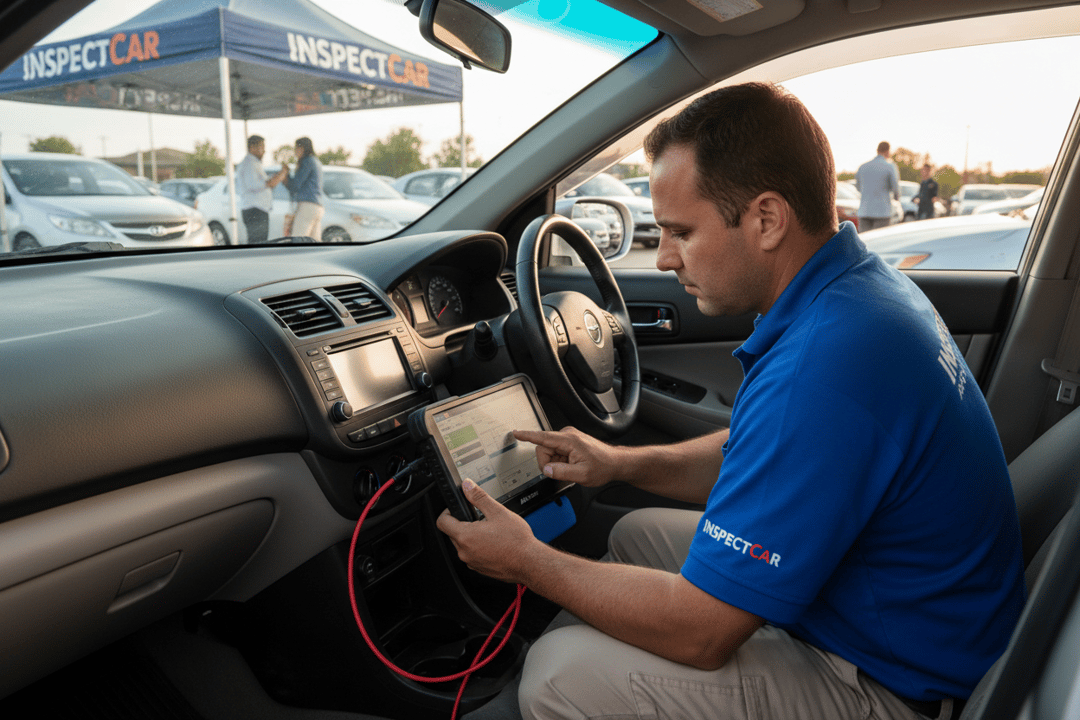
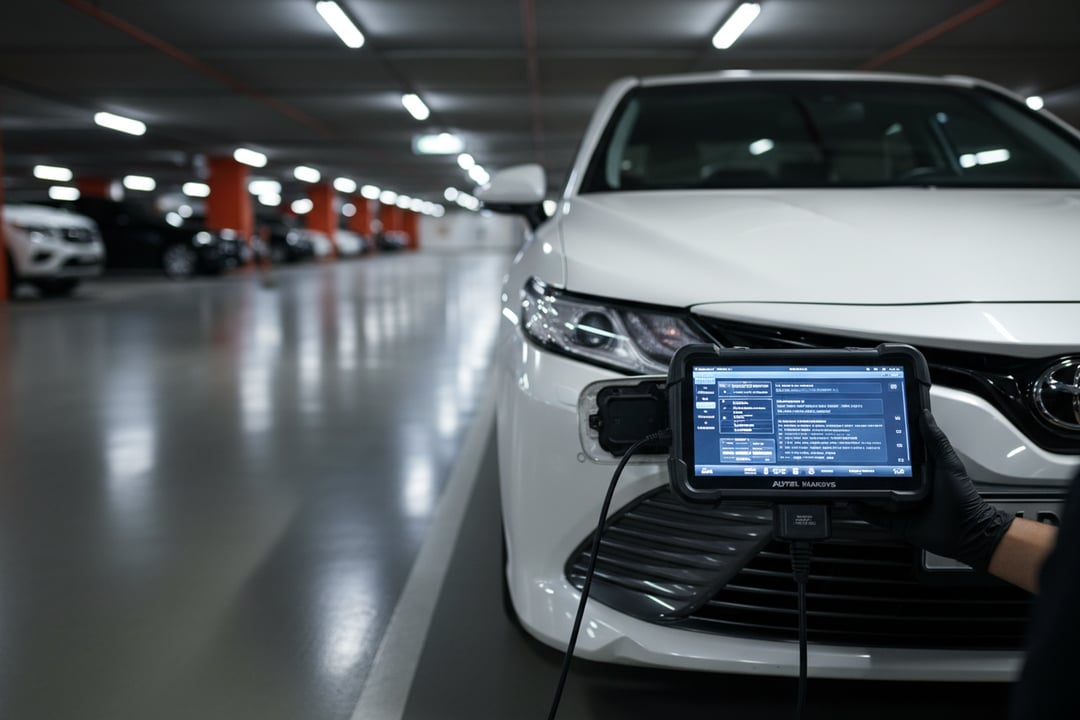
Mechanical checks are vital, but modern luxury vehicles rely heavily on electronic control units (ECUs) to manage performance. A road test cannot be validated without a corresponding diagnostic scan. The onboard computer stores error codes that indicate sensor malfunctions or system failures that are not immediately visible during a drive.
At AutoFay, we integrate Computer Diagnostics into our comprehensive inspection process. This step reveals hidden faults in the engine, transmission, airbag, and ABS systems. For example, a road test might show normal acceleration, but the diagnostic scan could reveal a failing oxygen sensor that will eventually trigger the check engine light and reduce fuel efficiency.
Inspectors categorize these findings to provide a clear picture of the vehicle's health. The severity of the mechanical symptoms usually correlates with the electronic faults detected. Prioritizing electronic repairs can prevent catastrophic mechanical failures later on.
| Inspection Package | Key Inclusions | Diagnostic Level |
|---|---|---|
| Computer Diagnostic | Engine & Transmission Code Scanning | Basic |
| Body & Computer | Panel-by-panel Paint Check + OBD Scan | Advanced |
| Comprehensive | Full 410+ Checkpoints, Road Test, Fluids | Complete |
Choosing the right inspection package determines the depth of the road test. The Body & Computer package is ideal for spotting cosmetic issues and electronic faults. The Comprehensive package provides a full 410+ checkpoint, covering the road test, frame integrity, and fluid conditions.
Professional Methodology and Service Coverage
A successful road test requires a controlled environment and a trained eye. The vehicle must be driven on varied road surfaces to simulate real-world conditions. In the UAE, this includes high-speed highways, city traffic, and undulating arterial roads. Inspector comes to the vehicle providers like AutoFay bring this expertise directly to the buyer, conducting the inspection at the location of the vehicle.
We operate across all seven Emirates, ensuring that whether the vehicle is in Dubai, Abu Dhabi, or the Northern Emirates, a professional assessment is accessible. The service covers specific categories including suspension, tires, and fluids. By analyzing the condition of brake pads, fluid levels, and tire manufacturing dates, we provide a holistic view of the vehicle's maintenance history.
Documentation is the final output of the road test. A detailed PDF report with HD photos confirms every finding. This record serves as a defense against future disputes regarding the vehicle's condition. The inspector notes the specific state of the steering, braking, and acceleration systems during the test to create an immutable record of the vehicle's performance at the time of inspection.
AutoFay inspects 410+ checkpoints with HD photos and PDF report. Book at autofay.ae or call +971542584458.


0 Comments
No comments yet. Be the first to share your thoughts!