

The Range Rover represents a specific category in the UAE market — vehicles that combine genuine off-road capability with luxury that matches the best sedans. This dual nature means the inspection must cover both rugged mechanical systems and sophisticated electronic luxury features. A Range Rover that excels in one area but fails in the other can be an expensive ownership experience.
Air Suspension: The Defining System
Every Range Rover uses air suspension, making this the single most important inspection category for the model. AutoFay's suspension inspection checks air suspension status — Working, Leaking, or Not Working. A Range Rover that sits level when parked but sags on one corner after sitting overnight has a slow leak in that corner's air spring. The air springs are rubber bellows that crack and deteriorate in UAE heat, losing their ability to hold air pressure.
The air compressor is assessed indirectly through noise at startup and ride height behavior. A compressor that runs for more than 30 seconds after the vehicle is started is compensating for a leak somewhere in the system. The road test reveals air suspension quality dynamically — ride comfort should rate as Comfortable on a properly functioning system. A rating of Bouncy or Harsh indicates the air springs or dampers have lost their capability. Ride height changes during the road test — a system that drops at highway speed and struggles to return to normal height when stopped has a compressor or valve block approaching failure.
Electronics: More Systems, More Potential Issues
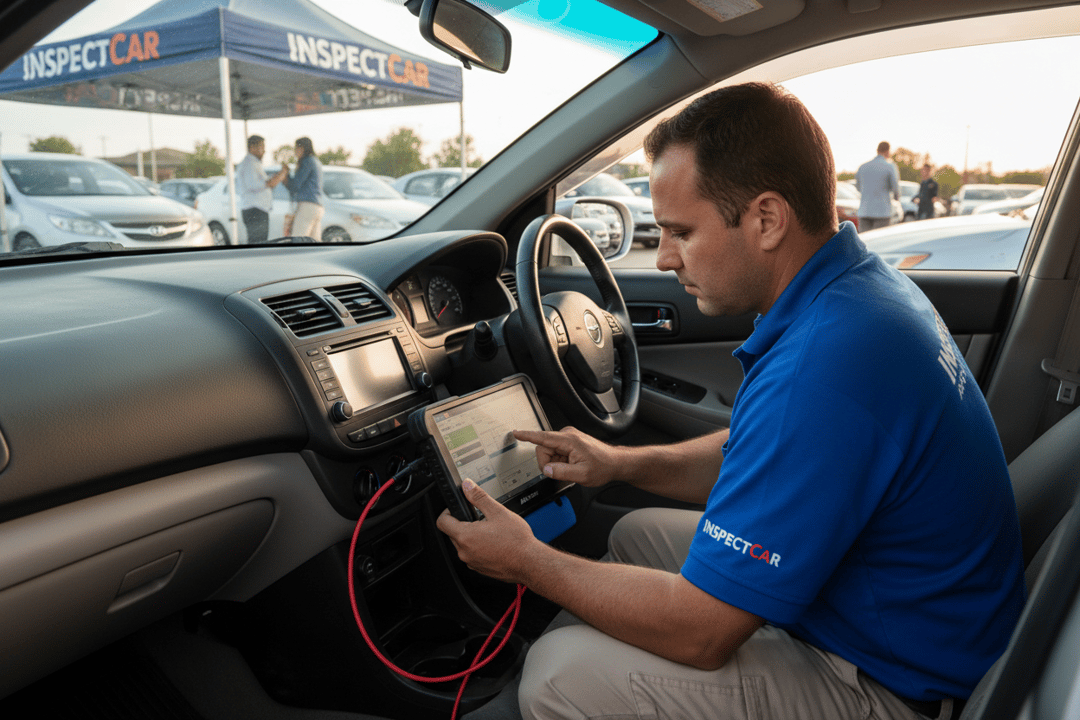
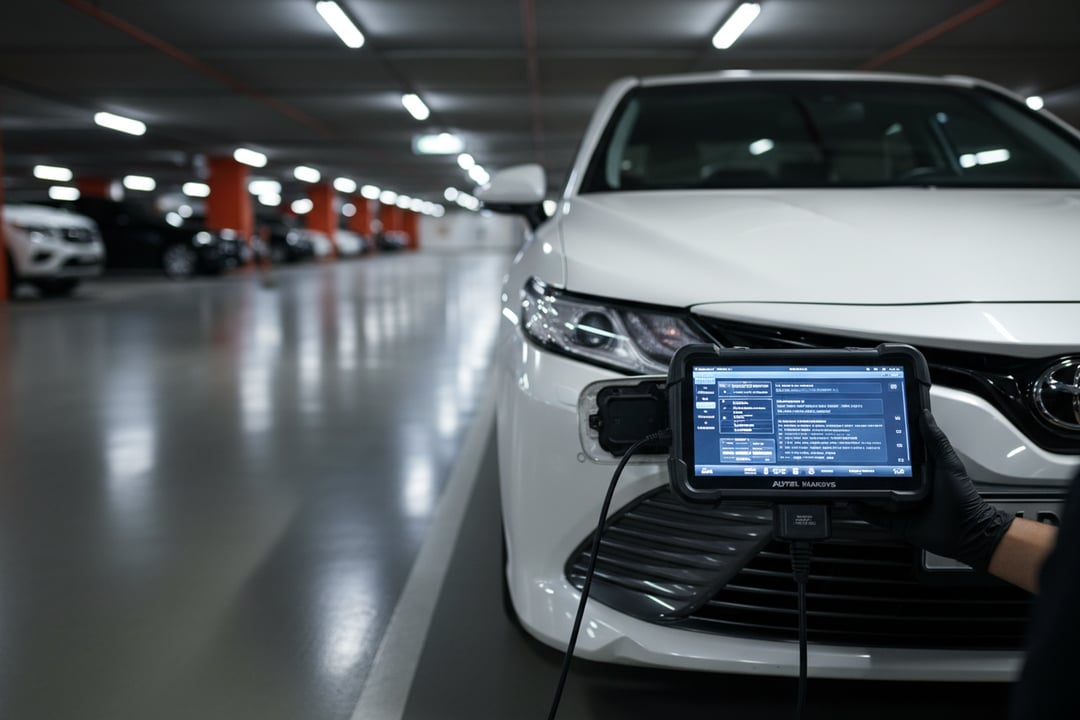
The OBD scanner report on a Range Rover typically contains more data than on most vehicles. Engine, transmission, ABS, airbag, and body control module fault codes are scanned across five categories. Range Rovers are known for generating stored fault codes related to body control systems — parking sensors that intermittently fail, terrain response modules that store errors, and power tailgate systems that log faults. Not every stored code represents a current problem, but the pattern of codes tells an experienced inspector where the vehicle's electronics are aging.
The digital and infotainment inspection covers the touchscreen system, digital instrument cluster, and navigation. Range Rover's Touch Pro or Pivi Pro system is checked for responsiveness and stability. The infotainment screen is rated as Working, Glitchy, Cracked, or Not Working. A Glitchy rating — where the screen freezes, lags, or reboots during use — is a relatively common finding that can sometimes be resolved with a software update but may also indicate hardware failure.
Engine and Cooling: Heat Stress
Range Rover engines — whether the supercharged V8, turbocharged V6, or turbocharged inline-four — all generate significant heat. The cooling system inspection is critical. Radiator condition, cooling fans, water pump, and all hoses and connections are checked. Supercharged models have an additional intercooler that cools the compressed intake air — any degradation in this system reduces power and increases engine stress.
The engine inspection checks turbocharger or supercharger function specifically. A supercharger rated as Noisy may have worn bearings or a failing clutch mechanism. Engine oil seals and valve cover gasket conditions are important — oil leaks on Range Rovers are a common finding, partly because the engine bay generates intense heat that degrades seals faster. Exhaust smoke is noted — white smoke can indicate coolant entering the combustion chamber through a failing head gasket.
Interior and Luxury Features: Everything Must Function
Range Rover buyers pay for luxury, and every luxury feature must work. The interior inspection checks heated seats, cooled seats, seat memory, massage function where present, and power steering column. The power features inspection covers power windows, auto-folding mirrors, power tailgate, hands-free tailgate, and deployable running boards. Deployable running boards — which extend when the door opens and retract when it closes — are a common failure point; they operate on electric motors exposed to road spray, sand, and debris.
The sunroof or panoramic roof is tested for operation and leaks. Range Rover panoramic roofs are large and have complex drainage systems. A sunroof rated as Leaking can cause significant water damage to the interior electronics, headliner, and carpet. The HVAC system is tested thoroughly — with multiple climate zones and the large cabin volume, the AC system must work at full capacity to keep the interior comfortable in UAE summer.
Frame and Underbody: Off-Road Evidence
The frame condition inspection reveals whether a Range Rover has been used off-road. Underbody shields and covers, skid plates, and the chassis condition show impact damage, scraping, and sand accumulation. A Range Rover with underbody damage and missing skid plates has seen real off-road use. The tow hitch and trailer wiring connector condition are noted — Range Rovers are commonly used for boat towing in the UAE, which adds stress to the cooling and drivetrain systems.
AutoFay inspects 410 checkpoints on every Range Rover, with HD photos and a detailed PDF report. On-location inspection across all 7 Emirates. Book at autofay.ae or call +971-54-258-4458.

0 Comments
No comments yet. Be the first to share your thoughts!