

Used Kia vehicles represent a significant portion of the pre-owned market in the United Arab Emirates due to their competitive pricing, generous warranty programs, and feature-rich specifications. However, the harsh environmental conditions and varying maintenance histories of vehicles in the region can expose specific weaknesses that are not immediately visible to the untrained eye. A pre-purchase inspection is not merely a formality; it is a critical risk assessment tool designed to uncover latent defects that could compromise safety or lead to costly repairs. Understanding the mechanical and structural nuances of these models allows buyers to navigate the market with technical precision rather than relying on guesswork.
Common Mechanical Anomalies in Korean SUVs
Kia engines, particularly the turbocharged capable and capable GDI variants, are susceptible to oil consumption issues over time. In the extreme heat of the UAE, elevated oil levels can lead to the formation of sludge, which restricts oil flow to critical components such as the camshaft and bearings. This degradation accelerates wear on piston rings and valve seats, potentially resulting in misfires or reduced compression. Buyers must prioritize checking the oil dipstick and the characteristic blue smoke during acceleration, as these are primary indicators of internal combustion seal failure.
Transmission longevity varies significantly between automatic and dual-clutch variants. The six-speed automatic transmissions found in older models like the Sorento are generally robust, while the wet dual-clutch units in sportier trims can struggle with heat dissipation during stop-and-go traffic in city centers. Slipping gears or delayed engagement are symptoms of fluid degradation or solenoid malfunction, issues that escalate rapidly into complete drivetrain failure if left unaddressed.
- Knock or Ping Sounds: Metallic rattling from the engine bay under light acceleration suggests bearing wear or detonation due to incorrect fuel octane or carbon buildup.
- Transmission Slippage: A noticeable drop in RPM when accelerating without a corresponding increase in vehicle speed indicates clutch pack wear or torque converter failure.
- Excessive Exhaust Smoke: Blue smoke indicates burning oil, white smoke suggests coolant leaks (head gasket failure), and black smoke points to a rich fuel mixture or faulty oxygen sensors.
Electrical and Infotainment System Vulnerabilities
Modern Kia vehicles rely on a complex network of sensors and a central infotainment module to manage vehicle functions. Wiring harnesses in the cabin are often exposed to temperature fluctuations that can degrade insulation and cause short circuits. Infotainment system glitches, such as screen freezing, Bluetooth disconnection, or voice recognition failure, are frequent complaints. These symptoms often point to software corruption or failing capacitors on the motherboard, which can eventually affect the operation of critical safety systems like the parking sensors or lane-keeping assist.
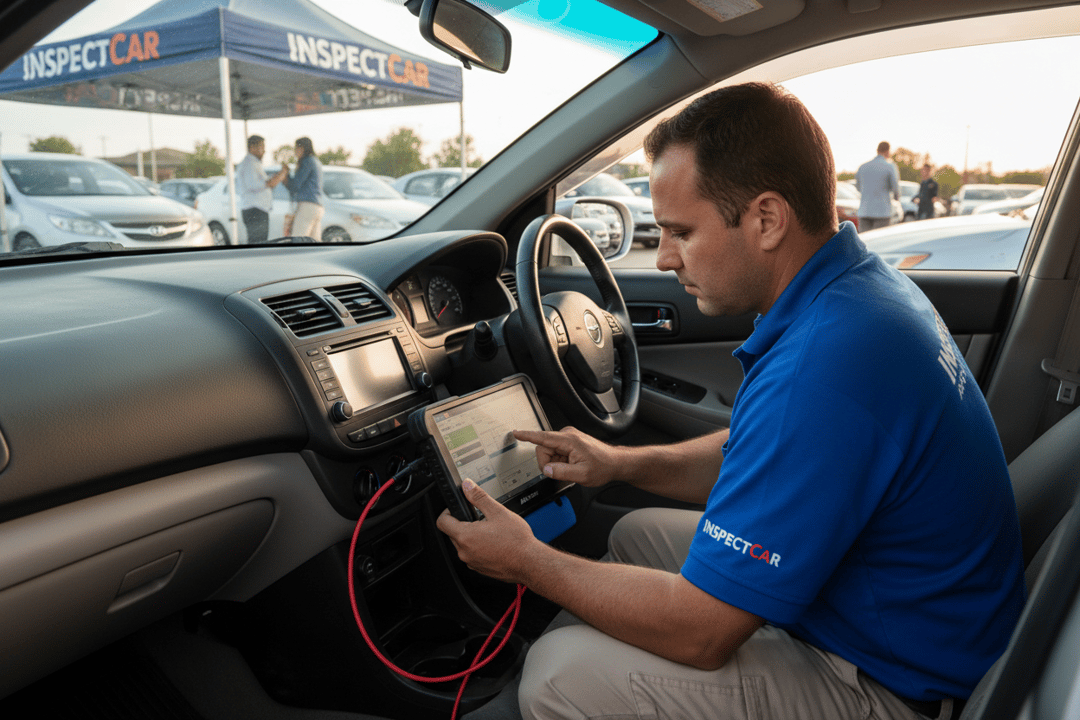
The electronic suspension systems found in higher-trim Kia models require constant calibration to function correctly. A failure in the height sensors can cause the vehicle to sit unevenly on one side, leading to premature tire wear on the outer edges. Diagnosing these electronic faults requires specialized equipment that reads the vehicle's Body Control Module (BCM), as visual inspection cannot detect active sensor calibration data.
Priorities During a Physical Inspection
Inspectors must examine the bodywork panel-by-panel to differentiate between original factory paint and repairs resulting from accidents. Even a minor accident can compromise the structural alignment of the unibody, affecting the steering geometry and handling characteristics. In the UAE, salt from coastal regions accelerates rust formation on the chassis rails and the floor pans beneath the carpets. A thorough inspection includes lifting the vehicle to inspect the suspension mounting points and the condition of the subframes for signs of welding or corrosion.
Brake systems in the region endure high thermal loads. The brake fluid absorbs moisture over time, lowering its boiling point. If the fluid is dark brown or black, it has likely absorbed significant moisture and must be replaced immediately to prevent brake fade during heavy braking. Inspectors assess the remaining lining thickness and check for uneven wear patterns, which indicate caliper sticking or a damaged rotor.
Tire selection is critical for vehicle dynamics. Tires degrade faster in high temperatures, and sidewall cracking can occur even if tread depth is adequate. Inspectors verify the manufacturing date on the tires, as rubber hardens over time and loses its ability to grip the road, increasing the risk of a blowout at high speeds.
The Value of Computer Diagnostics
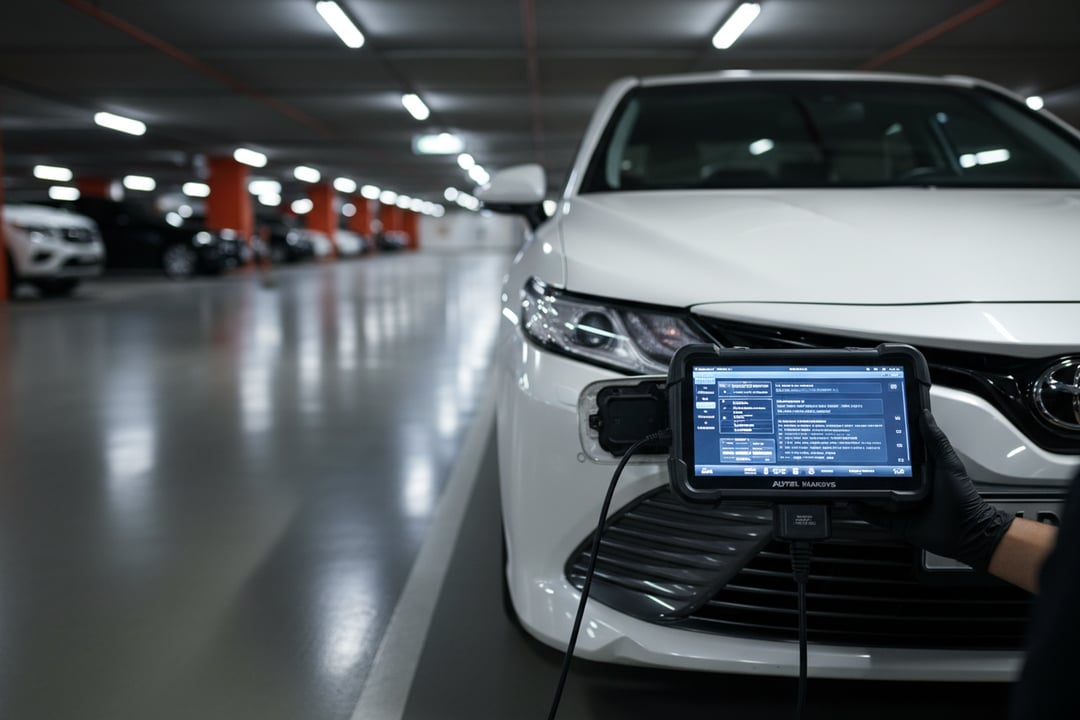
Visual inspections cannot detect internal engine wear, transmission slippage, or hidden electrical faults. A diagnostic scan retrieves error codes stored in the Engine Control Unit (ECU), Transmission Control Unit (TCU), ABS module, and airbag system. This digital data reveals whether the vehicle’s computer has detected pending faults that have not yet triggered the dashboard warning lights.
Professional inspection services offer tiered packages to address different levels of evaluation needs. For a basic assessment of the engine and transmission health, a Computer Diagnostic AED 99 service provides the necessary error codes and freeze frame data. For a more detailed review covering the vehicle’s mechanical and electronic health, the Body & Computer AED 250 option covers essential diagnostics and visual checks. The most thorough route, the Comprehensive AED 299 package, expands the scope to 410+ checkpoints across 25 categories, including a full road test to verify that the vehicle drives correctly under load.
Model-Specific Risk Assessment
Understanding the specific liabilities of the Kia Sorento, Sportage, and K5 helps buyers understand what to prioritize during the inspection process.
| Model | Common Mechanical Issues | Electrical & Infotainment | Body & Structural |
|---|---|---|---|
| Kia Sorento (2017-2021) | Oil consumption in GDI engines; timing belt tensioner wear. | >Bluetooth connectivity issues; infotainment screen lag.Rust on the frame rails in coastal areas; hood alignment after accidents. | |
| Kia Sportage (2020-2024) | Transmission hesitation; fuel pump failure symptoms. | >Rear camera blackouts; software glitches in driver assist tech.Fender liner detachment due to heat; bumper paint peeling. | |
| Kia K5 / Cerato (2019-2023) | td>Turbocharger seal leaks; fuel odors from injector O-rings. >Navigation system freezing; infotainment system resets.Door handle motor failure; dashboard panel warping under heat. |
Final Assessment Strategy
Attempting to purchase a used vehicle based solely on a visual walk-around is insufficient for identifying the hidden factors that depreciate asset value. The combination of a comprehensive visual inspection, a full diagnostic scan, and a high-speed road test provides a complete picture of the vehicle's operational status. By verifying the condition of the frame, the health of the drivetrain, and the functionality of the electronics, buyers can avoid inheriting expensive liabilities.
AutoFay inspects 410+ checkpoints with HD photos and PDF report. Book at autofay.ae or call +971542584458


0 Comments
No comments yet. Be the first to share your thoughts!