

Purchasing a pre-owned Toyota in the UAE requires a critical distinction between engine reliability and structural integrity. While manufacturers like Toyota are renowned for long-lasting powertrains, a collision can compromise the chassis in ways that a standard road test cannot reveal. A post-accident inspection must go beyond checking the oil level; it requires a forensic examination of the vehicle’s skeleton and electronics. The difference between a safe daily driver and a potential hazard often lies in the details missed by the untrained eye.
The "Toyota" Myth: Engine Integrity vs. Chassis Safety
Buyers often assume that a Toyota's legendary durability means the car will survive any impact without lasting damage. However, the engine and chassis are mechanically disconnected structures. A collision can misalign the engine mounts, causing vibration or transmission issues that manifest months after purchase. Even if the 2GR-FE V6 or 1KD-FTV diesel engine runs perfectly, a bent subframe can transmit excessive noise and vibration into the cabin. Professional inspection focuses on the decoupling of the powertrain from the chassis to ensure long-term drivability.
Furthermore, the cooling system is directly tied to the front crash structure. A radiator support bar that is slightly twisted will not leak immediately, but it compromises the cooling airflow. This leads to overheating in the intense heat of the UAE summer. Inspectors must verify that the radiator cap seals securely and that the fan shroud is not cracked, as the cooling system bears the brunt of the impact energy.
Model-Specific Susceptibilities in Abu Dhabi and Dubai Markets
The most common Toyota models in the region—the Camry, Corolla, and Land Cruiser—possess specific structural weaknesses that dictate where damage occurs.
- Toyota Camry: The front bumper mounting points on the Camry are notorious for snapping during low-speed collisions. This failure often goes unnoticed until the bumper falls off. Furthermore, the lower control arm mounts are prone to cracking if the car was driven with a bent subframe.
- Toyota Corolla: Due to its lighter weight, the Corolla’s suspension mounting points in the rear are highly susceptible to deformation. A rear-end impact can alter the camber, causing the tires to wear unevenly on the inner edges within a few thousand kilometers.
- Toyota Land Cruiser/Hilux: While built on a frame, the cabin structure is rigid. In a rollover or side impact, the B-pillars and roof rails can twist. This deformation affects the door seal integrity and can cause the doors to refuse to close properly or open unexpectedly, creating a serious safety hazard.
The Silent Danger of Structural Damage
Structural damage is the most expensive pitfall because it affects every component attached to the chassis. A bent frame rail alters the geometry of the suspension, leading to premature tire wear and erratic handling characteristics. Even if the car tracks straight while stationary, the alignment may be permanently set incorrectly. This results in the steering wheel being off-center and the vehicle "pulling" to one side during highway driving. It is also common for a damaged firewall to interfere with the brake pedal linkage, reducing the effectiveness of emergency braking.
Inspectors must look closely at the door gaps and alignment. A car that has been hit will often have uneven gaps between the door and the fender. This misalignment indicates that the door hinges or the structural pillars have been pushed out of position. Driving a vehicle with poor door alignment allows water and dust to seep into the cabin, causing rust and electrical corrosion.
The Hidden Cost of Electronic Systems and ADAS
Modern Toyota vehicles are laden with sensors, cameras, and radar units essential for Advanced Driver Assistance Systems (ADAS). A bumper replacement is rarely just cosmetic; the impact often knocks these sensors out of calibration or damages the wiring harnesses behind the bumper. Without proper calibration, the Lane Departure Warning and Automatic Emergency Braking systems may fail to activate when required. This renders the car significantly less safe and can lead to legal liability for the seller or buyer.
Electrical faults are also common after accidents. A disconnected wire can cause the dashboard warning lights to illuminate permanently or trigger phantom errors. For example, a damaged door module can drain the battery overnight. Inspecting the wiring harness involves looking for melted insulation or pinched wires that may short circuit the vehicle's computer systems.
The Post-Accident Inspection Checklist
A thorough post-accident inspection requires a systematic approach to uncover hidden faults. We recommend focusing on the following categories during the evaluation process.
- Body and Paint Verification: Inspectors must conduct a panel-by-panel analysis to distinguish between original factory paint and aftermarket repairs. This involves checking the paint thickness using a gauge and looking for brush marks, orange peel texture, or mismatched color codes on the edges of panels.
- Frame and Structural Integrity: The focus here is on the rails, pillars, and floor pan. A laser measurement tool is necessary to compare the damaged vehicle against factory blueprints to ensure the chassis has not been compromised in width or height.
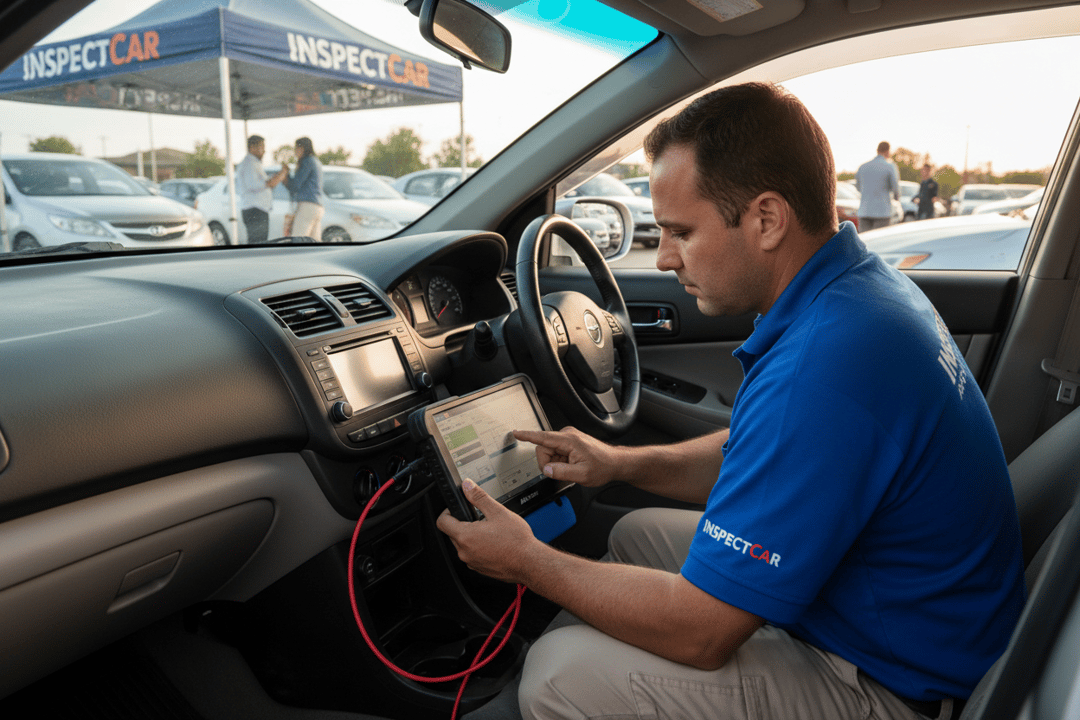
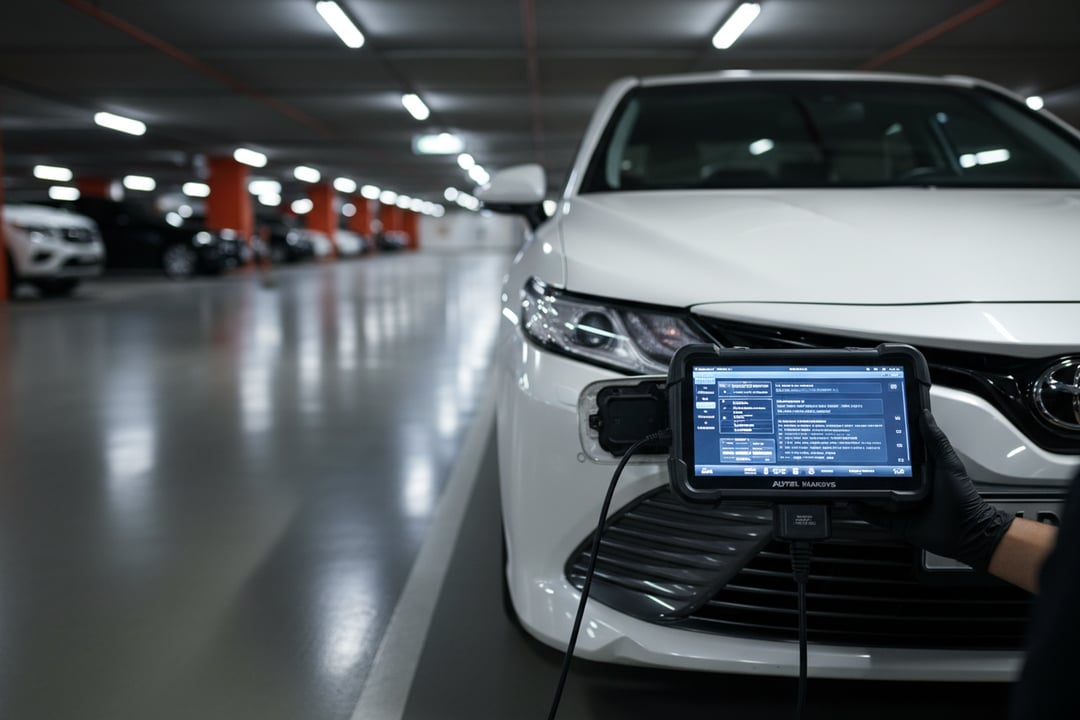
- OBD System Scan: A diagnostic scan is vital to check for stored fault codes in the Engine, Transmission, ABS, and SRS (Supplemental Restraint System) modules. Codes stored in the airbag module indicate that an airbag has deployed, meaning the safety system is no longer original.
- Undercarriage Inspection: Fluid leaks, cracked brake lines, and damaged steering components must be examined. Brake fluid contamination or air in the hydraulic lines affects stopping power. A damaged fuel line poses a significant fire risk and must be identified immediately.
- Road Test Dynamics: The inspector must accelerate, brake, and turn to identify noise, vibration, and harshness. A suspension component that is bent but still "functional" will cause clunking noises over bumps and uneven tire wear.
Value-Driven Inspection Packages
Understanding the scope of the inspection is essential when budgeting for a post-accident vehicle. Not all accidents require a full teardown, but hidden damage often necessitates a comprehensive analysis. AutoFay offers specialized packages designed to address the unique needs of accident-damaged vehicles.
| Package | Price | Scope & Details |
|---|---|---|
| Computer Diagnostic | AED 99 | Focused on engine and transmission fault codes. Identifies mechanical issues and sensor failures without a physical inspection. |
| Body & Computer | AED 250 | Combines a visual body check with a comprehensive OBD scan. Ideal for vehicles with visible body damage to ensure electrical systems are intact. |
| Comprehensive | AED 299 | Includes 410+ checkpoints across 25 categories. Covers frame, suspension, engine, fluids, brakes, and tires with HD photos and a PDF report. |
AutoFay provides a on-location inspection across all 7 Emirates, allowing the inspection to take place at the seller’s location or a convenient parking lot. The detailed report provides a roadmap of the vehicle's condition, separating cosmetic issues from safety-critical failures. This information is essential for negotiating the purchase price or planning necessary repairs before the vehicle hits the road.


0 Comments
No comments yet. Be the first to share your thoughts!