


Purchasing a used luxury vehicle in the UAE requires a forensic level of scrutiny. A post-accident Mercedes-Benz demands deeper analysis than a standard visual check. These vehicles possess complex electronic architectures and safety structures designed for high-speed impact protection. A superficial scan misses critical failure points that compromise vehicle safety and longevity. Expert inspection is necessary to uncover hidden structural or electronic damage.
Structural Integrity and Safety Systems
Mercedes-Benz vehicles utilize unibody construction, where the frame and body are fused. This design maximizes passenger safety but complicates repair verification. Inspectors must verify that the crash pillars and frame rails have not been bent or twisted. Misalignment in these areas leads to uneven tire wear and compromised handling dynamics. The floor pan integrity is equally critical; even minor intrusion can weaken the vehicle's safety cell.
Post-accident repairs often involve replacing safety-critical sensors rather than just cosmetic parts. The SRS (Supplemental Restraint System) module records crash severity and deployment history. A damaged door impact sensor or a bent roof rail can disable airbag deployment in a future incident. Ignoring these structural nuances creates a significant risk for the next owner. Professional inspection confirms whether the vehicle’s safety cage retains its original engineering specifications.
The Electronic Architecture of Mercedes-Benz
Modern Mercedes models function as computers on wheels, relying on extensive sensor networks. A minor bumper impact can trigger a cascade of complex airbag and sensor faults. The steering angle sensor is a common failure point after front-end collisions. If this sensor is not properly recalibrated, the vehicle may experience impaired steering assistance or stability control warnings. The system may also default to a "limp mode," severely limiting speed and power delivery.
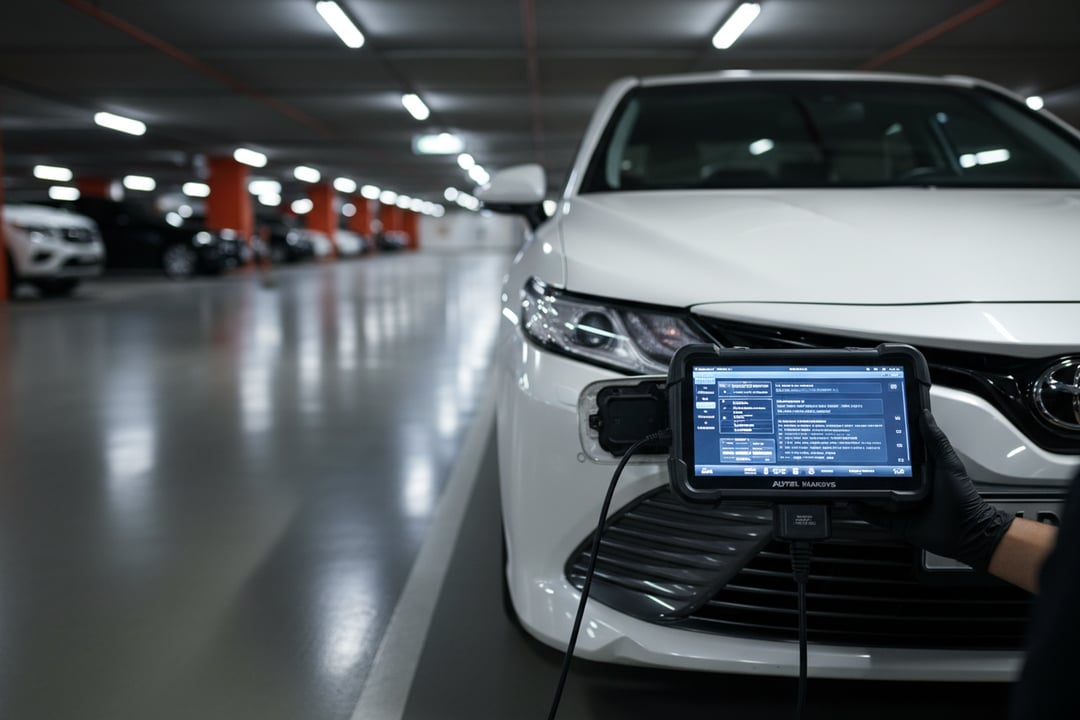
Electrical wiring harnesses located near impact zones often suffer from insulation damage that is invisible to the naked eye. Color-coded connector pins may have been bent during repair, causing intermittent open circuits. These faults manifest as flickering dashboard lights, non-responsive infotainment systems, or erratic transmission shifting. A standard visual inspection cannot detect these internal electrical faults. Diagnostic tools are required to read the CAN bus data and identify these hidden electronic errors.
Model-Specific Vulnerabilities
Different Mercedes-Benz generations possess unique design elements that fail under specific impact scenarios. The W204 C-Class is notorious for rack and pinion steering damage following low-speed impacts. The W211 E-Class frequently requires inspection of the steering column and radiator support, as the radiator is often relocated to the trunk in these models. The W206 introduces advanced driver-assist systems that are highly sensitive to sensor calibration; a hit to the front bumper can knock out adaptive cruise control and lane-keeping assist.
- W204 C-Class: Focus on steering angle sensor calibration and rack bushing integrity.
- W211 E-Class: Inspect the electronic radiator fan and steering column shroud.
- W206 A-Class: Verify camera and radar sensor placement and alignment.
- W166 GLA: Check the air suspension compressor and electronic damper control modules.
Mechanical Systems Under Pressure
Collision forces transfer significant stress to mechanical components. Engine mounts absorb vibrations and engine torque; a hard impact can crack or dislodge these mounts. A broken mount causes excessive engine movement, leading to driveline vibrations and noise during acceleration. The vehicle’s brakes are another critical system to verify. Calipers and rotors may warp from sudden temperature changes caused by a fire or hydraulic leak during the collision.
The suspension geometry is often disturbed by axle impacts. Control arm bushings or ball joints may be torn during a crash, causing a "clunk" noise over bumps. Tires may hide the true extent of suspension damage, as uneven wear patterns develop over time. Inspectors must assess the brake pad percentage rating and the overall condition of the suspension components to ensure the vehicle stops and handles correctly.
Inspection Packages and Value
AutoFay provides on-location inspection services across all seven Emirates. Inspectors utilize a standardized checklist covering 410+ checkpoints across 25 categories. Selecting the appropriate package ensures the specific needs of a post-accident vehicle are met. The Computer Diagnostic package costs AED 99. This option is essential for reading engine, transmission, ABS, and airbag codes to uncover hidden electronic faults.
For vehicles with suspected body damage or electronic issues, the Body & Computer package at AED 250 provides a broader overview. It includes panel-by-panel paint analysis to detect body filler or mismatched color. The highest level of scrutiny is provided by the Comprehensive package at AED 299. This covers the entire vehicle, including HD photo documentation and a full PDF report generated immediately after the inspection.
| Package | Price | Key Coverage |
|---|---|---|
| Computer Diagnostic | AED 99 | Engine, Transmission, ABS, Airbag Codes |
| Body & Computer | AED 250 | |
| Comprehensive | AED 299 | Full 410+ checkpoint list, HD photos, PDF report, Road Test |
AutoFay inspects 410+ checkpoints with HD photos and PDF report. Book at autofay.ae or call +971542584458.




0 Comments
No comments yet. Be the first to share your thoughts!