
The UAE market features a high volume of used Honda vehicles, ranging from the ubiquitous Civic to the rugged CR-V. Many of these cars carry a history of accident damage that is not immediately visible to the untrained eye. Purchasing a used vehicle without a comprehensive post-accident check invites significant mechanical and safety risks. A vehicle that has been in an accident may appear cosmetic on the surface but hide structural compromises that threaten the driver's safety. Identifying these hidden defects requires professional expertise and a rigorous inspection process. This guide outlines the critical areas to prioritize when inspecting a used Honda following an accident, focusing on structural integrity, engine health, and safety systems.
Structural Integrity and Frame Diagnostics
Honda vehicles utilize unibody construction, meaning the frame and the body are fused together as a single unit. When crash damage occurs, this structural bond can be compromised, leading to alignment issues and safety failures. Even a minor bumper impact can alter the vehicle's chassis dimensions. In the UAE environment, road salt and harsh conditions accelerate the corrosion of repaired metal. Therefore, checking the frame is not optional; it is a safety prerequisite.
Inspectors must examine the perimeter of the vehicle for uneven gaps between panels. Uneven spacing often indicates that mounting points have been bent to align panels. The floor pans and rocker panels are particularly vulnerable areas that are difficult to access and repair correctly. Damage to these areas can affect the vehicle's handling and roof crush resistance in a subsequent impact. A professional inspection will detect these nuances, preventing a purchase that compromises the structural safety of the vehicle.
Engine and Transmission Commonalities
While Hondas are widely recognized for reliability, specific engine and transmission faults can be exacerbated by accident damage. The most common issue in older models is the propensity for oil burning. Accident damage, even seemingly minor rear-end impacts, can damage oil pans or cause misalignment in the engine mounts. This misalignment puts stress on the crankshaft bearings, leading to increased oil consumption and smoke from the exhaust. Ignoring an oil-burning engine in a post-accident vehicle will result in rapid engine wear and expensive repairs.
Transmission health is another critical factor. The torque converter and transmission mounts are often located near the front of the engine bay, making them susceptible to crash impact. A damaged transmission mount can cause the engine to vibrate excessively, leading to driveline damage over time. A post-accident inspection must verify that the transmission shifts smoothly and that all fluid levels remain stable after a road test. Failure to address transmission mounting issues immediately will lead to drivability problems and eventual transmission failure.
Critical Safety Systems and Electricals
Modern vehicles rely heavily on electronic safety systems, including airbags, seatbelts, and ABS modules. Accident damage frequently disables these systems, either through physical impact on sensors or electrical shorts. The most common consequence of a deployed airbag is the replacement of the entire unit, which is costly and difficult to source. However, the real danger lies in hidden faults; the airbag control module may retain crash data that prevents the system from resetting. This renders the airbags useless in a future collision.
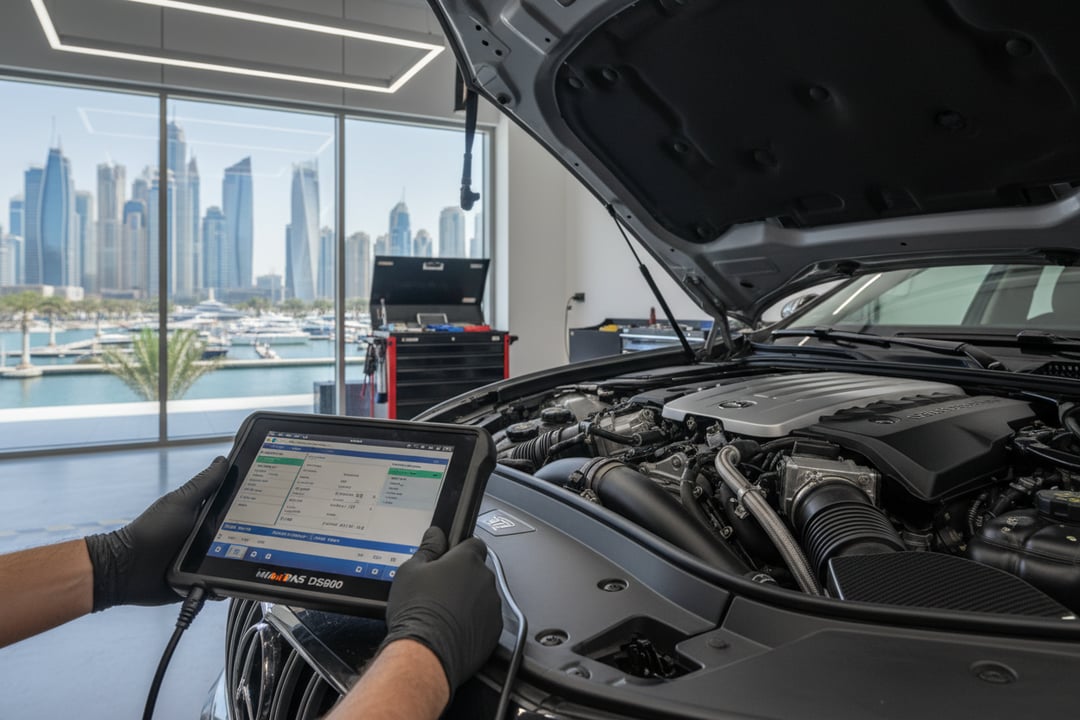
ABS sensors are located at each wheel hub and are often mounted on the steering knuckle or suspension arms. A low-speed impact can knock these sensors out of alignment or damage their wiring harnesses. This disruption compromises the vehicle's ability to prevent wheel lock-up during emergency braking. Furthermore, the SRS (Supplemental Restraint System) light must remain off during operation; any warning light indicates a malfunction that requires immediate diagnosis. A computer diagnostic scan is essential to identify these faults before the vehicle is driven on public roads.
AutoFay Inspection Packages
To thoroughly evaluate a post-accident Honda, a multi-step inspection process is required. Professional inspection services utilize a structured approach to cover every potential defect. The following table details the specific packages available to identify these hidden issues efficiently.
| Package | Price (AED) | Key Inclusions |
|---|---|---|
| Computer Diagnostic | 99 | OBD scan for engine, transmission, ABS, and airbag codes. |
| Body & Computer | 250 | |
| Comprehensive | 399 |
Choosing the right package depends on the severity of the accident history. For minor cosmetic repairs, the Computer Diagnostic is a minimum requirement. However, for vehicles with visible damage, the Comprehensive package provides the necessary depth to uncover hidden frame or suspension issues.
Model-Specific Considerations
While the principles of inspection remain consistent, specific Honda models in the UAE present unique challenges. The Honda Civic, for example, is frequently involved in rear-end collisions. This impacts the trunk floor pan and the differential housing, which can affect the vehicle's alignment and transmission cooling. Owners of these models should prioritize checking the rear subframe and differential mounts for cracks or tears. A compromised differential mount will cause the transmission to hang lower, leading to further damage to the oil pan and exhaust.
The Honda Accord and CR-V are popular family SUVs that often suffer from suspension wear due to the UAE's road conditions, exacerbated by accident damage. The CR-V frequently exhibits rust issues in the wheel arches and suspension arms. After an accident, these suspension components must be dismantled and inspected for bending or fatigue. The front control arms on these models are critical for steering stability; any damage here is not repairable and requires immediate replacement to prevent loss of control.
Fluids and Road Test Priorities
The condition of the fluids offers a clear window into the engine's health following an impact. Engine oil should be checked immediately after the road test. If the oil appears milky, it indicates coolant leaks, often caused by a cracked radiator or a damaged cylinder head from a collision. Transmission fluid should be examined for a burnt smell or metal shavings, which suggests internal damage transmitted through the driveshaft.
- Brake Inspection: After an accident involving the front or rear end, brake lines and calipers may have been damaged. A thorough inspection must verify the brake pad thickness percentage and check for fluid leaks.
- Tire Condition: Misalignment caused by frame damage will lead to rapid tire wear. Inspectors must verify that all tires are of the same size and that wear is even across the tread surface.
- Suspension Noise: Over-rotation during a road test will reveal clunking noises from worn ball joints or control arms. These noises indicate that the suspension geometry has been permanently altered by the accident.
Inspecting a used Honda post-accident demands a focus on structural safety and hidden electrical faults. A visual inspection is insufficient to guarantee the vehicle's integrity. Professionals must rely on systematic checklists to ensure no detail is overlooked.
AutoFay inspects 410+ checkpoints with HD photos and PDF report. Book at autofay.ae or call +971542584458



0 Comments
No comments yet. Be the first to share your thoughts!