

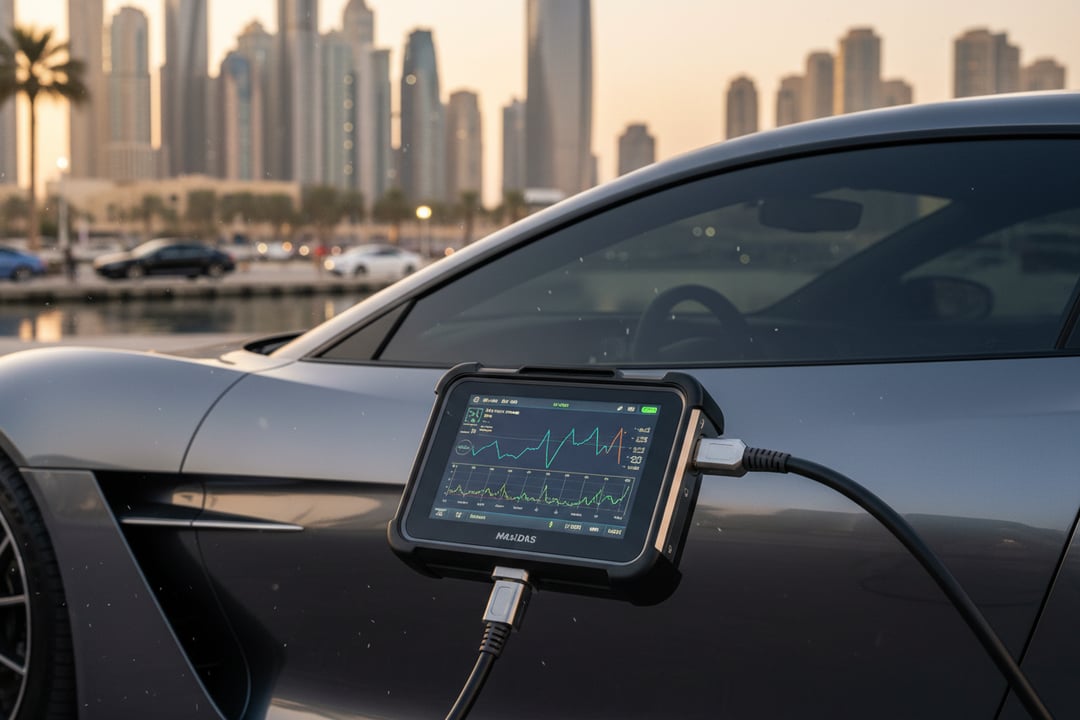
Recovering from a collision requires more than cosmetic repairs; it demands a rigorous diagnosis to ensure the vehicle’s structural and mechanical integrity remains intact. In the UAE's harsh climate, where extreme heat and abrasive roads accelerate component degradation, a post-accident inspection serves as the critical gatekeeper for safety and resale value. Ignoring hidden damage often leads to accelerated wear, expensive repairs down the line, and potential safety hazards on public highways. This guide outlines the essential systems and components requiring scrutiny following an incident, the warning signs to watch for, and what a professional diagnostic should reveal.
The Engine and Transmission Health
The engine and transmission are the heart of the vehicle and are frequently compromised during collisions due to the force transferred through the chassis. Post-accident, the first step is identifying oil leaks that may have been caused by loose drain plugs or damaged gaskets resulting from impact vibrations. A experienced inspector must listen for abnormal noises—such as knocking or ticking—that suggest piston or bearing damage.
Engine mounts are another critical component often overlooked. If these rubber isolators are cracked or broken, the engine will shift during acceleration or braking, placing undue stress on the transmission bell housing and differential. Transmission fluid should be checked immediately for a burnt smell or a granular texture, indicating internal friction damage or overheating. A diagnostic scan must be performed to check for error codes in the engine control unit (ECU) and transmission control module (TCM) that might not trigger a dashboard warning light immediately.
Structural Integrity and Frame Damage
Structural damage extends far beyond visible dents and can compromise the vehicle’s ability to protect occupants in a subsequent accident. Inspectors must carefully examine the frame rails, roof pillars, and the floor pan for signs of twisting or misalignment. Even a minor impact into a curb or a shallow pothole can bend the unibody structure, altering the vehicle's alignment and affecting tire wear.
Warning signs include the vehicle pulling to one side when driving straight or doors that do not close with a solid, uniform thud. The hood and trunk gaps should be consistent across the vehicle. If the frame has been welded, it is essential to verify that the welding quality is high and that the structural rigidity has been fully restored to factory specifications. A compromised frame can lead to steering drift and reduced cabin space, posing significant risks to the driver and passengers.
Electrical Systems and Safety Modules
Modern vehicles rely on a complex network of sensors and electronic control units to manage safety features such as airbags, ABS, and traction control. Post-accident, these systems are highly susceptible to wiring damage, even if the physical wires are not severed. Inspectors must check for broken wire insulation, loose connections, and corrosion at the fuse box.
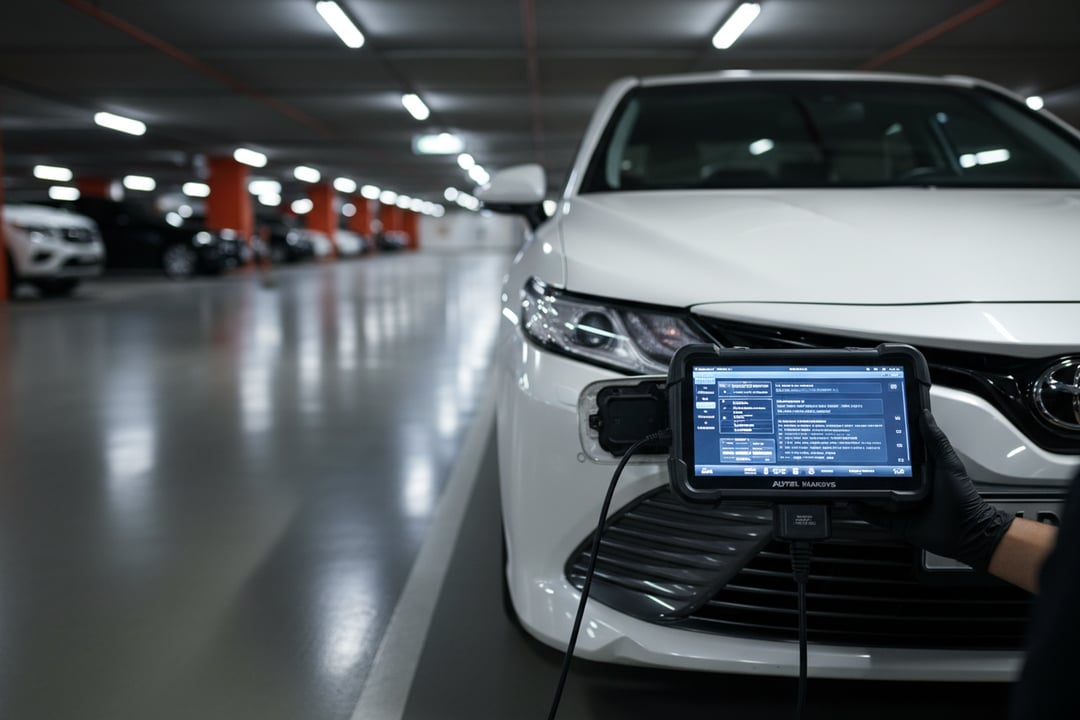
The SRS (Supplemental Restraint System) is perhaps the most critical electrical system to verify. A deployed airbag can mask underlying damage to the steering column or dashboard electronics. A professional OBD scan is mandatory to retrieve airbag module codes and ensure no sensors are malfunctioning. Furthermore, parking brake cables and sensors must be inspected to ensure they are not damaged, as this affects the vehicle's ability to hold stationary on steep UAE inclines.
Suspension, Steering, and Brakes
The suspension system absorbs impact energy, and a collision can easily bend control arms, damage ball joints, or crack suspension bushings. In the UAE's high-temperature environment, these rubber components degrade rapidly, making a thorough inspection of the shock absorbers and struts essential. Warning signs include unusual vibrations at highway speeds, clunking noises over bumps, or fluid leaks from the shock absorbers.
Braking systems require immediate attention following an accident. Inspectors must measure the remaining thickness of brake pads and check the condition of rotors for scoring or warping. The brake fluid level and condition must be verified, as a sudden drop in fluid often indicates a leak in the brake lines or a damaged brake caliper. The road test phase of the inspection is critical here to evaluate the vehicle's stopping distance and pedal feel for any softness or pulsation.
Fluids, Tires, and Undercarriage
Fluids often tell the true story of a vehicle's history, particularly in the UAE where cooling systems are under constant stress. Post-accident, coolant reservoirs should be checked for a milky white substance, which indicates a blown head gasket or coolant mixing with oil due to head damage. Brake fluid should be clear and golden; a dark brown or black fluid indicates moisture contamination and potential brake failure risks.
Tires are the only point of contact between the vehicle and the road and are easily damaged by curb impacts. Inspectors must verify tire manufacturing dates to ensure they are not old or dry-rotted, which becomes dangerous under hard braking. Undercarriage components, including exhaust systems and steering linkage, must be inspected for dents or holes that could cause exhaust fumes to enter the cabin—a critical safety hazard.
Bodywork, Paint, and Panel Alignment
While cosmetic repairs are often the first to be addressed, they provide valuable clues about the severity of the crash. A panel-by-panel inspection is necessary to distinguish between original paint and a repaint. Color differences, orange peel texture, or a lack of undercoating on the wheel arches indicate recent bodywork.
Panel alignment is a key indicator of structural safety. The gaps between the hood, trunk, doors, and fenders should be uniform and consistent. Misaligned panels often result from a bent unibody frame or improperly installed body mounts. Rust is also a concern, particularly in the UAE, where salt and humidity can accelerate corrosion on repaired metal panels if proper anti-corrosion treatment was not applied during repairs.
Interpreting the Inspection Report
A competent inspection report must go beyond a simple pass or fail and provide detailed documentation of every 410+ checkpoints across 25 categories. The report should categorize findings clearly, separating minor aesthetic issues from critical safety defects. It should include high-definition photos of damaged areas, leaks, and undercarriage components to provide objective evidence of the vehicle's condition.
The report must explicitly state the condition of the frame, the percentage of brake pad life remaining, and the status of all airbags. It should also detail the results of the OBD scan, listing any active or pending trouble codes. This level of granularity is essential for insurance claims, resale negotiations, or ensuring the vehicle is roadworthy for the owner's daily commute.
Professional Inspection Packages in the UAE
For vehicle owners requiring a comprehensive assessment of post-accident damage, professional on-location inspection services offer the most efficient solution. AutoFay provides a suite of diagnostic packages designed to cover every system and component mentioned above. A Computer Diagnostic service is available for AED 99, focusing strictly on OBD scans to identify engine, transmission, ABS, and airbag codes.
For more severe cases requiring both mechanical and body assessment, the Body & Computer package is priced at AED 250. This service covers the essential mechanical health checks alongside body condition. When structural and comprehensive damage is suspected, the Comprehensive package at AED 299 provides the most thorough evaluation, covering all 25 categories and 410+ checkpoints.
| Category | Inspection Focus | AutoFay Package |
|---|---|---|
| Engine | Mounts, oil leaks, sound, smoke color | Computer Diagnostic AED 99 |
| Body/Paint | Panel gaps, original vs. repainted status | Body & Computer AED 250 |
| Frame | Rails, pillars, floor pan alignment | Comprehensive AED 299 |
| Brakes | Pad percentage rating, rotor condition | Body & Computer AED 250 |
| Suspension | Shock absorbers, bushings, road test noise | Comprehensive AED 299 |
AutoFay operates across all 7 Emirates with a fully on-location inspection, meaning inspectors can bring the diagnostic equipment directly to the vehicle’s location. By utilizing professional inspection services, vehicle owners can ensure that no hidden damage goes unnoticed and that the vehicle is safe to drive or accurately valued for its true condition.
AutoFay inspects 410+ checkpoints with HD photos and PDF report. Book at autofay.ae or call +971542584458




0 Comments
No comments yet. Be the first to share your thoughts!