

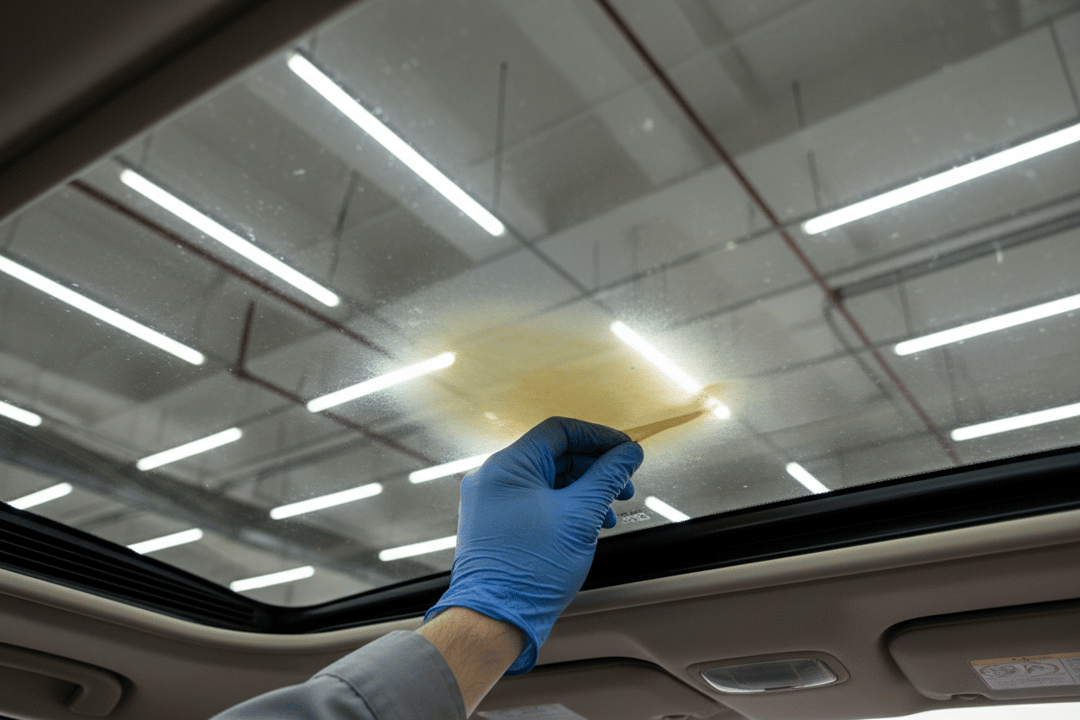
Panoramic sunroofs have become a standard feature on many mid-range and luxury vehicles sold in the UAE. They transform the cabin experience with natural light and a sense of openness. However, panoramic sunroofs also introduce several potential issues that are particularly relevant in the UAE climate — from drainage problems caused by sand accumulation to seal degradation from intense UV exposure and motor failures from extreme heat cycles.
Sunroof Operation: The Motor and Track System
AutoFay's power features inspection rates the sunroof/moonroof as Working, Noisy, Stuck, or Leaking. The inspector operates the sunroof through its full range of motion — open, close, tilt, and slide. A sunroof that opens slowly, stutters during movement, or stops mid-travel has a motor or track issue. The motor drives the glass panel along tracks on both sides, and when either track accumulates debris or loses lubrication, the movement becomes irregular.
The one-touch open and close function is tested where equipped — a sunroof that opens with one touch but requires holding the button to close often has a calibration issue that can be reset, or it may indicate resistance in the track mechanism. The power rear sunshade, where present, is separately tested — Working or Not Working. On vehicles with multiple glass panels (front sliding, rear fixed), each section is assessed independently.
Glass Condition: More Than Just Cracks
The sunroof/moonroof glass is inspected as part of AutoFay's glass category — rated No Visible Fault, Cracked, Aftermarket, or N/A. Beyond visible cracks, the inspector checks for stress marks, delamination on tinted glass, and scratches from improper cleaning or sand abrasion. A cracked panoramic sunroof is a significant finding because these large glass panels are expensive to replace and require precise installation to maintain seal integrity.
The UV rejection coating on panoramic glass degrades over time, particularly under UAE sun exposure. While coating degradation is not a safety issue, it increases cabin heat and puts additional load on the AC system — connecting directly to the HVAC inspection findings.
Seals and Drainage: Where Problems Hide
Door rubber seals are rated No Visible Fault, Worn, Torn, or Missing in the doors inspection section, and sunroof seals follow the same scrutiny. The rubber seal around the sunroof perimeter prevents water from entering the cabin. In the UAE, UV exposure causes rubber to harden and crack over time, creating paths for water intrusion during car washes or the rare rain event.
The drainage system is the most critical and least visible component. Panoramic sunroofs are designed with channels that collect water that gets past the initial seal, directing it through small drain tubes that exit at the front fenders or rear quarter panels. When fine UAE sand blocks these tubes, water backs up and overflows into the headliner, A-pillars, or footwells. The inspection checks for evidence of this — the headliner is rated No Visible Fault, Good, Sagging, or Damaged. Water staining on the headliner near the sunroof edges is a clear indicator of drainage blockage.
The interior smell check (Fresh, Normal, Smoke, Musty, or Pet Odor) can also reveal sunroof drainage issues — a musty smell often traces to water trapped in the headliner insulation from a blocked drain tube. Carpet and flooring condition (Clean, Stained, Worn, or Damaged) may show water damage in the front footwells where front drain tubes exit.
Interior Impact: What Water Damage Looks Like
When sunroof drainage fails, water enters areas that are difficult and expensive to repair. The dashboard condition is checked — water that runs down A-pillars can damage dashboard electronics. The dome light and map lights are tested — water intrusion near the sunroof opening commonly affects overhead lighting. The auto-dimming mirror, often mounted near the sunroof area, is checked for functionality. Electrical components near the roof — including the sunroof motor itself, courtesy lights, and microphones — can all be affected by water exposure.
The headliner material near the sunroof opening is examined for staining, sagging, or discoloration. On light-colored headliners, water stains are visible as yellowish rings. The B-pillar trim and C-pillar trim are checked because drain tube routing often passes through or near these areas.
Wind Noise: A Road Test Indicator
During the road test, wind noise is rated Quiet, Normal, Loud, or Excessive. A panoramic sunroof with worn seals or misaligned glass will produce noticeable wind noise at highway speeds that would not be present on a properly sealed unit. Excessive wind noise from the sunroof area during the road test corroborates physical findings from the seal inspection.
AutoFay checks 410+ checkpoints including comprehensive sunroof assessment, with HD photos and a detailed PDF report. On-location inspection across all 7 Emirates. Book at autofay.ae or call +971-54-258-4458.

0 Comments
No comments yet. Be the first to share your thoughts!