

A lease return marks the final chapter of vehicle ownership, yet it often triggers the most contentious financial negotiations. Lenders mandate a specific condition standard to protect their residual asset value. A comprehensive lease return check serves as the primary defense against unexpected repair charges and penalties. This inspection process uncovers latent defects that standard visual inspections often miss. Understanding the scope of a professional inspection ensures that vehicle owners are not held liable for wear and tear they did not cause.
The Lease Return Mandate and Financial Risk
The leasing agreement defines "fair wear and tear" versus "damage." Discrepancies between the lessor's inspection and an independent report can result in significant financial deductions. Manufacturers often use standardized inspection guides, but third-party experts offer an objective third perspective. In the UAE market, where extreme heat and salt air accelerate vehicle degradation, rigorous checking is essential.
Exterior Integrity and Paint Analysis
The exterior condition is the first metric a lessor evaluates. Original paint indicates a vehicle that has not been in a collision. Repainted panels often lack the precise color code matching found on the original factory stamp. Panel gaps vary slightly between manufacturers, but significant deviations suggest structural misalignment.
- Mismatched Paint: Identical paint codes on adjacent panels prove the vehicle is unrestored. Different shades indicate previous repairs, which may not have met OEM standards.
- Gloss and Texture: Repainted areas often lack the metallic sheen or soft texture of factory paint. A flashlight inspection reveals orange peel effects or spray marks.
- Glass and Trim: All glass must be free of chips and cracks. Trim pieces, such as side mirrors and window regulators, should not be cracked or loose.
Structural Integrity and Frame Condition
Modern vehicles utilize high-strength steel, but accidents can compromise structural rigidity. A experienced inspector examines the unibody or frame rails for distortion. Floor pans and rocker panels are critical structural components that often hide collision damage.
- Door Alignment: A door that does not close with a solid "thud" or drags against the rubber seal indicates frame misalignment.
- Bumper Fitment: Gaps between the bumper and the bodywork should be consistent on both sides. Uneven gaps suggest impact damage to the bumper mounts or the chassis.
Mechanical Health: Engine and Transmission Diagnostics
The engine and transmission are the most expensive components to repair. Inspectors listen for abnormal noises and check for fluid leaks. The condition of fluids provides immediate insight into the engine's health.
- Fluid Leaks: Puddles under the vehicle indicate failing seals. Oil leaks degrade engine bearings, while coolant leaks lead to overheating.
- Exhaust Smoke: Blue smoke indicates burning oil. White smoke suggests coolant ingestion, and black smoke points to a rich fuel mixture or sensor failure.
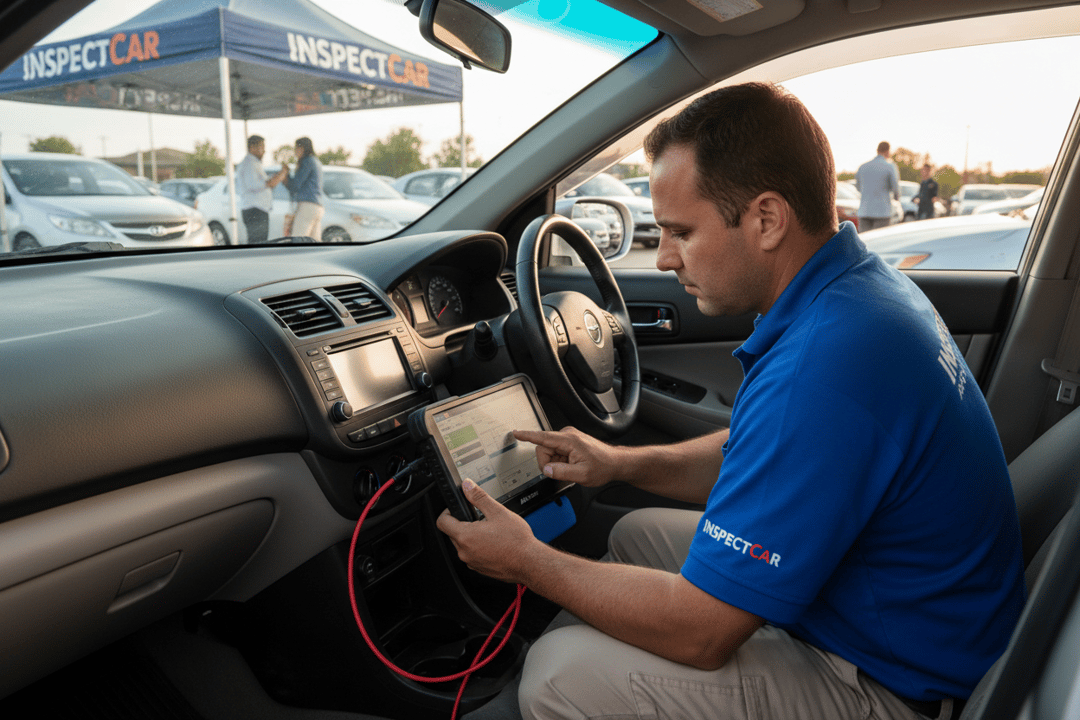
- OBD Scanning: Modern vehicles store diagnostic trouble codes (DTCs) in the computer memory. An On-Board Diagnostics (OBD) scan retrieves these codes to reveal pending faults in the engine, transmission, ABS, and airbag systems.
AutoFay offers a computer diagnostic service for AED 99, providing a digital snapshot of the vehicle's electronic health.
Critical Safety Systems and Braking Performance
Brakes are the primary safety system in any vehicle. Worn brake pads reduce stopping distance and generate metal-on-metal noise, which is a common reason for lease return rejection.
- Brake Pad Thickness: Inspectors measure pad thickness against industry standards. A low rating triggers a mandatory repair order.
- Disc Condition: Warped rotors cause pulsation during braking. Surface rust or glazing reduces braking efficiency.
- Airbag Systems: The SRS (Supplemental Restraint System) warning light must remain off. A history of airbag deployment requires a full system reset and inspection of sensors.
Suspension and Tire Condition
Suspension components dictate ride quality and handling. Leaking shock absorbers or worn ball joints create a rough ride and uneven tire wear. Tires require scrutiny for both tread depth and manufacturing age.
- Tire Age: Tires degrade over time regardless of tread wear. A tire older than six years may suffer from sidewall cracking, leading to a blowout.
- Tread Depth: Uneven wear patterns (crown wear, inner/outer wear) indicate alignment issues. Camber and toe alignment must be verified.
- Suspension Bushings: Cracked rubber bushings allow excessive movement, resulting in clunking noises and poor handling.
Fluids and Maintenance Condition
Fluids act as the lubricants and coolants for the vehicle's systems. The condition of these liquids reveals the maintenance history and current mechanical state.
- Engine Oil: Dark, gritty oil indicates carbon buildup and sludge. Oil should be amber and clean.
- Transmission Fluid: Burnt odor or a dark brown color suggests overheating and internal friction damage.
- Brake Fluid: A low level or a dark, dirty appearance indicates moisture absorption, which lowers the fluid's boiling point and compromises braking.
- Coolant: A rusty or slimy texture indicates corrosion within the cooling system.
Road Testing and Driving Dynamics
A static inspection is insufficient for a lease return. A road test evaluates how the vehicle functions in real-world conditions. This phase tests the powertrain response and safety systems.
- Acceleration: The vehicle should accelerate smoothly without hesitation or jerking.
- Braking: The pedal should feel firm. Spongy brakes indicate air in the lines or worn master cylinders.
- Noise and Vibration: Humming, whining, or rattling sounds during acceleration or cornering pinpoint drivetrain or wheel bearing issues.
Structuring the Inspection Report
A professional report must be detailed and photogenic. It should categorize findings into clear sections with objective ratings. The report serves as legal evidence if a dispute arises.
| Category | Key Checkpoints | Condition Rating |
|---|---|---|
| Body & Paint | Panel alignment, color match, stone chips | Pass / Fail / Refer |
| Frame & Structure | Rail integrity, floor pan, door alignment | Pass / Fail / Refer |
| Engine | Leakage, smoke, mounts, sound | Pass / Fail / Refer |
| OBD Scan | Engine, ABS, Airbag, Transmission codes | Clear / Stored Faults |
| Brakes | Pad thickness, disc condition, fluid level | Pass / Fail / Refer |
| Suspension | Shock absorbers, ball joints, bushings | Pass / Fail / Refer |
| Tires | Tread depth, manufacturing date, wear pattern | Pass / Fail / Refer |
| Fluids | Level, condition, color, smell | Pass / Fail / Refer |
| Road Test | Acceleration, braking, noise, vibration | Pass / Fail / Refer |
Selecting the Appropriate Service Package
Vehicle owners can choose the level of inspection depth required. The scope of the report depends on the chosen package. Selecting the correct tier ensures sufficient detail without unnecessary cost.
- Computer Diagnostic: This package targets electronic faults. It costs AED 99 and is ideal for vehicles with check engine lights or electronic malfunctions.



0 Comments
No comments yet. Be the first to share your thoughts!