
Hyundai and Kia have transformed from budget alternatives to genuine competitors in the UAE market. Models like the Hyundai Tucson, Santa Fe, Sonata, and Kia Sportage, Sorento, and K5 offer features and build quality that rival Japanese and even some European brands. However, their rapid engineering evolution means different model years can have very different inspection profiles. Knowing what to check on each generation matters.
Engine: Turbo Models Need Extra Scrutiny
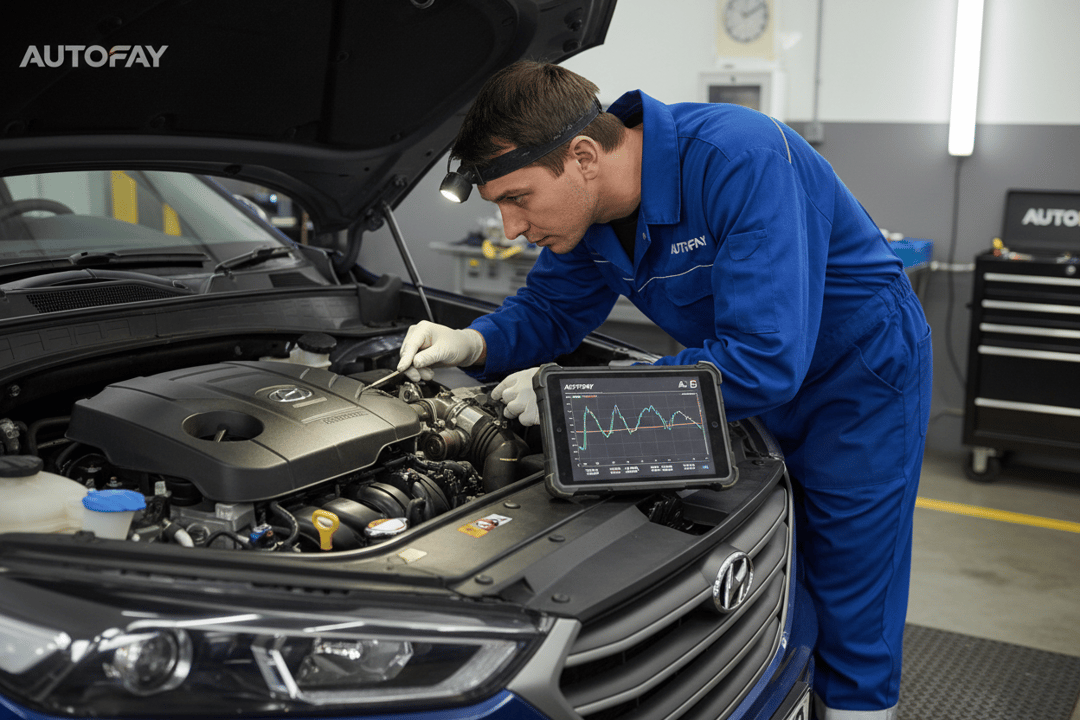
AutoFay's engine inspection covers start quality, idle behavior, abnormal noises, engine vibration, and exhaust smoke. Hyundai and Kia's naturally aspirated engines — the 2.0L and 2.4L found in many models — generally inspect well. Engine start is typically Normal, and these engines maintain smooth idle characteristics at reasonable mileage.
The turbocharged engines tell a different story. The 1.6T and 2.0T engines used across both brands are powerful and efficient but require diligent maintenance. The turbocharger is checked — rated as Working Fine, Noisy, or Leaking. Engine oil condition on these turbocharged models is critical. Oil rated as Dark is expected between services, but Dirty oil on a turbo Hyundai or Kia means the turbo bearings are running on contaminated lubricant. The engine air filter and air intake system condition directly affect turbo longevity — a dirty air filter forces the turbo to work harder to deliver the same boost.
Transmission: DCT vs Conventional Automatic
The drivetrain inspection is where Hyundai and Kia inspection requires specific knowledge. Many models use dual-clutch transmissions (DCT), which operate differently from conventional automatics. During inspection, transmission operation is rated — a DCT that shows Slight Delay or produces shudder from a standing start has clutch pack wear. This is not unusual on DCTs with mileage, but the severity determines whether it is a minor characteristic or an approaching repair.
Models with conventional automatic transmissions — the 6-speed and 8-speed units — typically rate as Smooth. Transmission fluid condition is checked and is especially relevant because many owners do not realize DCTs require specific fluid that must be changed at intervals. Fluid rated as Needs Replacement on a DCT is an immediate service item, not something to defer.
Cooling System: Heat Management
The cooling system inspection matters significantly on turbocharged Hyundai and Kia models. The radiator, water pump, cooling hoses, and coolant condition are each checked. Turbocharged engines generate more heat than naturally aspirated equivalents, and in UAE conditions this compounds. Cooling hoses rated as Soft or Cracked on a turbo model need immediate replacement — a cooling system failure on a turbocharged engine leads to rapid overheating that can cause permanent engine damage.
Coolant condition rated as Clean at proper level indicates the owner understood the maintenance requirements. Contaminated or low coolant on a relatively new Korean turbo vehicle suggests the kind of neglect that shortens engine life significantly.
Electronics and Infotainment: Modern Systems
Recent Hyundai and Kia models feature sophisticated infotainment and digital instrumentation. The digital and infotainment inspection covers the infotainment screen, digital instrument cluster, navigation, Bluetooth, and Apple CarPlay/Android Auto. These systems generally function reliably, but the large screens in models like the Tucson and Sportage can develop touch sensitivity issues that manifest as delayed response or ghost touches.
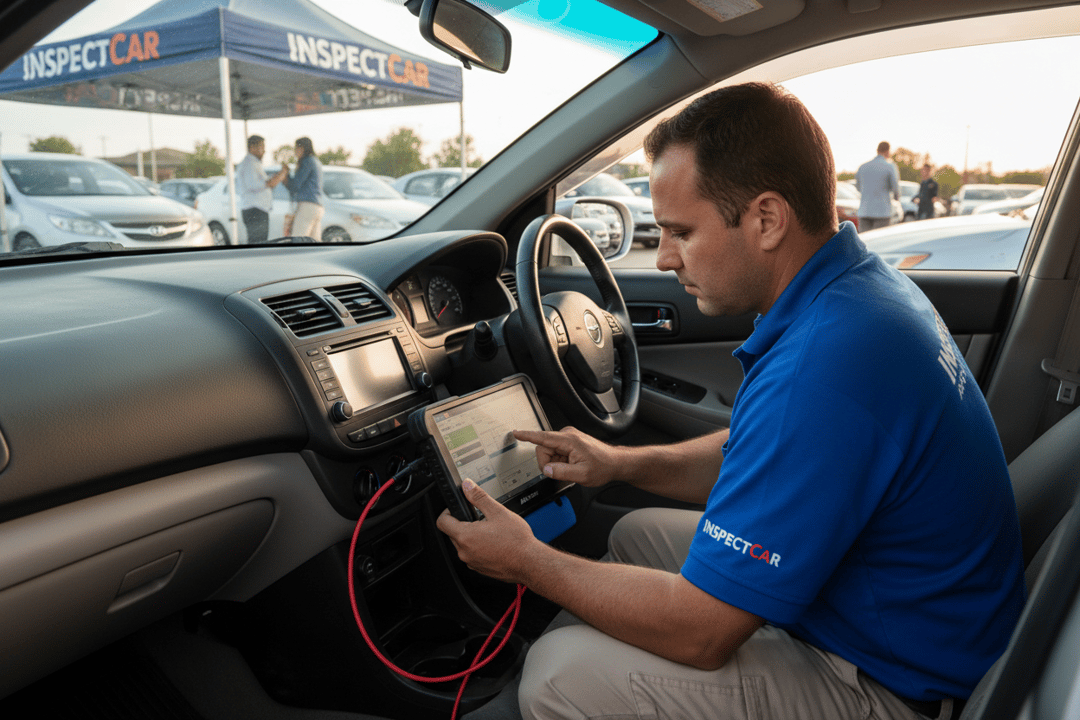
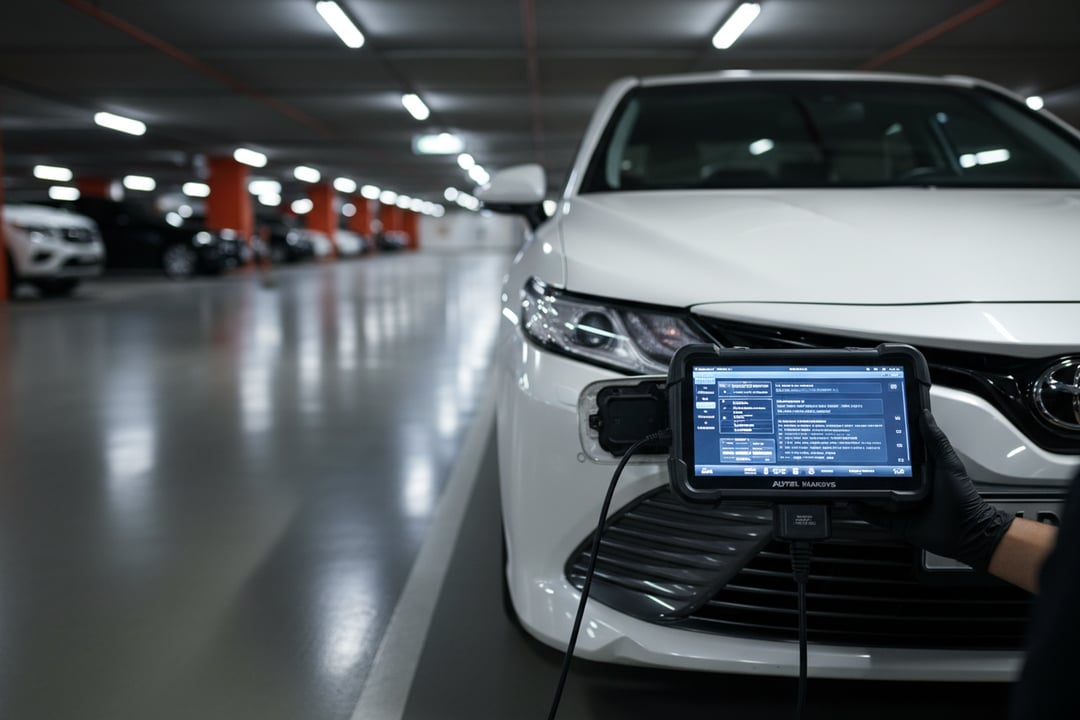
The OBD scanner report on Korean vehicles is usually clean on well-maintained examples. When codes are present, they often relate to emissions system components. Body control module codes can appear relating to smart key and proximity entry systems, which occasionally develop intermittent connectivity issues.
Safety Systems: Well-Equipped from Factory
Modern Hyundai and Kia models come well-equipped with safety technology. The safety and security systems inspection verifies blind spot detection, lane keep assist, forward collision warning, automatic emergency braking, and rear cross-traffic alert. These systems are standard on many trims and generally test as Working. However, front radar sensors mounted in the lower grille area are vulnerable to damage from parking contact and stone chips — a non-functional forward collision warning system may simply need a sensor replacement after minor front bumper contact.
AutoFay inspects 410 checkpoints on every Hyundai and Kia, with HD photos and a detailed PDF report. On-location inspection across all 7 Emirates. Book at autofay.ae or call +971-54-258-4458.
0 Comments
No comments yet. Be the first to share your thoughts!