
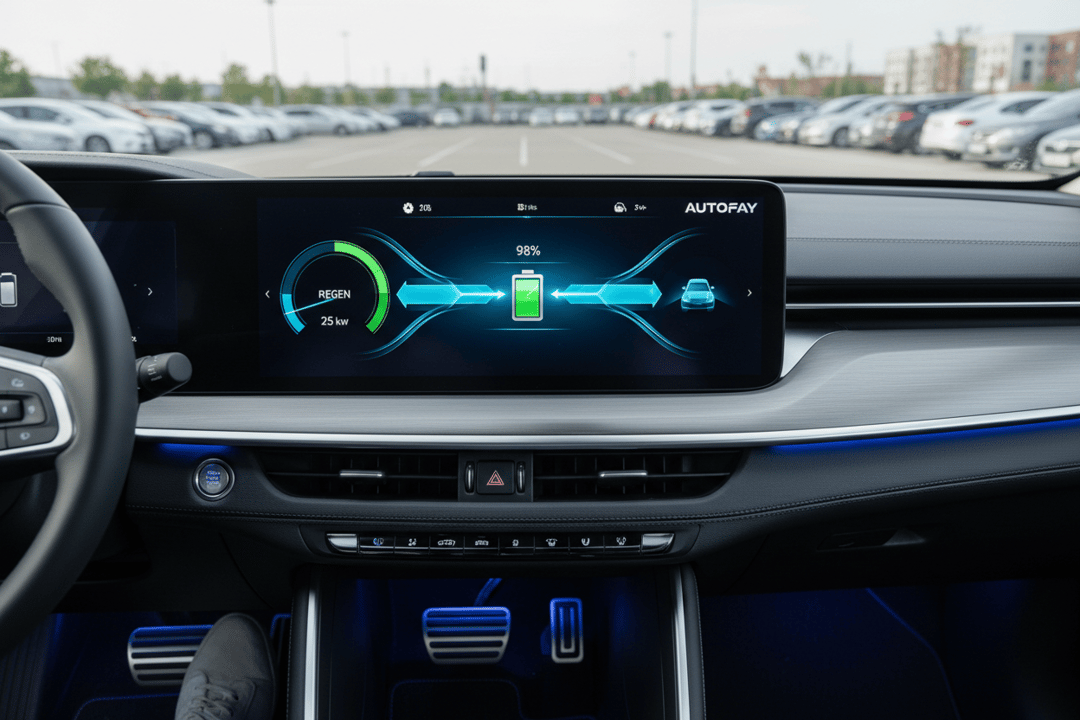
Regenerative braking is one of the defining features of hybrid and electric vehicles. When you lift off the accelerator or press the brake pedal, the electric motor reverses its role and becomes a generator, converting the vehicle's kinetic energy back into electrical energy stored in the battery. This system reduces wear on conventional brake components and extends driving range — but when it degrades, the vehicle loses both range efficiency and a significant portion of its braking capability.
How AutoFay Tests Regenerative Braking
AutoFay's EV and Hybrid Systems inspection rates regenerative braking as Working, Weak, or Not Working. The test is performed during the road test portion of the inspection. The inspector evaluates the deceleration force when lifting off the accelerator at various speeds — a properly functioning regenerative braking system should produce noticeable deceleration without touching the brake pedal, especially in higher regen settings where available.
The energy flow display on the instrument cluster or infotainment screen is observed during deceleration — it should show energy flowing from the wheels back to the battery. If the display shows no energy recovery during deceleration, the regenerative system is not functioning. The road test also evaluates overall braking performance — rated Excellent, Good, Soft, Pulling, or Poor — to assess how the regenerative and friction braking systems work together.
Brake Pad Wear: The Hybrid Paradox
On a hybrid or EV with properly functioning regenerative braking, the conventional brake pads should show less wear than on an equivalent conventional car with similar mileage. AutoFay checks front brake pads — Good (>50%), Average (25-50%), Worn (<25%), or Needs Replacement — and rear brake pads separately. Brake rotors are checked for scoring and warping.
The paradox is that hybrid brake pads may actually develop problems from too little use rather than too much. Brake rotors on hybrids can develop surface rust because the regenerative system does most of the light braking, leaving the friction brakes underused. This rust causes pulsation when the brakes are applied firmly. The inspection checks brake pedal feel — Firm, Soft, Spongy, or Pulsating — and notes whether pulsation occurs during normal or hard braking.
Brake calipers are checked — Working, Sticking, Leaking, or Seized. On a hybrid, calipers that sit unused for extended periods can develop corrosion on the slide pins, causing them to stick. A sticking caliper causes uneven pad wear and pulls the vehicle to one side during braking.
Battery Health and Regenerative Capacity
Regenerative braking effectiveness is directly tied to battery condition. AutoFay checks high voltage battery health — Excellent, Good, Degraded, or Needs Replacement. Battery state of health percentage is recorded. A significantly degraded battery may not accept charge from regenerative braking as efficiently, reducing the system's effectiveness. Battery capacity is assessed — Full Capacity, Slightly Degraded, or Significantly Degraded.
The hybrid battery cooling system is checked — Working, Noisy, or Not Working. A battery that overheats will limit regenerative charging to protect itself, which reduces braking force from the electric motor. Cell variation is assessed — Normal or High Variation. High cell variation means some cells are weaker than others, which can cause inconsistent regenerative braking behavior.
The hybrid drive mode is tested — Working or Not Switching. Some hybrids allow drivers to select between different regenerative braking intensities, and all available modes should function correctly. The electric motor itself is assessed — Working, Noisy, or Vibration. A motor with bearing wear may produce noise during regenerative braking that is not present during acceleration.
The Blended Braking System
Modern hybrids use blended braking systems that combine regenerative and friction braking seamlessly. The brake master cylinder and brake booster are checked because they work differently on hybrids — the booster may be electrically operated rather than vacuum-assisted. Brake fluid level and condition are inspected. The ABS system is verified because it must coordinate with the regenerative system to prevent wheel lockup.
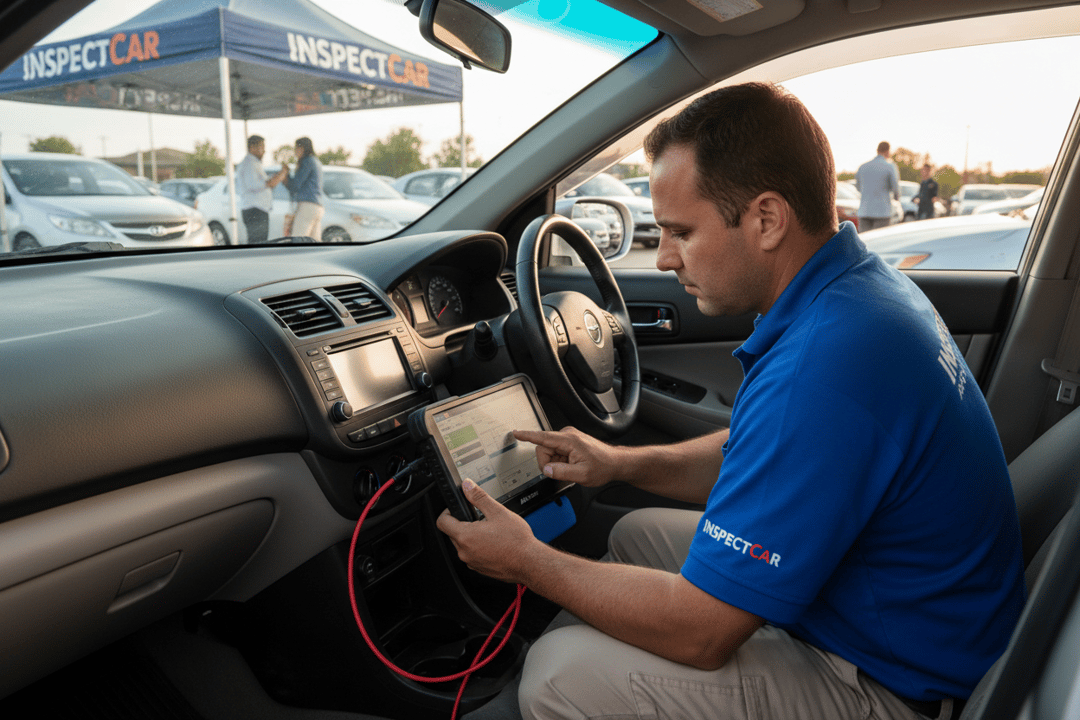
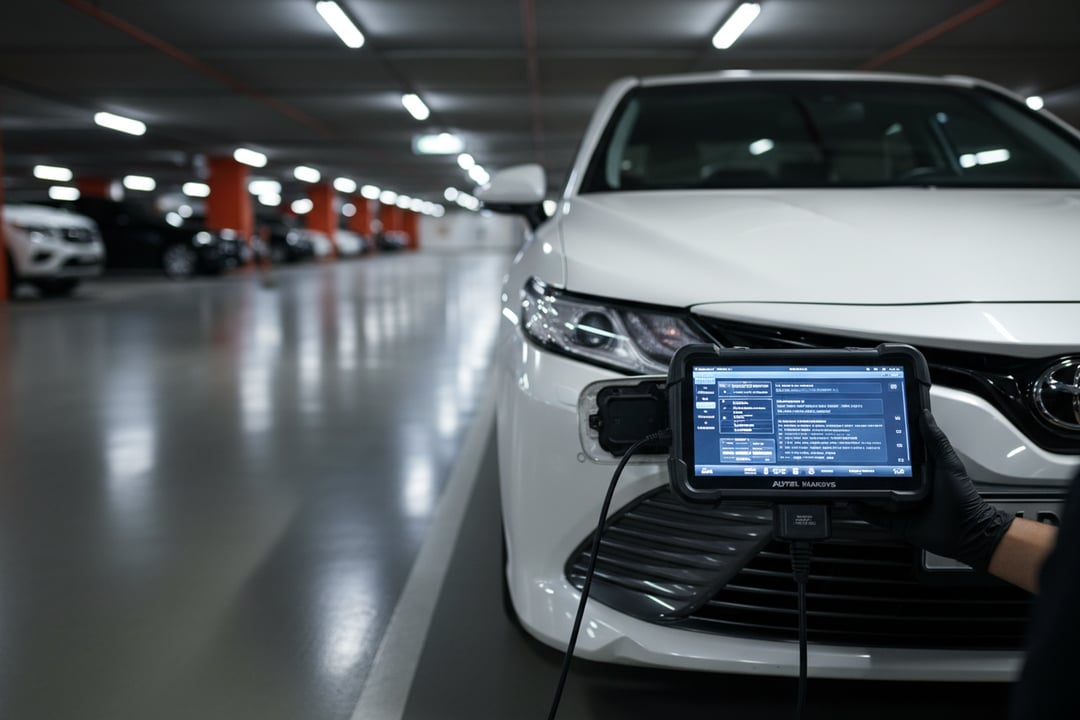
The OBD scanner checks for hybrid-specific fault codes that may affect regenerative braking. Stored codes in the hybrid control module or battery management system can indicate issues that reduce regenerative capability without triggering a warning light. The inspection documents any such codes in the OBD fault code details section.
Why This Matters for UAE Buyers
In UAE driving conditions, regenerative braking contributes significantly to a hybrid's fuel efficiency. Stop-and-go traffic, common in Dubai and Abu Dhabi, provides constant opportunities for energy recovery. A hybrid with weak regenerative braking will show noticeably worse fuel economy in daily driving. the conventional brakes must work harder to compensate, accelerating pad and rotor wear and increasing maintenance costs.
AutoFay checks 410+ checkpoints including regenerative braking assessment on every hybrid and EV, with HD photos and a detailed PDF report. On-location inspection across all 7 Emirates. Book at autofay.ae or call +971-54-258-4458.



0 Comments
No comments yet. Be the first to share your thoughts!