

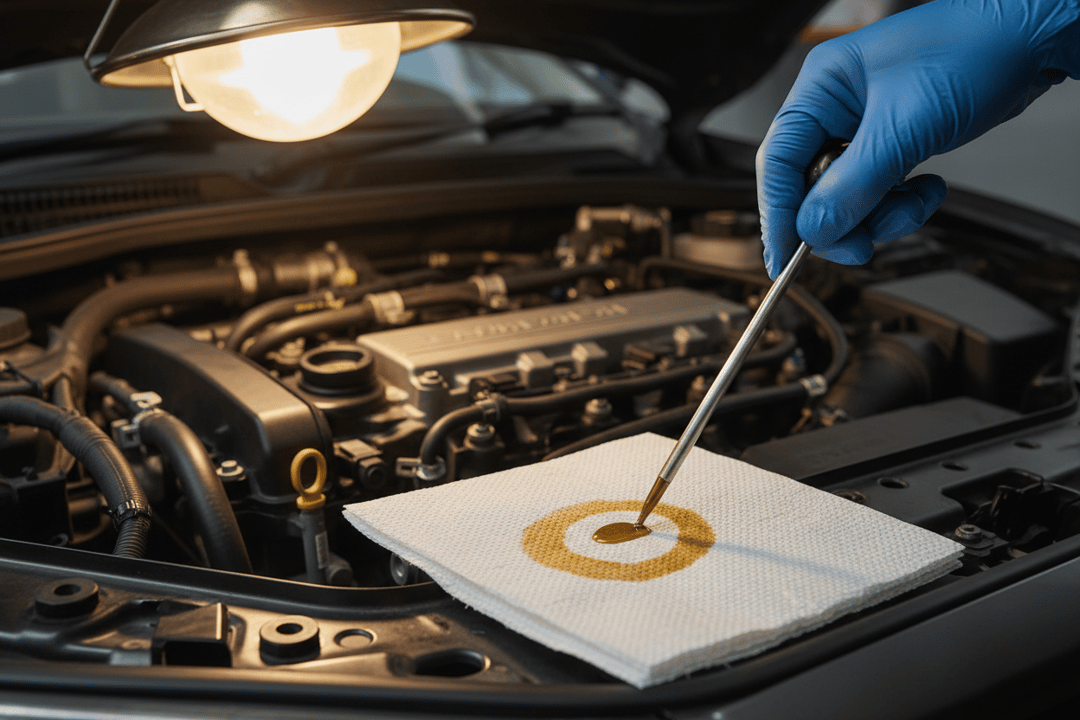
Fluids are the lifeblood of every vehicle. They lubricate, cool, clean, and transmit force. A car can look perfect on the outside while carrying fluids that tell a very different story. AutoFay checks 11 fluid points, evaluating both the level and the condition of each — because a full reservoir of contaminated fluid is worse than a slightly low reservoir of clean fluid.
Engine Oil: Level and Condition Tell Different Stories
Engine Oil Level is checked as Full, Low, Overfilled, Empty, or Sealed Unit (No Dipstick) for modern vehicles without traditional dipsticks. Low oil means either a leak or consumption — both need investigation. Overfilled oil can foam and lose its lubricating properties, potentially damaging bearings and seals.
Engine Oil Condition reveals maintenance habits. Clean oil is amber and translucent — it has been changed recently. Dark oil is normal for oil that has been in service for a while. Dirty oil is thick and black, indicating overdue oil changes. Milky oil is the most alarming — a creamy, coffee-colored appearance means coolant is mixing with oil, almost always pointing to a head gasket failure or cracked engine block. This single finding can turn a potential purchase into a walk-away.
Coolant: The Color Tells the Story
Coolant Level is straightforward — Full, Low, or Empty. But Coolant Condition is where critical information hides. Clean coolant is bright green, orange, pink, or blue depending on the type. Dirty coolant has turned murky and lost its color intensity, indicating it has not been flushed on schedule. Contaminated coolant contains particles or has turned an unexpected color. Oily coolant — with a visible oil film floating on the surface — indicates the opposite of milky oil: engine oil is leaking into the cooling system, again pointing to gasket or block issues.
Brake Fluid: Clarity Is Safety
Brake Fluid Level checked as Full, Low, or Empty directly relates to brake system integrity. Low brake fluid could mean worn brake pads (as pads wear thinner, the caliper pistons extend further, drawing more fluid from the reservoir) or a leak in the system. Brake Fluid Condition rated as Clear is ideal — the fluid is fresh and has not absorbed moisture. Dark brake fluid has degraded and absorbed water over time. Contaminated fluid needs immediate replacement because moisture in brake fluid lowers its boiling point, which can cause brake fade during sustained braking — particularly dangerous on UAE highway off-ramps and mountain roads.
Transmission and Power Steering Fluids
Transmission Fluid Level is rated Full, Low, Overfilled, or Sealed Unit for modern transmissions without dipsticks. Transmission Fluid Condition carries the widest range of ratings: Good, Acceptable, Dirty, Burnt Smell, Contaminated, Low Level, Needs Replacement, or Sealed Unit. Burnt-smelling transmission fluid is a significant finding — it means the fluid has overheated, which degrades its friction properties and accelerates wear on clutch packs and bands. In UAE conditions, where summer heat pushes transmission temperatures higher, burnt fluid is more common than in moderate climates.
Power Steering Fluid Level and Condition are assessed where applicable — many modern vehicles have electric power steering with no fluid. For hydraulic systems, dark or contaminated power steering fluid causes pump noise and accelerated wear. Windshield Washer Fluid is checked as Full, Low, or Empty — a minor point, but an empty washer reservoir during a sandstorm is a visibility hazard.
AutoFay checks 410+ checkpoints including 11 fluid checkpoints, with HD photos and a detailed PDF report. On-location inspection across all 7 Emirates. Book at autofay.ae or call +971-54-258-4458.





0 Comments
No comments yet. Be the first to share your thoughts!