

The automotive landscape of the United Arab Emirates is dominated by a preponderance of premium European vehicles, with Mercedes-Benz standing as a consistent leader in both personal ownership and fleet management. For fleet operators and commercial buyers, the acquisition of high-value assets requires a rigorous vetting process to mitigate risk and ensure operational continuity. Unlike standard passenger vehicles, commercial fleets often endure higher mileage and more abrasive driving conditions, making the integrity of the chassis, braking systems, and electronic architecture paramount. A superficial visual assessment is insufficient for these sophisticated machines; a comprehensive fleet inspection is the only method to accurately determine the vehicle’s true condition. Professional inspection services provide the data-driven clarity necessary to separate a well-maintained asset from a vehicle harboring latent mechanical failures that could result in costly downtime.
The Complexity of German Electronics
Modern Mercedes-Benz vehicles are engineering marvels that rely heavily on complex electronic control units (ECUs) to manage everything from engine performance to suspension damping. In the context of a fleet, the cumulative impact of these systems means that a minor fault in one module can cascade into broader operational issues. Inspectors must prioritize the vehicle's Electronic Stability Program (ESP), adaptive braking systems, and air suspension modules. A failure in the electronic control system can disable critical safety features, rendering the vehicle unsafe for public roads and violating UAE traffic regulations. Furthermore, the integration of infotainment and navigation systems with the vehicle’s central computer can lead to software glitches that affect accessory functionality. Without a detailed diagnostic scan, these electronic anomalies remain hidden, potentially leading to expensive repairs or component replacement.
Common Mercedes-Benz Anomalies
Several mechanical and electrical patterns have been identified in Mercedes-Benz models within the UAE market that inspectors must actively seek. One prevalent issue involves the cooling system, where thermostat failures or coolant leaks can lead to overheating, particularly in stop-and-go traffic common in Dubai and Abu Dhabi. Inspectors should look for signs of coolant degradation or residue around the radiator cap and hoses. Another frequent culprit is the oil consumption rate; high-mileage models may consume oil due to piston ring wear, which can lead to sludge buildup and eventual engine failure if not monitored. Additionally, the electrical wiring harnesses in older models are susceptible to degradation from high ambient temperatures and dust, often resulting in erratic sensor readings and warning lights on the dashboard.
- Oil Consumption: Verify oil levels between oil change intervals to rule out internal wear.
- Cooling System: Inspect for leaks and check coolant quality for discoloration or debris.
- Electrical Harnesses: Look for brittle wiring, especially along the engine and chassis grounds.
- Timing Components: Check service history for belt replacement intervals to prevent catastrophic engine failure.
- Transmission Shift Points: Observe smooth gear transitions; harsh shifting indicates hydraulic or solenoid issues.
Model-Specific Considerations
Fleet managers must recognize that different Mercedes-Benz models present unique challenges during inspection. The C-Class, a staple in the UAE rental market, often suffers from accelerated suspension wear due to frequent pothole impacts and heavy loads. Inspectors should pay close attention to the air struts and shock absorbers, checking for leaks and uneven ride height. The E-Class, while generally robust, has historically been prone to transmission fluid degradation in high-mileage units, requiring a fluid exchange to ensure proper shifting. For the S-Class and GLE models, the advanced air suspension systems are a major point of failure; a leak here can cause the vehicle to sag, affecting handling and tire alignment. The GLE, in particular, has seen reports of engine block issues in certain production years, necessitating a thorough compression test and leak-down test as part of the inspection protocol.
The AutoFay Inspection Protocol
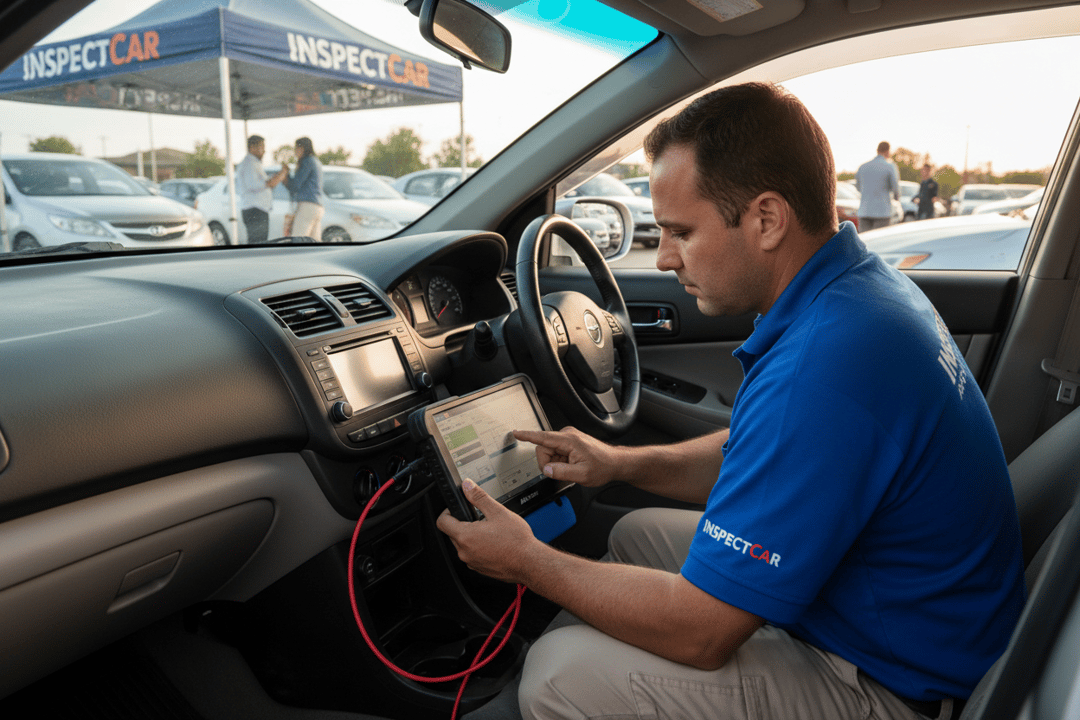
A professional fleet inspection requires a structured approach that covers the vehicle’s physical condition and mechanical health. AutoFay provides a rigorous evaluation process designed to uncover hidden defects. The service operates across all 7 Emirates, offering on-location convenience that allows inspections to be conducted at the buyer’s location or dealership. The core of the inspection protocol involves 25 distinct categories, ensuring that no aspect of the vehicle is overlooked. This systematic method allows for the identification of discrepancies that might be missed during a standard walk-around. From the condition of the chassis to the functionality of safety-critical sensors, every element is scrutinized to provide a true representation of the vehicle's value and safety.
| Package | Price (AED) | Scope of Inspection |
|---|---|---|
| Computer Diagnostic | 99 | Full OBD scan for engine, transmission, ABS, and airbag fault codes. |
| Body & Computer | 250 | Panel-by-panel paint analysis (original vs. repaired) combined with computer diagnostics. |
| Comprehensive | 399 | Full 410+ checkpoint inspection including frame integrity, engine sound, road test, fluids, and tires. |
Prioritizing Critical Inspection Categories
When conducting a fleet inspection, certain categories demand immediate attention to ensure safety and regulatory compliance. The body and paint inspection must be conducted panel-by-panel to detect mismatches in color and texture that indicate past accidents or repairs. A compromised frame, particularly the door sills and rocker panels, can compromise vehicle structural integrity and safety. The engine bay should be inspected for signs of oil leaks, coolant seepage, and loose wiring, as these are indicators of poor maintenance. Furthermore, the braking system is critical; inspectors must assess the pad thickness percentage and check for any fluid leaks or unusual noises during a test drive. Suspension components, including control arms and bushings, must be checked for wear, as failure in these parts can affect vehicle handling and increase tire wear costs.
- Body & Paint: Identify repainted panels or accident damage that may affect resale value.
- Frame Integrity: Inspect rails and pillars for structural damage or unibody separation.
- Engine Condition: Listen for knocking sounds and inspect for smoke from the exhaust.
- Brake Performance: Verify pad wear levels and fluid condition for safety.
- Suspension & Tires: Ensure even tire wear, correct tire manufacturing dates, and no suspension noise.
- Fluids: Check engine oil, transmission fluid, coolant, and brake fluid levels and condition.
The Importance of Fluids and The Road Test
The condition of the vehicle's fluids is a direct reflection of the maintenance history and the mechanical health of the engine and transmission. Engine oil should be examined for viscosity and the presence of metallic particles, which can indicate internal wear. Transmission fluid should be checked for burnt smells and discoloration, as degraded fluid is a primary cause of transmission failure. The brake fluid must be tested for moisture content, which lowers its boiling point and reduces braking efficiency. Finally, a comprehensive road test is essential to evaluate the vehicle's dynamics under real-world conditions. This test assesses acceleration, braking response, noise levels, and vibrations to ensure the vehicle drives as intended without mechanical anomalies.
AutoFay inspects 410+ checkpoints with HD photos and PDF report. Book at autofay.ae or call +971542584458



0 Comments
No comments yet. Be the first to share your thoughts!