

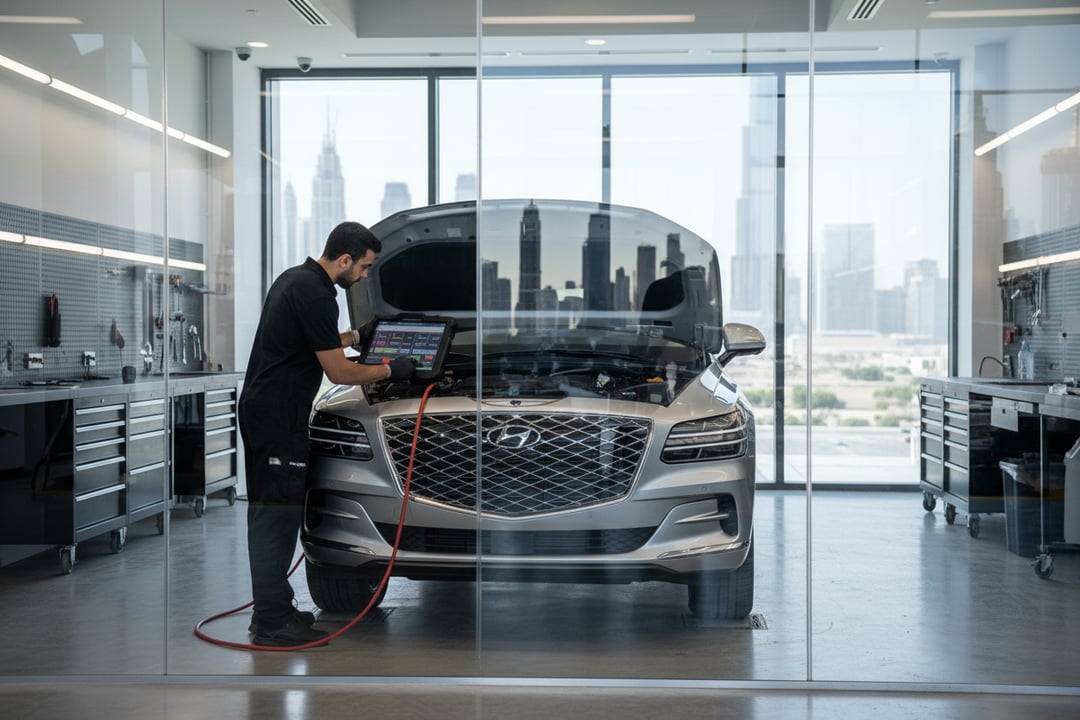
Hyundai vehicles have secured a significant position in the UAE commercial and private fleet sectors due to their competitive pricing and general reliability. However, the local operating environment—characterized by extreme heat, abrasive dust, and coastal salinity—exerts unique stress on automotive components. A prospective buyer or fleet manager must distinguish between normal wear and critical mechanical failure before committing capital. Professional vehicle inspection services provide the technical rigor required to validate a vehicle's condition. AutoFay offers a on-location inspection solution with 410+ checkpoints across 25 categories, ensuring that every aspect of the Hyundai is scrutinized without requiring the owner to visit a workshop.
Common Mechanical Anomalies in Hyundai Fleet Vehicles
While Hyundais are generally robust, specific models exhibit recurring faults that require immediate attention during an inspection. The 1.6 Lambda (Gamma) and Theta (GDI) engines, found in everything from the Accent to the Santa Fe, are prone to cooling system degradation. The plastic intake manifolds in these engines often crack due to thermal expansion cycles and heat soak, leading to vacuum leaks that cause rough idling and poor fuel economy. Furthermore, the timing chain tensioners in these powertrains are known to weaken over time; if the chain stretches significantly, the engine may fail to start or suffer catastrophic internal damage.
- Timing Chain Tensioners: Failure here results in engine stalling or internal damage requiring complete engine replacement.
- Intake Manifolds: Cracks disrupt airflow, causing vacuum leaks and reduced engine efficiency.
- Water Pumps: Premature failure leads to coolant leaks and potential overheating, especially during summer operations.
- PCV Valves: Clogging in these devices causes excessive oil consumption and blue smoke emissions.
Model-Specific Vulnerabilities
Different Hyundai models in the UAE fleet market possess unique weak points that inspectors must identify. The Hyundai Elantra is frequently subjected to suspension wear; the rear shock absorbers and ball joints tend to degrade faster due to the unforgiving nature of UAE roads and the vehicle's front-engine weight distribution. For the Accent, insulators and brackets often crack, while the fuel pump relay is a common point of failure that causes sudden stalling while driving. Diesel variants like the Santa Fe and Tucson demand closer scrutiny regarding the turbocharger oil seals; a failure here results in oil consumption and blue smoke from the exhaust, signaling immediate mechanical intervention.
The Impact of the UAE Climate on Fleet Assets
The relentless summer temperatures in the Emirates accelerate the aging of rubber components and electrical systems. High under-hood temperatures degrade engine mounts, causing excessive engine vibration and noise during operation. The intense UV exposure and humidity also affect the vehicle's paintwork and trim, making oxidation and fading common issues for older fleet vehicles. Dust accumulation in the cabin air filter and air intake systems can clog the mass airflow sensor, triggering 'Check Engine' lights and reducing HVAC efficiency. Salt air from coastal cities like Dubai and Abu Dhabi accelerates corrosion on the chassis, brake lines, and suspension components, necessitating a thorough underbody inspection.
The Inspection Protocol: What to Prioritize
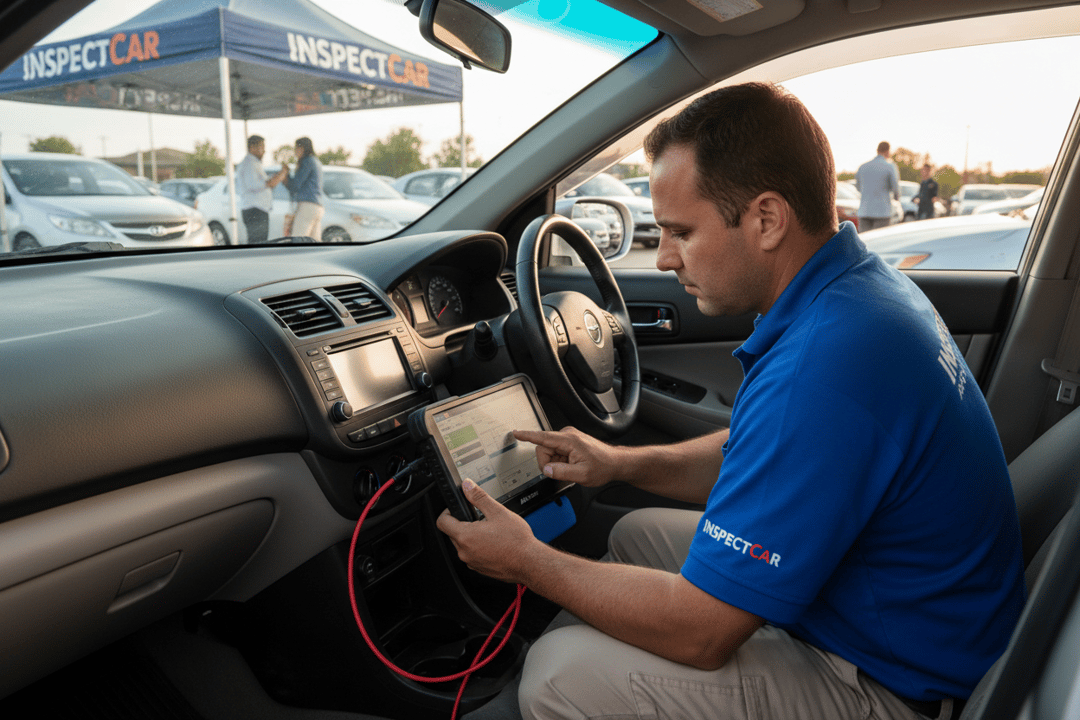
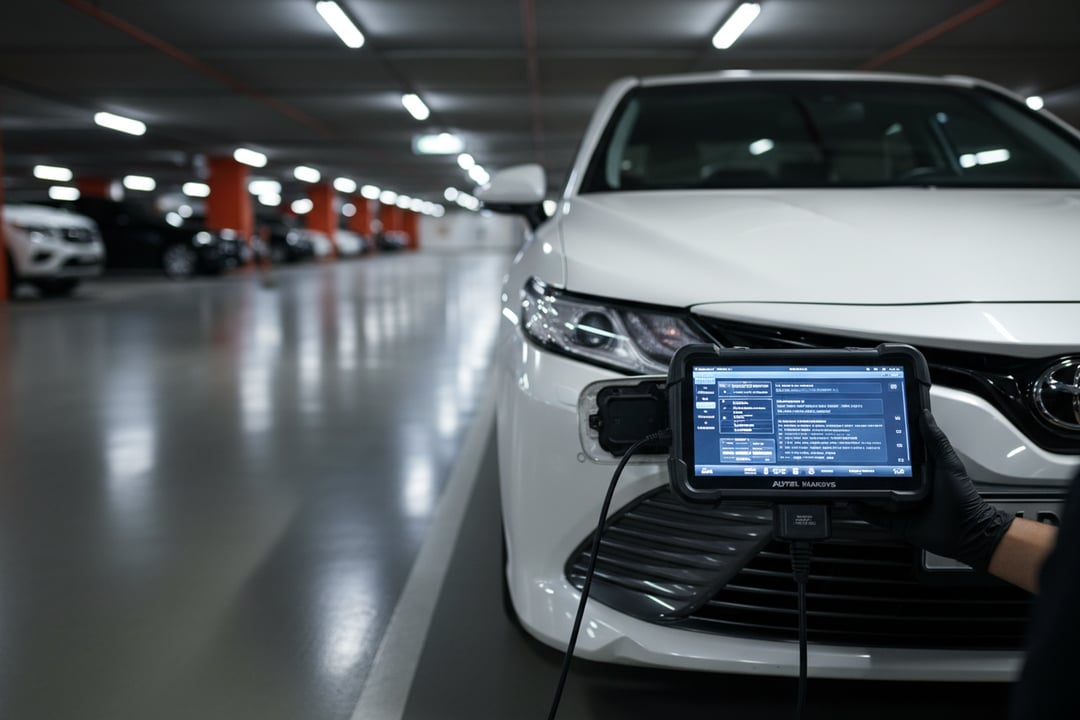
A comprehensive inspection must move beyond a visual check to include functional testing. Computer diagnostics are essential to retrieve hidden fault codes stored in the Engine, Transmission, ABS, and Airbag control modules. An OBD scan reveals issues that are not immediately apparent, such as lean or rich fuel mixture errors or sensor malfunctions. The road test evaluates acceleration, braking stability, and suspension behavior under load. Inspectors must verify the condition of the tires, checking manufacturing dates to ensure they have not exceeded their lifespan, and inspect brake pads to ensure they meet safety standards.
Selecting the Appropriate Inspection Package
Fleet managers require varying levels of scrutiny depending on the vehicle's age and condition. A basic electrical check is sufficient for newer vehicles, while older models demand a full mechanical audit. AutoFay provides three distinct tiers of service designed to match the complexity of the inspection needed.
| Service Package | Price (AED) | Key Inclusions |
|---|---|---|
| Computer Diagnostic | 99 | Connects to vehicle computer to read and clear engine, transmission, ABS, and airbag fault codes. |
| Body & Computer | 250 | Includes Computer Diagnostic plus a detailed panel-by-panel visual inspection of exterior and interior condition. |
| Comprehensive | 399 | Full 410+ checkpoint inspection covering Body, Frame, Engine, Drivetrain, Brakes, Suspension, and Road Test. |
Verification of Structural Integrity
Collision damage can compromise the structural safety of a Hyundai, even if the exterior appears repaired. Inspectors must verify the frame rails and chassis for straightness, checking that the vehicle sits level on a flat surface. Pillar alignment and door gaps provide indicators of previous repairs. Checking the floor pan for rust or welding marks is critical, as access to the cabin is often hidden from general view. Suspension mounting points must be free from cracks or excessive play, which would indicate a history of severe impacts.
Hyundai vehicles offer excellent fleet value, but only when hidden defects are identified before acquisition. A formal inspection uncovers the mechanical reality of the asset. AutoFay inspects 410+ checkpoints with HD photos and PDF report. Book at autofay.ae or call +971542584458



0 Comments
No comments yet. Be the first to share your thoughts!