
The UAE used car market includes vehicles with every kind of accident history — from minor parking lot scratches to major structural collisions. A good body shop can make a severely damaged car look presentable on the surface, but a professional inspection reveals what the paint and polish hide. Here are five signs that an inspector looks for to determine if a car has been in a major accident.
1. Frame Rail Repair or Replacement
The frame condition section of AutoFay's inspection checks 27 structural points. The left and right front rails, left and right rear rails, and chassis are each rated as No Visible Fault, Minor Damage, Frame Repaired, Minor Frame Repaired, or Damaged. Frame rails are the structural backbone of the car — they absorb impact energy during a collision and protect the passenger cabin.
A frame rail that shows signs of repair — welding marks, straightening evidence, or mismatched paint underneath — indicates the car absorbed a significant impact. The front and rear aprons are checked for dents, repairs, welding, or replacement. The firewall — the metal barrier between the engine bay and the passenger compartment — is checked for dents, repairs, or welding. Any repair to the firewall indicates a severe front-end collision that pushed the engine backward into the cabin structure.
2. Multiple Repainted Panels on the Same Side
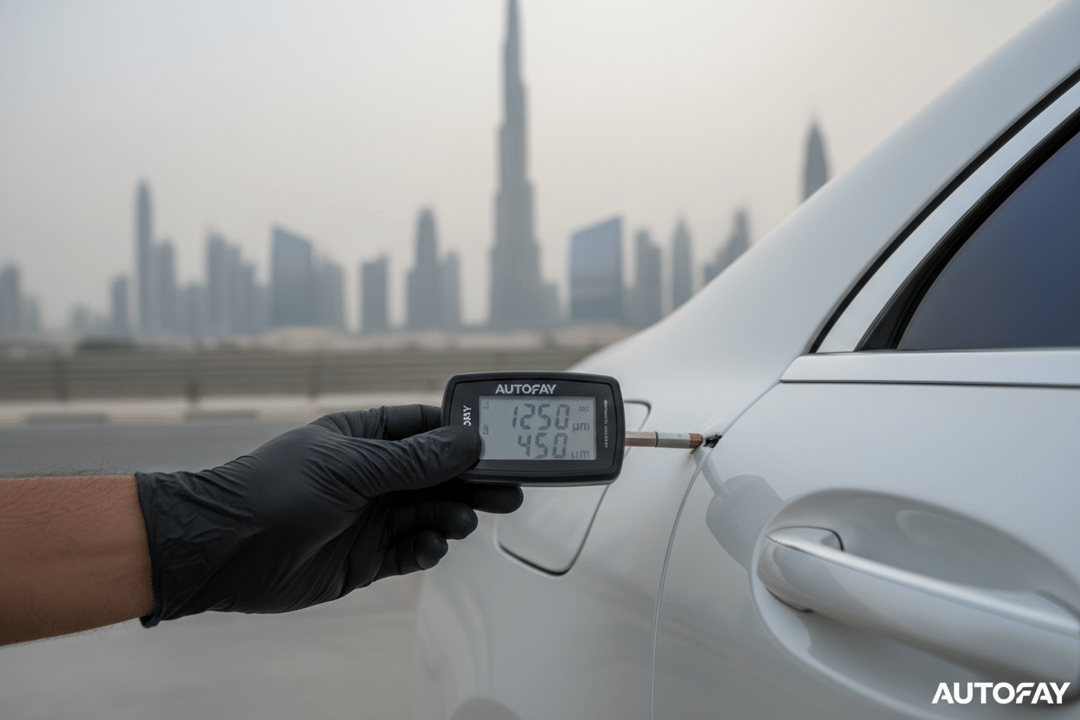
AutoFay's body and paint inspection checks every panel individually. Each panel — front bumper, hood, fenders, doors, quarter panels, trunk lid, rear bumper, and roof — receives two ratings: one for condition (No Visible Fault, Dent, Repainted, Repaired, Scratch, Replaced, Damaged) and one for paint (Original, Repainted, Total Repainted, Damaged).
A single repainted panel can be innocent — a scratched fender that was professionally refinished. But when the inspector finds three or four adjacent panels on the same side all rated Repainted — for example, front left fender, front left door, rear left door, and rear left quarter panel — this pattern indicates a side impact that damaged the entire length of the vehicle. Similarly, a front bumper, hood, and both fenders all showing Repainted strongly suggests a front-end collision.
3. Body Panel Misalignment
Body panel alignment is rated Good, Slight Misalignment, or Major Misalignment. After a collision repair, panels are removed, repaired or replaced, and refitted. Even the best body shops struggle to achieve factory-level alignment on heavily repaired vehicles. Uneven gaps between the hood and fenders, doors that do not sit flush with the body, or a trunk lid that is slightly off-center all point to structural work.
The door operation inspection provides supporting evidence. Doors rated as Stiff, Squeaky, or Not Closing Properly may have been rehung on a body that is no longer perfectly straight. Hinges rated as Worn or Needs Replacement on a relatively new car suggest the doors were removed during repair work. The A-pillar, B-pillar, and C-pillar conditions — checked on both left and right sides — reveal whether the structural pillars have been repaired, welded, or replaced.
4. Airbag System Warnings
The airbag system is rated No Warning, Warning Light On, or Deployed. Front airbags, side airbags, and curtain airbags are each checked separately, rated as Present, Warning, or Deployed/Missing. Seat belt pretensioners — explosive devices that tighten seat belts during a crash — are rated Working, Warning, or Deployed.
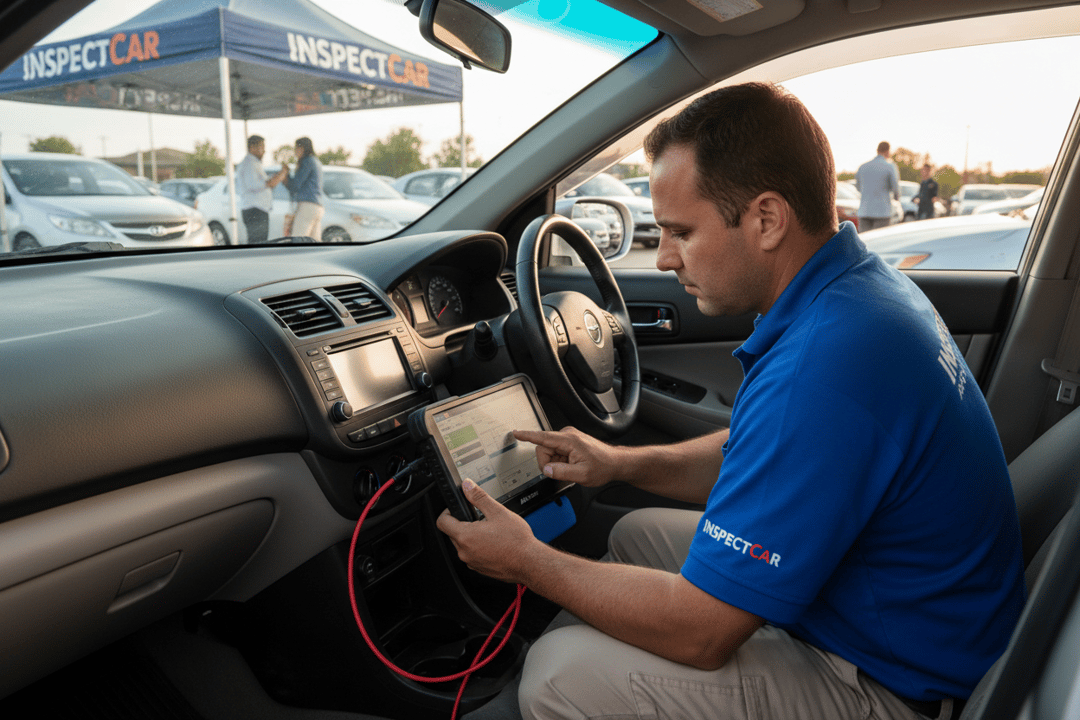
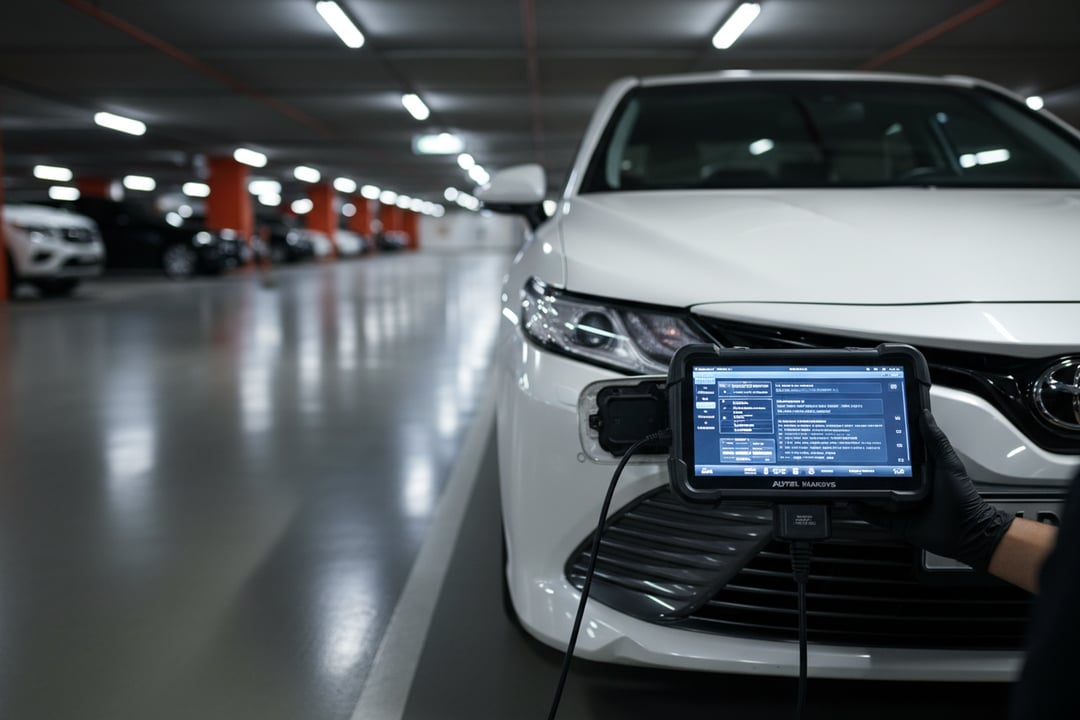
A car that has been in a collision severe enough to deploy airbags has absorbed significant impact energy. The airbags themselves may have been replaced, but the warning light and OBD codes tell the story. Airbag/SRS fault codes checked during the OBD scan will show stored codes related to deployment events, even if the physical airbags have been replaced. If the airbag system shows Warning Light On and the body inspection shows multiple repainted panels, the evidence of a major accident is clear.
5. Inconsistent Glass and Trim
The glass inspection checks the windshield, rear window, and all side windows. Each is rated as No Visible Fault, Chipped, Cracked, Needs Replacement, Aftermarket, or Replaced. Factory glass carries the vehicle manufacturer's logo etched into the corner. When a window is rated Aftermarket, it means the original was replaced with non-factory glass — which happens when glass breaks in a collision.
Multiple Aftermarket glass ratings — especially the windshield and one or more side windows — suggest an impact that shattered several glass panels simultaneously. Trim pieces rated Loose, Missing, or Damaged can indicate panels that were removed and poorly refitted during repair. Exterior chrome and trim rated Faded, Peeling, or Missing on specific sections while the rest of the car looks clean points to replacement parts that do not match the original finish.
The Complete Picture
No single finding proves a major accident on its own. A repainted panel might be cosmetic. An aftermarket windshield might replace one cracked by a rock. But when multiple indicators align — frame repair plus repainted panels plus misaligned body gaps plus airbag warnings — the inspection report tells a story that the seller cannot dispute. This is why a professional inspection examines every system, not just the ones the buyer thinks to ask about.
AutoFay inspects 410 checkpoints including complete body, paint, and frame analysis, with HD photos and a detailed PDF report. On-location inspection across all 7 Emirates. Book at autofay.ae or call +971-54-258-4458.


0 Comments
No comments yet. Be the first to share your thoughts!