

Inspecting exterior lighting systems on used sedan vehicles requires a methodical approach that goes beyond simply turning the ignition on and off. In the context of the UAE market, where high-speed highways and night driving are frequent, the functionality of a vehicle's lighting is not merely a cosmetic feature but a fundamental safety requirement. Sedans, due to their specific aerodynamic profiles and integrated lighting designs, present unique challenges during pre-purchase inspections. A compromised light system can lead to legal infractions, accidents, and a significant reduction in the vehicle's resale value. Understanding the operational mechanics of headlights, turn signals, and tail lights allows a buyer to identify potential electrical faults or mechanical failures that may not be immediately visible to the untrained eye.
The Criticality of Headlight Functionality and Alignment
The headlight assembly serves as the primary source of illumination for the driver, defining the road surface ahead and highlighting potential hazards. In the inspection process, the primary focus must be on the physical integrity of the lens and the functionality of the internal components. Sedans often utilize flush-mounted or integrated LED units; these designs are prone to moisture ingress if the rubber gaskets degrade over time. Condensation inside the lens creates a diffusion effect, drastically reducing brightness and rendering the headlight ineffective in low-visibility conditions. Furthermore, the physical condition of the lens is critical; yellowing or clouding occurs due to UV exposure and heat, which scatters light rather than focusing it. A professional inspector checks for cracks in the housing, as these allow water and debris to accumulate, potentially shorting the electrical circuitry behind the light.
Beam alignment is another non-negotiable checkpoint for sedan vehicles. Improperly aimed headlights do not illuminate the road effectively but instead create a dangerous glare for oncoming drivers. This is a violation of traffic laws in the UAE and poses a significant safety hazard. During an inspection, one must verify if the beam pattern is sharp and even, or if it is washed out, indicating a misalignment caused by suspension sagging or a bent mounting bracket. The distinction between low-beam and high-beam functionality must also be tested. A failure in the high-beam circuit often points to a burnt-out bulb or a faulty relay, which are relatively inexpensive fixes but indicate underlying electrical management issues.
Turn Signal Mechanics and Timing Precision
Turn signals are the communication system of a vehicle, alerting other road users of the driver's intent to change direction. A malfunction here is not just an annoyance; it is a primary cause of intersection collisions. The inspection of turn signals must include a check of the blink rate. A healthy turn signal typically clicks 60 to 90 times per minute. If the blinking is excessively slow, it indicates a high-resistance point in the circuit, often caused by a corroded socket or a partially burnt-out bulb. Conversely, excessively fast blinking suggests a short circuit or a faulty flasher relay. Detecting these irregularities requires a keen ear and a steady hand during the inspection phase.
Visual verification of the turn signal’s visibility is equally important. Sedans often have turn signals integrated into the front bumper or the side mirrors, which can be obscured by mud or paint overspray. An inspector must physically access these areas to ensure the amber light is clearly visible from a distance. The rear turn signals, often part of the tail light assembly, must be checked for symmetry. If one side operates but the other does not, the issue could be as simple as a blown filament or as complex as a broken wiring harness that traverses the vehicle's body structure. Ensuring the fluidity of the signal—free from flickering or intermittent operation—is essential for safe lane changes.
Tail, Stop, and Fog Light Hierarchy
While headlights provide forward visibility, tail, stop, and fog lights provide essential context to following vehicles. The hierarchy of importance here places brake lights above tail lights. The brake light system generates significantly more heat and draws higher current than the tail lights, leading to a shorter lifespan for the filament or LED elements. During inspection, it is vital to test the brake lights while the hood is open to observe the heat signature or listen for the sound of the relay engaging. A bulb that lights up dimly when braking suggests a voltage drop, often caused by corroded battery terminals or a failing alternator, which would necessitate a broader engine inspection.
Dashboard warning indicators must be monitored to ensure the vehicle's Body Control Module (BCM) is recognizing the status of these lights. If the dashboard illuminates a warning symbol for a failed light but the physical bulb appears intact, the failure is likely within the control module or the wiring loom. Fog lights, often overlooked on sedans, should be checked for their ability to cut through the dense desert dust or moisture that frequently occurs in the UAE. A fog light housing that is cracked or has a loose lens will not focus the beam correctly, creating a blinding effect for other road users rather than illuminating the road edge. The consistency of the light output across all rear-facing lights is a strong indicator of the vehicle's overall maintenance history.
The Electrical Context: Wiring and Grounding
Modern sedans rely heavily on complex electrical networks to operate exterior lighting. A failure in a single light often points to a larger issue within the vehicle's grounding or wiring integrity. Inspectors must look for signs of corrosion on the socket terminals, which are common in the humid coastal areas of the UAE. Green or white powdery corrosion acts as an insulator, preventing the flow of electricity and causing the light to flicker or fail intermittently. This is particularly prevalent in the tail light assemblies, where water ingress is common due to the design of the trunk seal.
Pinching or abrasion of wiring looms is another frequent issue, often caused by wear at the door hinges or the trunk lid hinges. Over time, the insulation on the wires wears away, leading to short circuits that can blow fuses or damage the vehicle's computer systems. When inspecting a used sedan, tracing the path of the wiring from the light unit back to the fuse box provides insight into the vehicle's past abuse. If the wire harness has been repaired with electrical tape rather than proper soldering and crimping, this indicates poor maintenance and a potential future point of failure. Verifying the ground connection—the point where the metal body of the car connects to the electrical system—is critical; a bad ground can cause erratic behavior in all light systems.
Incorporating Exterior Checks into a Full Inspection
Isolating exterior lights as a standalone check is useful, but it fails to reveal the systemic health of the vehicle. A professional inspection, such as those conducted by AutoFay, integrates exterior lighting checks into a broader 410+ checkpoint evaluation. This holistic approach ensures that lighting issues are not viewed in isolation but as potential symptoms of larger mechanical or electrical failures. For instance, a failed alternator will eventually cause all exterior lights to dim and fail, whereas a simple blown fuse will only affect specific circuits. A comprehensive inspection looks for these correlations to provide a complete picture of the vehicle's condition.
The inspection process involves a road test to verify that lighting systems function correctly under dynamic conditions. This includes testing the turn signals while turning the steering wheel to full lock, ensuring there is sufficient clearance for the light to be seen by other drivers. It also involves activating the hazards to check the synchronization of all lights. These real-world scenarios are impossible to replicate effectively during a static walk-around. By combining physical visual checks with dynamic testing, inspectors can accurately assess the reliability of the lighting system.
Selecting the Right Inspection Package
To accurately diagnose the issues surrounding exterior lighting, one must utilize the appropriate diagnostic tools and expertise. A simple visual inspection can identify obvious physical damage, but it cannot pinpoint electrical faults or control module errors. This is where professional diagnostic packages become essential. For basic electrical troubleshooting, the Computer Diagnostic package at AutoFay provides the necessary OBD scan to read error codes related to the lighting control systems. This service identifies faults that are not visible to the naked eye, such as communication errors between the sensors and the control unit.
For a more detailed assessment, the Body & Computer package offers a broader scope. This package allows the inspector to check for wiring faults, fuse box integrity, and grounding issues that are specific to the body and electrical loom. If the inspection reveals damage to the light housing or the paintwork surrounding the lights, the Comprehensive package is the most suitable option. This covers 25 categories, including panel-by-panel analysis of the body and chassis, ensuring that any impact damage affecting the light mounting points is identified. Utilizing these specific packages ensures that no aspect of the vehicle's condition is overlooked.
Summary of Light Types and Critical Implications
The following table outlines the specific types of exterior lights found on sedan vehicles and the critical inspection points for each, highlighting the immediate consequences of failure.
| Light Type | Primary Function | Common Inspection Failures |
|---|---|---|
| Headlights | Illumination of road surface | Condensation in lens, misalignment, bulb burnout, dim output |
| Turn Signals | Communicate direction change | Incorrect blink rate, flickering, bulb failure, melted socket |
| Tail Lights | Indicate vehicle presence | Filament burnout, discoloration, moisture ingress, paint damage |
| Brake Lights | Signal deceleration/stop | Dimming, Body & Computer Inspection - From AED 250 Pre-purchase inspection at the vehicle's location. Same-day digital inspection report. Share:  Related Articles inspection-guide OBD Scanner Report: 8-Point Diagnostic Code Check for UAE Used CarsEvery modern car logs every fault it has ever had, and most sellers clear those codes ten minutes before a viewing. A proper OBD scan does not just read the live faults; it reads the history that should still be there, the readiness monitors that prove a recent code-clear, and the freeze-frame data that exposes hidden issues. Here are the 8 OBD checkpoints we run on every AutoFay inspection using a dealer-grade Autel MaxiSys MS909. 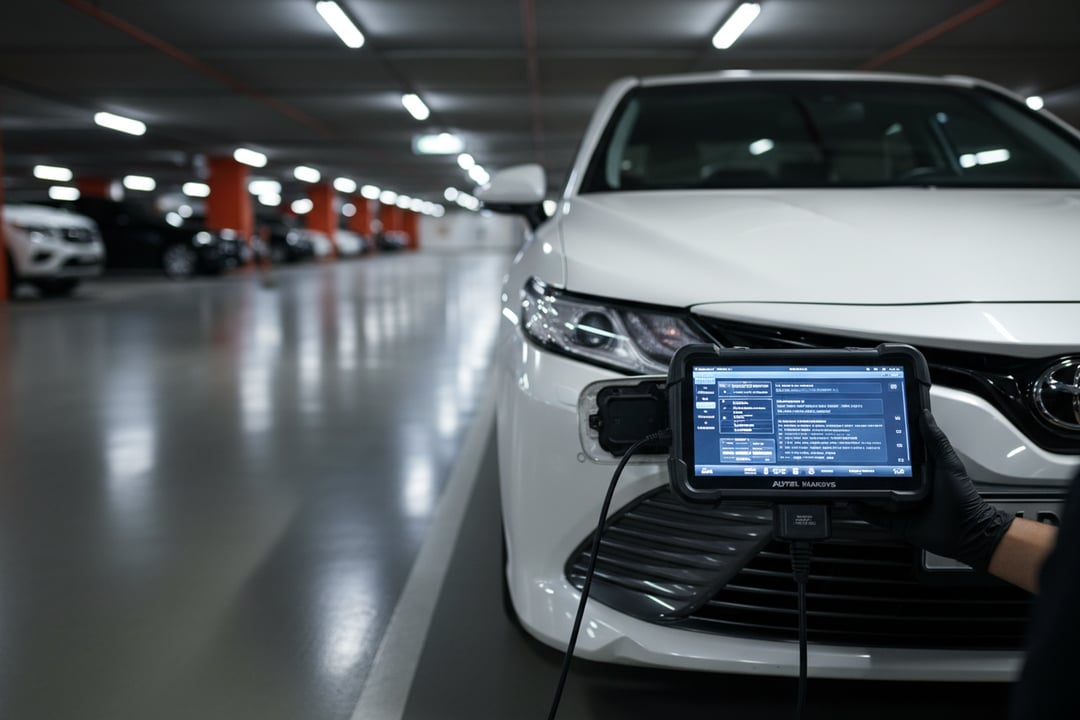 Inspection Guide Inspecting Stored Used Toyota: Key Issues and Inspection PrioritiesThe UAE market frequently sees vehicles that have remained stationary for extended periods due to importation, seasonal usage, or business closure. While...  Inspection Guide Rain Season Check for Used Toyota UAE: Model Issues & PrioritiesThe shift from the scorching heat of summer to the unpredictable drizzle of the UAE’s rainy season requires vehicle owners to reassess their car’s...  Inspection Guide Road Trip Prep for Used Toyota in UAE: Inspection ChecklistPreparing a used vehicle for a long-distance journey in the United Arab Emirates requires a systematic approach. The intense desert heat, high highway... |
0 Comments
No comments yet. Be the first to share your thoughts!