
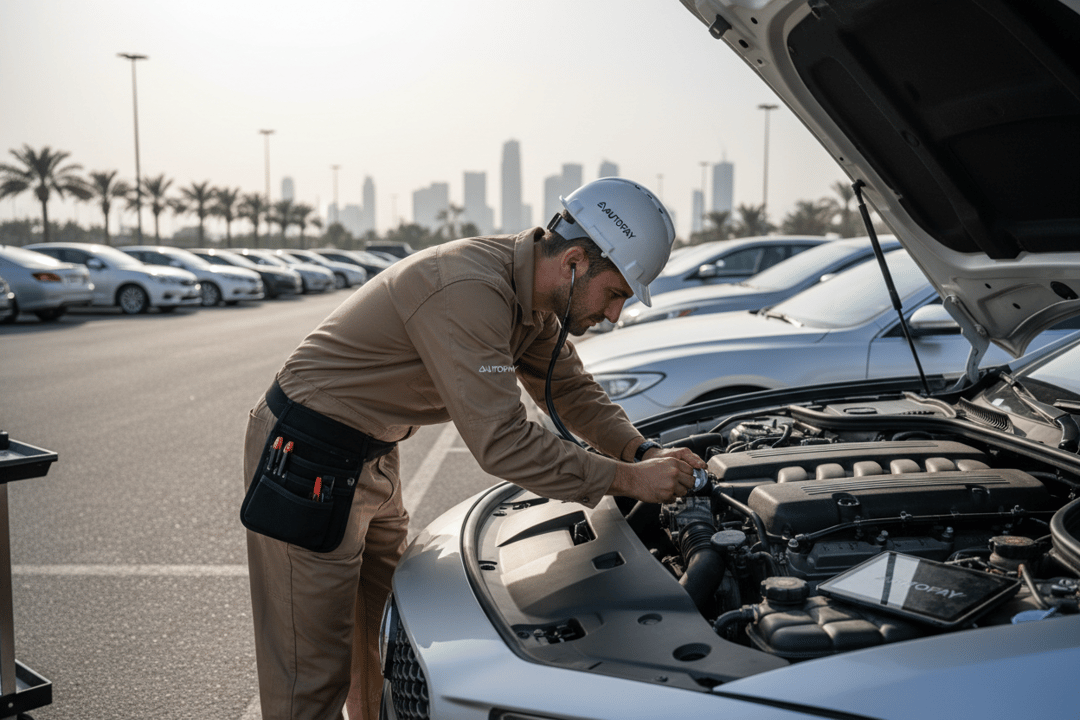
An engine can run smoothly during a five-minute test drive and still carry problems that only show up under load or after the car warms up fully. That is why our engine inspection goes beyond starting the car and listening — it is a systematic evaluation of 12 specific checkpoints.
12 Engine Checkpoints: What Gets Tested
The inspection starts with overall engine condition — a visual assessment of the bay for leaks, corrosion, and aftermarket modifications. Then engine sound is evaluated at idle and under acceleration, listening for knocking, ticking, or rattling that could indicate internal wear. Engine mounts are checked for excessive movement that causes vibration in the cabin.
Oil-related checks include the valve cover gasket, oil drain plug, oil pressure, and engine oil seals — any seeping or leaking is documented. For turbocharged vehicles, the turbocharger gets a separate assessment for noise, boost consistency, and oil leaks. Exhaust smoke is observed and categorized: no smoke is ideal, white smoke can mean coolant leak into combustion, blue smoke indicates oil burning, and black smoke points to fuel mixture problems.
Engine Sound: What Different Noises Mean
A slight ticking at cold start that fades after warming up is usually normal hydraulic lifter noise. A persistent ticking that stays after warm-up may indicate valve clearance issues. Knocking under acceleration often points to rod bearing wear — one of the most serious engine problems. A high-pitched whine from the front of the engine usually comes from a failing alternator bearing or power steering pump.
Our inspectors rate engine noise on a four-point scale: No Noise, Slight, Moderate, or Severe. The context matters — a Slight rating on a diesel engine with higher mileage is very different from the same rating on a petrol engine with higher mileage. The inspector notes this context in the report.
Exhaust Smoke Colors and What They Reveal
White smoke on a cold morning that clears within a few minutes is condensation — perfectly normal. White smoke that persists after warm-up suggests coolant is entering the combustion chamber, often through a failing head gasket. Blue or gray smoke means oil is burning, which could be worn piston rings, valve stem seals, or turbo seals. Black smoke indicates an overly rich fuel mixture, possibly from a faulty fuel injector or sensor.
The inspector documents smoke color, density, and when it appears (cold start, idle, acceleration, deceleration). This detail helps identify the specific component causing the issue, rather than just flagging "smoke present."
Engine Inspection in UAE Heat
UAE temperatures push engines harder than most environments. Cooling systems work at near-maximum capacity for most of the year, which accelerates wear on water pumps, hoses, and thermostats. Engine oil degrades faster in extreme heat, making the oil condition check particularly important — dark, gritty oil in a car that claims recent service is a warning sign.
Turbocharged engines are especially sensitive to heat. The turbo operates at extremely high temperatures, and inadequate cooling or old oil can cause premature bearing failure. Our inspectors check for turbo shaft play and listen for the distinctive whine of a failing turbo bearing.
AutoFay checks 410+ checkpoints including 12 dedicated engine checkpoints, with HD photos and a color-coded PDF report. On-location inspection across all 7 Emirates. Book at autofay.ae or call +971-54-258-4458.



0 Comments
No comments yet. Be the first to share your thoughts!