
Used pickup trucks dominate the commercial and utility vehicle landscape throughout the United Arab Emirates. Buyers prioritize payload capacity and towing ability, often overlooking the internal longevity of the powertrain. However, the intense heat and dusty conditions of the region accelerate engine wear and component fatigue. Verifying the mechanical health of a diesel or petrol pickup requires a systematic approach that goes beyond a casual visual inspection. A experienced professional must evaluate specific indicators of engine condition, sound, and structural integrity.
Environmental Stress and Oil Analysis
The UAE climate subjects vehicle engines to thermal stress that significantly impacts lubricant degradation. An inspector must check the engine oil dipstick to determine if the fluid has burnt or contaminated with coolant. Dark, sludge-like oil indicates the engine has operated under severe conditions, while a milky residue on the dipstick suggests a blown head gasket or coolant leak. Furthermore, the oil level should be checked immediately after a drive, as excessive consumption can point to worn piston rings or valve guides. These issues often lead to increased smoke emissions and reduced fuel economy over time.
Inspectors should also examine the condition of the oil filter. A filter clogged with metal shavings or excessive sludge indicates internal mechanical wear. In diesel pickups, the quality of the exhaust fluid (DEF) and fuel filters is equally critical, as clogged filters can cause performance issues and potential damage to the high-pressure fuel pump. Understanding these fluid dynamics provides a clear picture of how the engine has been maintained in the region's harsh environment.
Auditory Diagnostics: Listening for Red Flags
The human ear is a powerful tool for detecting mechanical anomalies during a road test. A healthy engine should produce a steady, rhythmic sound that is consistent with its intended displacement and type. Any deviation from this baseline requires investigation. A metallic knocking sound that increases with acceleration usually signifies bearing failure, which is a catastrophic issue requiring an engine rebuild. Conversely, a persistent ticking noise at idle may indicate valve train issues, such as worn lifters or lifter pumps, which can eventually lead to poor performance and rough idling.
Whining noises during acceleration often suggest bearing wear in the alternator, power steering pump, or air conditioning compressor. Inspectors must listen carefully during deceleration as well, as abnormal sounds can indicate brake drag or transmission issues. The sound should also be free from hissing or popping, which typically points to vacuum leaks or detonation problems. By isolating specific sounds, a trained inspector can narrow down the potential sources of failure before any diagnostic tools are even brought out.
Structural Integrity: Engine Mounts and Torque Management
Pickup trucks generate immense torque, particularly in diesel variants. This torque places vertical and lateral stress on the engine mounts, which are designed to dampen vibration and absorb shock. A visual inspection of the engine mounts reveals cracks, tears, or complete separation of the rubber bushing. When these mounts fail, the engine and transmission will shift excessively, causing a characteristic vibration felt through the steering wheel and the chassis. This misalignment can also cause the exhaust system to scrape the road surface, leading to further damage.
The consequences of failing engine mounts extend beyond mere discomfort. Excessive movement can separate the exhaust pipe from the manifold, causing a vacuum leak and poor engine performance. It can also damage the radiator cowl and the transmission crossmember. Inspectors must check the transmission mount as well, as failure here allows the drivetrain to shift, causing the driveshaft to bind and the transmission to suffer from premature wear. Ensuring these mounts are in top condition is vital for maintaining the structural alignment of the drivetrain.
Computer-Aided Diagnostics and OBD Scanning
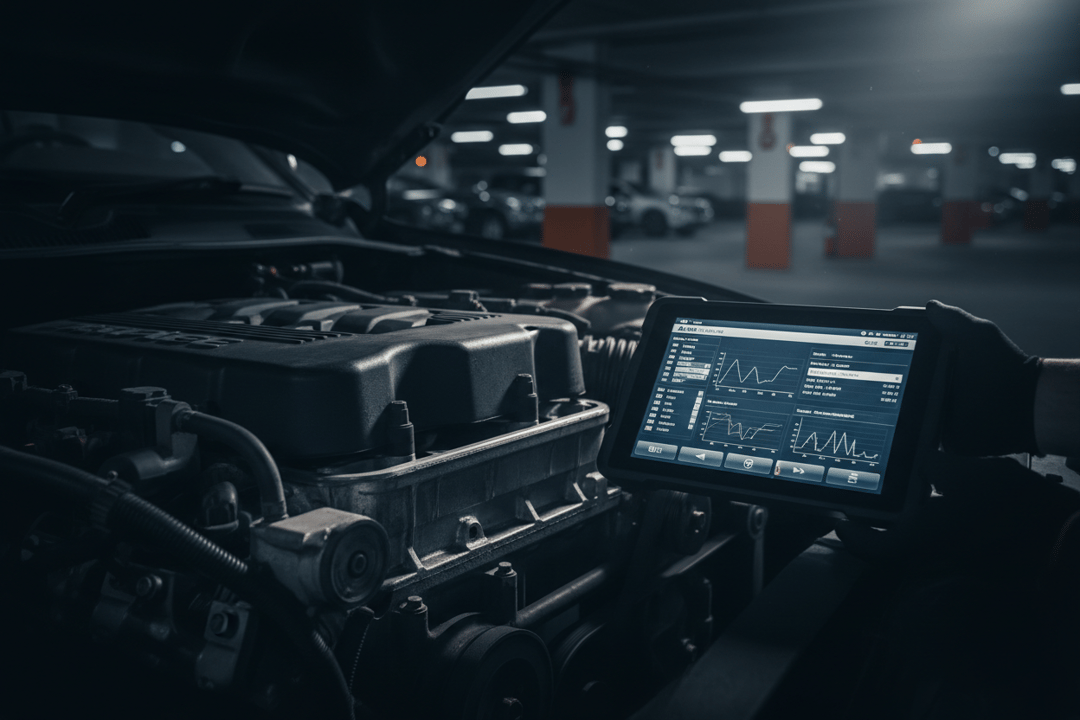
Modern engines rely on complex electronic control units (ECU) to manage fuel injection, timing, and emissions. Visual inspection alone cannot reveal electronic glitches or stored fault codes. An On-Board Diagnostics (OBD) scan is necessary to retrieve data from the ECU regarding sensor readings and historical fault codes. This step helps identify intermittent issues that may not be present during a static inspection but occur under specific load conditions. Codes related to the mass airflow sensor, oxygen sensors, or crankshaft position sensor can pinpoint specific failures that require immediate attention.
While a scan reveals the error codes, understanding the root cause is the inspector's job. For example, a "misfire" code could point to a simple spark plug issue or a deeper mechanical problem like a valve failure. The scan data provides a roadmap for the inspection, allowing the inspector to focus on the most likely components first. This methodical approach prevents unnecessary disassembly and ensures that the vehicle is inspected based on data rather than guesswork.
Selecting the Appropriate Inspection Package
Choosing the right level of inspection is crucial for balancing cost with the depth of analysis required. A basic visual check might miss subtle electronic faults or internal oil pressure issues. AutoFay provides a tiered service structure designed to offer different levels of scrutiny depending on the buyer's needs and budget. A Computer Diagnostic scan is available for AED 99, which is ideal for identifying stored error codes and sensor malfunctions. This package provides a technical overview of the vehicle's electronic health without a physical road test.
For buyers looking for a broader assessment, the Body & Computer package at AED 250 combines the electronic diagnostic with a manual inspection of the body and frame. This service checks for accident damage, panel alignment, and corrosion. The most thorough option is the Comprehensive package at AED 299. This package encompasses 410+ checkpoints across 25 categories, including a full road test, brake system analysis, suspension check, and fluid evaluation. This ensures that no aspect of the vehicle’s condition is overlooked.
| Inspection Focus | Key Checks | AutoFay Package Option |
|---|---|---|
| Engine Condition | Oil leaks, smoke color, oil consumption, timing components | Comprehensive (AED 299) |
| Engine Sound & Vibration | Knocking, ticking, whining, mount integrity, drivetrain alignment | Comprehensive (AED 299) |
| Computer Diagnostics | OBD codes, sensor readings, ECU history | Computer Diagnostic (AED 99) or Body & Computer (AED 250) |
| Brakes & Suspension | Pad wear rating, rotor condition, shock absorbers, steering play | Comprehensive (AED 299) |
AutoFay inspects 410+ checkpoints with HD photos and PDF report. Book at autofay.ae or call +971542584458.




0 Comments
No comments yet. Be the first to share your thoughts!