
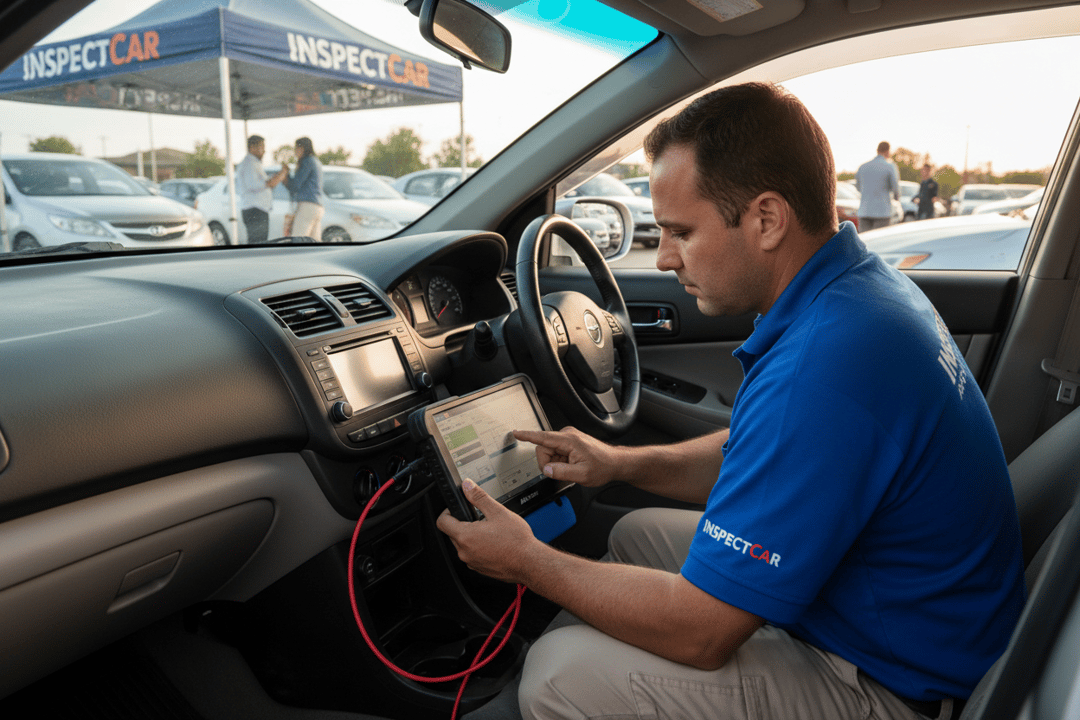
As electric vehicles become more common on UAE roads, the charging system becomes the equivalent of the fuel system on a conventional car — except it is more complex. A used EV with a faulty charging port, degraded onboard charger, or damaged cable presents problems that are not immediately obvious during a test drive. AutoFay's EV and Hybrid Systems inspection category covers 20 checkpoints specific to electric and hybrid vehicles, with charging components receiving dedicated attention.
Charging Port: The Physical Connection
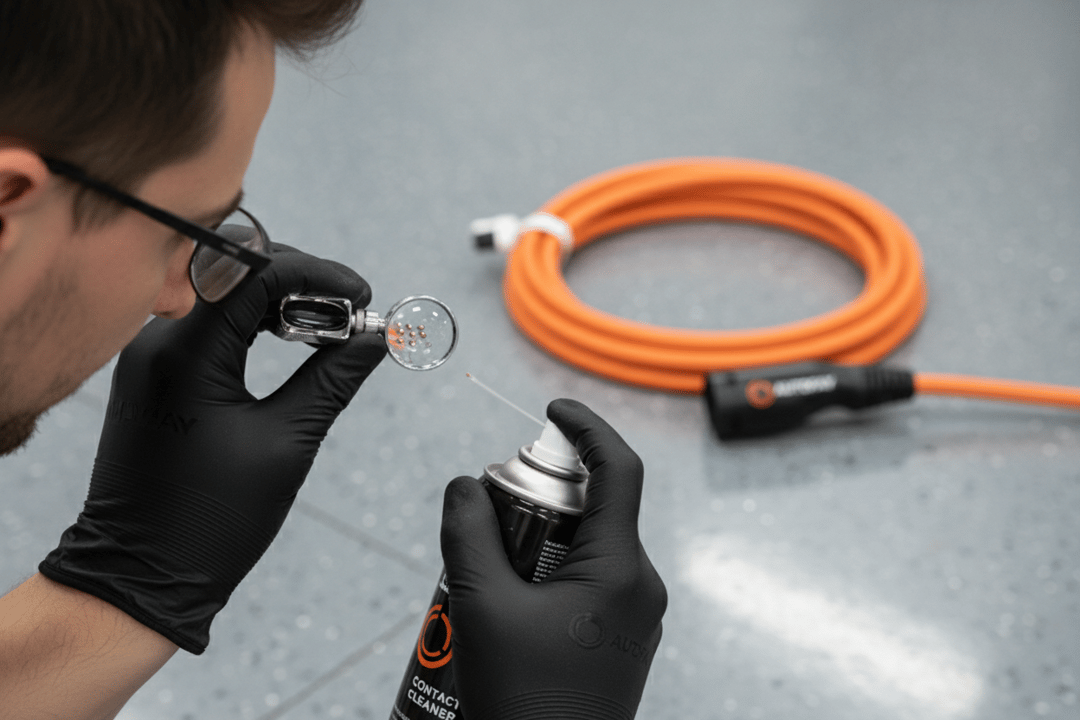
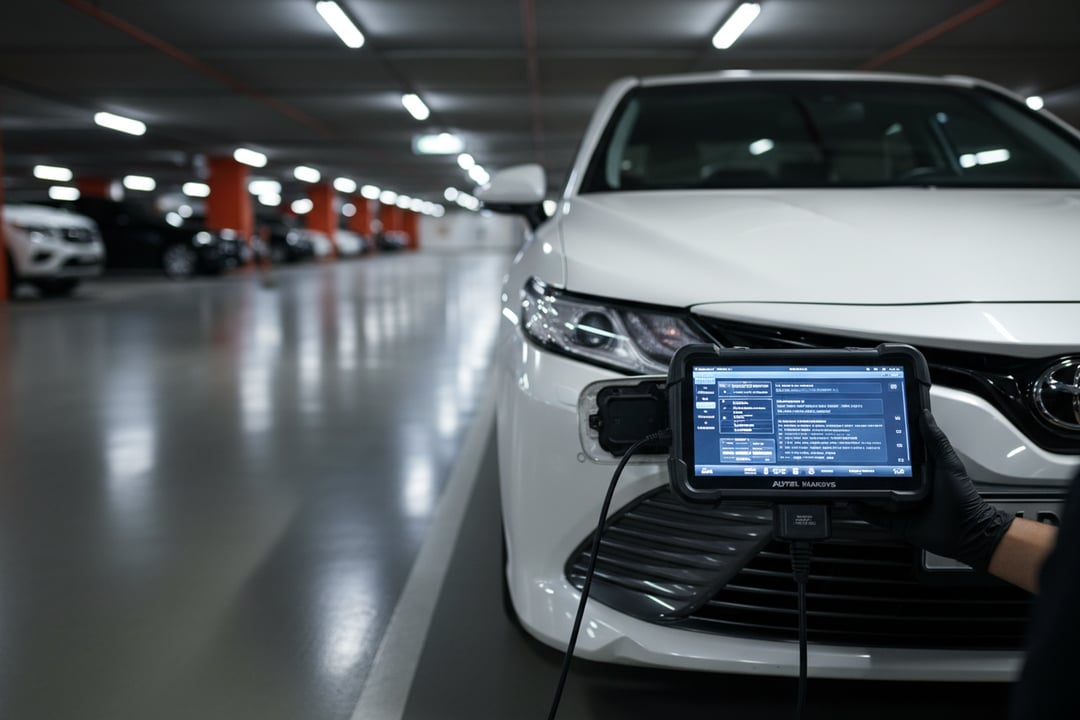
The charging port is checked and rated as Working, Damaged, or Not Working. Physical inspection looks for cracked or broken port housings, bent or corroded pins, and damage from cable insertion at improper angles. The port door mechanism is checked for proper opening and closing — a port door that does not seal properly allows dust and moisture to enter, potentially damaging the contacts over time.
In the UAE, sand and fine dust are constant concerns for any exposed electrical connection. A charging port that has accumulated debris in the pin housing may make intermittent contact, leading to failed charging sessions or slow charging speeds. The port illumination light, where equipped, is verified — a non-functioning light makes nighttime charging difficult and may indicate an electrical issue in the port assembly.
Onboard Charger: AC Charging Capability
The onboard charger converts AC power from a wall outlet or public Level 2 charger into DC power for the battery. AutoFay rates the onboard charger as Working, Slow Charging, or Not Working. A charger rated as Slow Charging means the vehicle accepts AC power but at a lower rate than specification — this could indicate a fault in the charger's power electronics or a thermal limitation from the cooling system.
The EV/Hybrid cooling system is checked — Working, Leaking, or Not Working. The onboard charger generates heat during operation, and its cooling circuit is often tied to the battery cooling system. A cooling system that is leaking or underperforming will cause the charger to throttle its power output, extending charging times significantly. In UAE summer conditions, cooling performance is especially critical as ambient temperatures are already high.
DC Fast Charging: The Highway Lifeline
DC fast charging capability is rated as Working, Slow, or Not Working. A used EV that cannot DC fast charge is limited to slow AC charging, which fundamentally changes its usability for anything beyond daily city commuting. DC fast charging bypasses the onboard charger entirely, feeding power directly to the battery through a separate circuit. A fault in this circuit may not affect normal AC charging at all, which is why it must be tested independently.
The inspection notes whether the vehicle supports the charging standards common in the UAE — CCS (Combined Charging System) for most European and American EVs, or CHAdeMO for some Japanese EVs. Compatibility with UAE public charging infrastructure is a practical consideration for buyers.
Charging Cable: Condition and Completeness
The charging cable is rated as Good, Damaged, or Missing. A damaged cable with cracked insulation, bent connector pins, or a frayed cord is both a safety hazard and a functional problem. Missing cables require replacement, and OEM cables for specific vehicle brands can be expensive. The cable should be inspected for heat damage — a cable that overheats during charging develops discolored insulation near the connector end.
The inspection also verifies whether the vehicle comes with the appropriate cable type for UAE outlets. Some imported EVs arrive with cables configured for other electrical standards that are not compatible with UAE power infrastructure without adapters.
Battery Health: The Context for Charging
Charging system condition must be understood alongside battery health. AutoFay checks high voltage battery health — Excellent, Good, Degraded, or Needs Replacement. Battery state of health percentage is recorded where accessible. Battery capacity is assessed as Full Capacity, Slightly Degraded, or Significantly Degraded. Cell variation is checked — Normal or High Variation, where high variation indicates cells aging at different rates.
The regenerative braking system is assessed — Working, Weak, or Not Working. Regenerative braking contributes to charging the battery during driving, and weak regeneration reduces the vehicle's effective range. The 12V auxiliary battery is checked — Good, Weak, or Needs Replacement — because a failed 12V battery can prevent the vehicle from starting even when the main battery is fully charged.
AutoFay checks 410+ checkpoints on every vehicle including 20 EV-specific checkpoints, with HD photos and a detailed PDF report. On-location inspection across all 7 Emirates. Book at autofay.ae or call +971-54-258-4458.


0 Comments
No comments yet. Be the first to share your thoughts!