

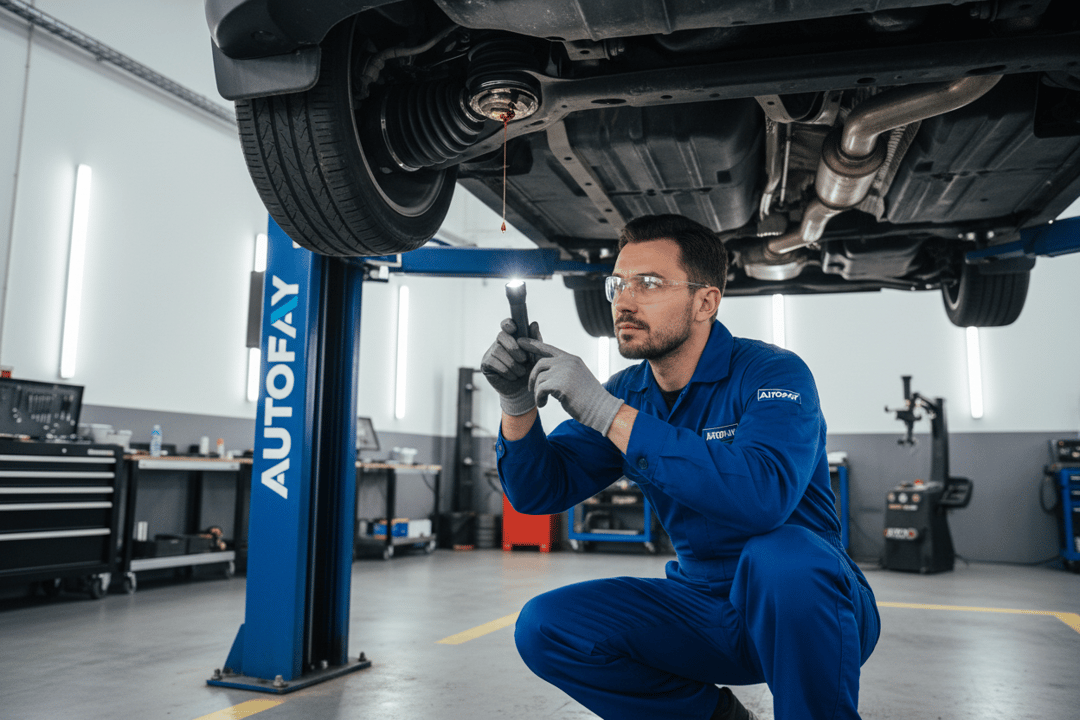
The drivetrain is everything between the engine and the wheels — it is the chain of components that converts combustion into motion. Transmission, driveshaft, differentials, CV axles, and transfer case each play a role. A problem anywhere in this chain affects how the car drives, and drivetrain repairs rank among the most expensive maintenance items a car owner can face.
Transmission: The Most Expensive Component After the Engine
AutoFay rates Transmission Operation as Smooth, Slight Delay, Hard Shifting, or Slipping. A smooth-shifting transmission moves through gears without any perceptible jolt or delay. Slight Delay means there is a noticeable pause when shifting from park to drive or between gears — often an early sign of wear or low fluid. Hard Shifting produces a firm jolt during gear changes, indicating worn clutch packs or solenoid issues. Slipping is the most serious — the engine revs rise without corresponding acceleration, meaning the transmission cannot maintain its grip on the selected gear.
Transmission Mounts are rated Good, Worn, or Broken. Worn mounts allow the transmission to move excessively, which creates vibrations felt through the floor and shifter. For manual transmission vehicles, the Clutch is assessed as Good, Slipping, or Hard — a slipping clutch engages high and cannot transfer full engine torque.
Driveshaft, Joints, and CV Components
The Driveshaft is checked as Good, Vibration, or Damaged. A driveshaft that produces vibration at speed usually has a worn center support bearing or is slightly bent. Universal Joints are rated Good, Worn, or Noisy — worn U-joints produce a clunking noise during acceleration and deceleration, especially noticeable at low speed.
CV Axles receive three separate checks. The axle itself is rated Good, Clicking, Vibration, or Leaking. CV Boots — the rubber covers protecting the CV joints — are rated Good, Cracked, Torn, or Leaking. A torn CV boot is a time-sensitive finding: once the boot tears, the grease escapes and dirt enters, and the exposed joint begins to wear rapidly. CV Joints are rated Good, Worn, or Clicking. A clicking noise during turns is the signature sound of a failing CV joint — it gets louder as the joint deteriorates.
Axles, Differentials, and 4WD Systems
Front and Rear Axles are checked independently — Good, Worn, or Damaged. Axle Seals are rated Good, Seeping, or Leaking. A leaking axle seal drips gear oil and, if left unattended, can starve the differential of lubrication. Front and Rear Differentials are each rated Good, Noisy, or Leaking. A noisy differential produces a whining sound that changes with speed — it indicates worn gears or bearings inside the differential housing.
The Transfer Case is checked on 4WD and AWD vehicles — Working, Noisy, or Leaking. A noisy transfer case often has worn chain or gear components. 4WD/AWD Engagement is tested as Working, Delayed, or Not Engaging. A system that does not engage means the vehicle is running in two-wheel drive only, which is a significant functional limitation for SUV owners in the UAE who use their vehicles for desert driving or need the traction in wet conditions.
Drivetrain Wear in UAE Conditions
UAE driving patterns create specific drivetrain stress. Stop-and-go traffic heats transmission fluid and accelerates clutch pack wear. Desert driving subjects CV boots to sand abrasion. SUVs that regularly go off-road put additional stress on transfer cases and differentials. The drivetrain inspection identifies wear before it becomes failure — giving buyers the information to budget for upcoming maintenance or negotiate accordingly.
AutoFay checks 410+ checkpoints including 15 drivetrain checkpoints, with HD photos and a detailed PDF report. On-location inspection across all 7 Emirates. Book at autofay.ae or call +971-54-258-4458.




0 Comments
No comments yet. Be the first to share your thoughts!