
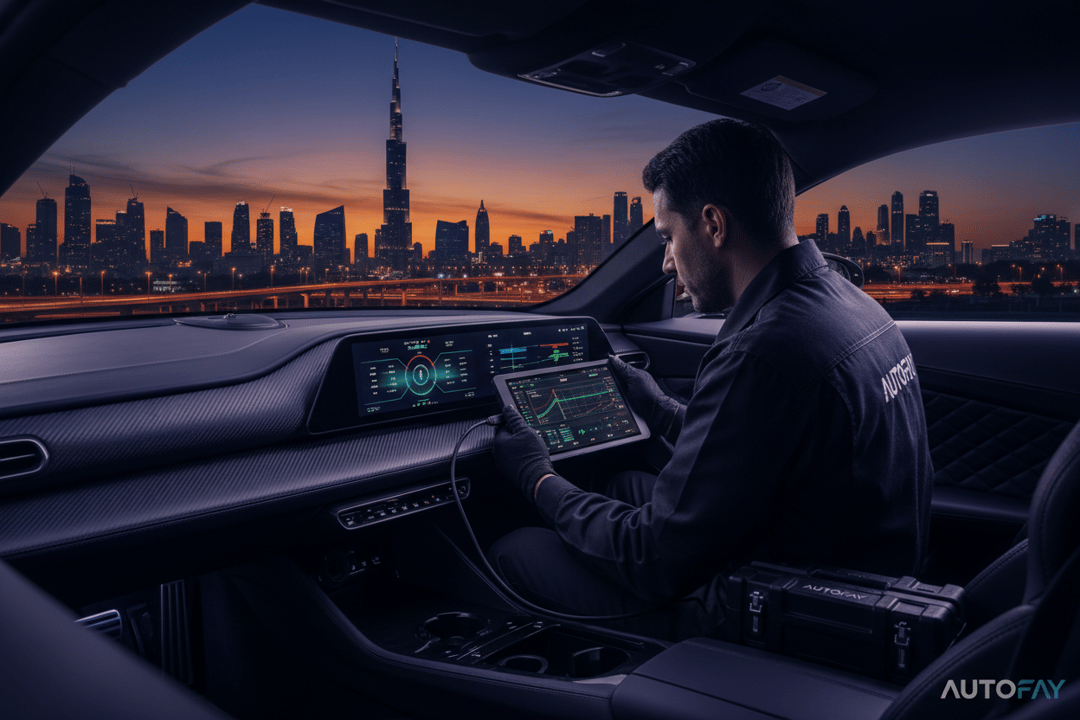
The modern automotive landscape has shifted from mechanical dominance to digital integration. A vehicle's value is no longer defined solely by engine performance or body panels; it is equally dictated by the sophistication of its infotainment and digital systems. Buyers in the UAE frequently overlook these components, focusing instead on visible aesthetics. However, a malfunctioning digital dashboard can render a vehicle unsafe and increase long-term maintenance costs. Professional inspection of these systems requires a technical understanding of how software, hardware, and wiring interact. This guide explains what experienced inspectors look for in digital and infotainment systems and how specific findings impact the purchase decision.
The Physical Inspection of Infotainment Displays
The central control unit is the nerve center of the vehicle's connectivity. Inspectors begin by assessing the physical hardware to ensure it matches the vehicle's specification. This involves verifying that the screen resolution and size align with the manufacturer's original specifications for that model year.
- Touch Sensitivity and Calibration: Inspectors test every corner of the screen to ensure touch inputs register accurately. A lack of responsiveness in specific areas often indicates a calibration failure or a damaged digitizer layer.
- Visual Flicker and Brightness Uniformity: Constant flickering or uneven lighting across the display suggests a failing backlight inverter or loose ribbon cables connecting the screen to the motherboard.
- Dead Pixels: The appearance of static colored dots on a black background indicates manufacturing defects or physical pressure damage from previous accidents.
These physical findings are critical because software updates cannot resolve hardware degradation. If the screen is unresponsive, the driver loses access to navigation, climate control, and safety warnings. In a pre-purchase inspection, a non-functional screen is a red flag that may require extensive electrical troubleshooting.
Navigation and GPS Functionality
Modern navigation systems serve as more than just maps; they provide critical data on vehicle speed, fuel economy, and trip statistics. Inspectors verify that the GPS unit tracks the vehicle's position accurately in real-time. A discrepancy between the displayed location and the actual physical location of the car suggests a potential antenna issue.
- Map Accuracy and Software Version: The system must display the correct map data corresponding to the vehicle's model year. Outdated maps can lead to incorrect routing and missed exits.
- System Responsiveness: Navigation entry should be instantaneous. Lag in the system often points to an aging processor or insufficient RAM, which can cause the interface to freeze while driving.
- MirrorLink and Data Sync: If the vehicle supports smartphone mirroring, inspectors ensure that the phone and car display remain synchronized without lag.
A malfunctioning navigation system often points to deeper wiring issues behind the dashboard or a damaged GPS antenna. In some cases, "fake" units installed by previous owners may have outdated maps or lack the official firmware updates provided by the manufacturer. Verifying the authenticity of the unit is a key part of the inspection process.
Bluetooth and Audio Connectivity
Bluetooth connectivity is a primary function for driver safety, allowing for hands-free communication and music streaming. Inspectors conduct rigorous testing of the vehicle's audio system to identify interference or hardware degradation. Poor connectivity is rarely just a software glitch; it is frequently a symptom of electrical faults.
- Connection Stability: The system is tested for dropouts during calls or music playback. Frequent disconnections often indicate a faulty Bluetooth module or damaged antenna wiring in the dashboard.
- Audio Fidelity: Quality of the audio output is evaluated for static, distortion, or volume inconsistencies. These issues can stem from a ground loop or degradation of the amplifier circuitry.
- Phone Book Sync: Inspectors verify that the vehicle's system can successfully sync with the user's phone book. Failure here often points to software corruption within the vehicle's infotainment processor.
Electrical issues behind the dashboard, such as corroded terminals or frayed wiring, frequently manifest as Bluetooth failures. These hidden faults can escalate into complete electrical system failures if left unaddressed. Identifying these problems early prevents unexpected repair bills after the purchase is finalized.
Apple CarPlay and Android Auto Integration
Smartphone integration has become a standard safety feature. Inspectors verify that the vehicle supports the latest protocols for Apple CarPlay and Android Auto. This involves checking compatibility with the user's specific smartphone model and testing the connection speed.
Integration failures can be caused by two distinct issues: software incompatibility or hardware damage to the USB port. A loose USB port may appear functional but fail to maintain a stable connection, leading to constant interruptions during navigation or media playback. Furthermore, if the display does not mirror the phone screen correctly, it indicates a processor issue within the car's computer or a mismatched software version.
Linking Digital Systems to Broader Vehicle Health
Infotainment systems are deeply integrated with the vehicle's body and engine computer networks. Therefore, investigating digital faults requires a comprehensive approach to vehicle inspection. Digital faults often coincide with other mechanical or electrical anomalies.
For a thorough evaluation, a standard computer diagnostic scan is essential. The Computer Diagnostic package at AutoFay (AED 99) scans the engine, transmission, ABS, and airbag systems. While this focuses on mechanical health, it also identifies communication errors between the dashboard and the engine control unit.
For a more detailed examination of both the physical body and the digital electronics, the Body & Computer package at AutoFay (AED 250) is recommended. This inspection checks the vehicle's frame, paint, and body integrity while simultaneously running deeper diagnostics on the vehicle's computer systems. This ensures that a damaged body panel has not causally affected the internal wiring that powers the infotainment unit.
The Comprehensive package at AutoFay (AED 299) offers the highest level of scrutiny. It covers the 410+ checkpoints across 25 categories, including brakes, suspension, tires, and fluids. This package is vital for complex vehicles where infotainment issues may be linked to overall electrical system health or major engine faults.
| Symptom | Potential Issue | Inspection Priority |
|---|---|---|
| Flickering or black screen | Loose ribbon cable or backlight failure | High – Affects all dashboard functions |
| GPS drift or no signal | Antenna damage or wiring harness issue | Medium – Affects navigation safety |
| Bluetooth dropouts | Ground loop or faulty module | High – Indicates underlying electrical fault |
| Apple CarPlay disconnects | USB port damage or software conflict | Medium – Affects driver distraction |
The Value of Technical Due Diligence
Neglecting digital inspections leads to uncertainty regarding the vehicle's true condition. A vehicle may look pristine physically but harbor latent software glitches or electrical shorts that will manifest shortly after purchase. Understanding the specific meaning of infotainment findings empowers buyers to negotiate better terms or avoid a bad investment altogether.
Technical inspection is not about finding cosmetic flaws; it is about understanding the functional integrity of the vehicle's complex systems. By utilizing professional services that specialize in both physical and digital inspection, buyers ensure they are purchasing a vehicle that operates as intended.
AutoFay inspects 410+ checkpoints with HD photos and PDF report. Book at autofay.ae or call +971542584458.



0 Comments
No comments yet. Be the first to share your thoughts!