

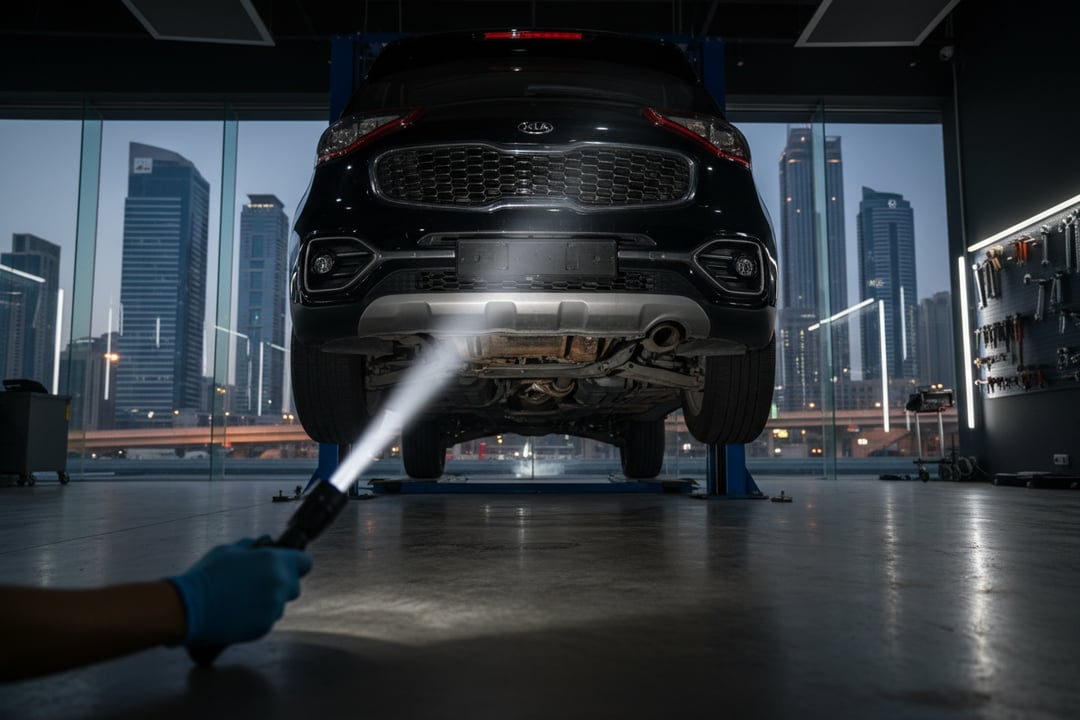
The unforgiving terrain of the UAE desert exerts unique stress on automotive suspensions, cooling systems, and electrical components, often leaving hidden damage on used vehicles. When purchasing a pre-owned Korean vehicle—specifically a Kia—owners must look beyond cosmetic appeal to identify the silent killers of desert reliability. This guide details the model-specific vulnerabilities caused by harsh environmental conditions and outlines how professional inspection protocols can reveal these critical faults.
Engine and Cooling System Stress
The extreme thermal cycling experienced during desert excursions accelerates wear on the engine block and cooling infrastructure. Kia engines are generally robust, but the combination of high ambient temperatures and sustained high speeds tests the limits of the cooling system.
- Oil Dilution: Prolonged idling in sandstorms or stop-and-go traffic can lead to condensation within the crankcase, mixing with unburnt fuel to dilute engine oil. This reduces lubrication efficiency and increases wear on piston rings.
- Thermostat Failure: A stuck thermostat can prevent the engine from reaching optimal operating temperature, affecting fuel economy and emissions control.
- Radiator Damage: Flying sand particles act as an abrasive, degrading the aluminum fins of the radiator and reducing its ability to dissipate heat.
Electrical Systems and Sensor Sensitivity
Dust is the primary adversary of an electrical system in the UAE. While modern Kias utilize advanced electronics, these components are susceptible to degradation when exposed to abrasive particulates over time.
- Mass Air Flow (MAF) Sensors: These sensors measure the amount of air entering the engine. Sand accumulation causes inaccurate readings, leading to poor fuel trim and hesitation during acceleration.
- ABS and Airbag Modules: Vibrations from rough desert tracks can loosen wiring connections. A failure in the anti-lock braking system or airbag deployment mechanism is a safety hazard that requires immediate diagnostic attention.
- Worn Ignition Coils: High under-hood temperatures combined with vibration can cause coil packs to crack, leading to misfires and rough idling.
Suspension and Underbody Integrity
The suspension system absorbs the impact of uneven dunes and rocks, leading to accelerated fatigue in bushings and ball joints. A used Kia that has spent significant time off-road may exhibit symptoms that are difficult to diagnose without lifting the vehicle.
- Shock Absorber Deterioration: Shocks work harder in sandy conditions. Leaking fluid or worn-out shock bodies result in a vehicle that lacks stability and handling precision.
- Corrosion and Rust: Salt usage on coastal roads or accidental spills can lead to floor pan rust. This compromises the structural integrity of the vehicle's chassis and can hide accident damage.
- Control Arm Bushings: These rubber components wear out rapidly due to heat cycles. Cracked bushings allow excessive movement in the steering system, creating a vague or loose feeling at the wheel.
Choosing the Right Inspection Strategy
Attempting to visually inspect a used vehicle alone is often insufficient due to the complexity of modern automotive systems. Utilizing a structured inspection service ensures that critical faults are not overlooked. AutoFay offers three distinct service tiers designed to match the specific needs of the buyer and the vehicle's condition.
For a preliminary health check, the Computer Diagnostic package at AED 99 scans the engine, transmission, ABS, and airbag systems for stored fault codes. This service reveals the "black box" electronic history of the vehicle without the need for a physical inspection.
For buyers concerned about physical damage from driving, the Body & Computer package at AED 250 combines the electronic diagnostic scan with a detailed visual inspection. This tier covers panel-by-panel paint analysis to identify repairs or accidents.
The Comprehensive package at AED 299 provides the highest level of scrutiny. This service covers 410+ checkpoints across 25 categories, including frame integrity, tire manufacturing dates, brake pad percentage ratings, and a full road test. This is the definitive choice for high-mileage vehicles or those with unknown histories.
The Critical Inspection Matrix
To effectively evaluate a used Kia, inspectors must focus on specific categories known to fail under desert conditions. The following matrix outlines the key areas to prioritize during the inspection process.
| Inspection Category | Priority Focus for Desert-Kia |
|---|---|
| Fluids | Check engine oil for milky texture (water mixing) and coolant for pH levels indicating freeze/thaw damage. |
| Tires | Verify manufacturing dates; sand abrasion wears treads unevenly, requiring early replacement. |
| Brakes | Inspect rotors for warping caused by rapid cooling after driving through sand or water. |
| Body & Paint | Identify "chips" in the paint which expose metal to immediate corrosion. |
| Suspension | Check for play in ball joints and cracks in stabilizer links. |
Road Test and Fluid Verification
The final phase of the inspection process involves a dynamic road test to verify that mechanical repairs are effective and that the vehicle drives as expected. During this phase, an inspector listens for abnormal noises that indicate worn bearings or worn wheel bearings exacerbated by desert dust.
Fluids must be inspected not just for level, but for condition. Brake fluid absorbs moisture over time, reducing its boiling point and compromising stopping power—a critical failure point in emergency situations. Transmission fluid should be examined for a burnt smell, indicating the transmission has been overheated during aggressive driving.
AutoFay inspects 410+ checkpoints with HD photos and PDF report. Book at autofay.ae or call +971542584458





0 Comments
No comments yet. Be the first to share your thoughts!