


The United Arab Emirates presents a challenging environment for automotive engineering, characterized by high ambient temperatures, abrasive desert sand, and salinity in coastal regions. Used Honda vehicles, while generally celebrated for their durability, exhibit specific wear patterns when subjected to prolonged continental driving conditions. Identifying these post-desert stresses requires a systematic approach that goes beyond a visual walk-around. A thorough inspection acts as a diagnostic protocol to uncover hidden degradation that may not be immediately visible to the untrained eye.
The Impact of Thermal Cycling on Key Components
Repeated exposure to extreme heat causes rapid expansion and contraction of metal components, leading to fatigue in chassis and suspension parts. This phenomenon, known as metal fatigue, compromises the structural integrity of the vehicle over time. Additionally, the intense solar radiation degrades exterior paint and protective coatings, accelerating the onset of rust on undercarriage components.
- Electrical Wiring Harnesses: Constant exposure to high heat can lead to insulation brittleness and terminal corrosion within the fuse box and relay panel.
- Fluid Viscosity: Engine oil and transmission fluid break down faster in high-temperature environments, reducing lubrication efficiency and increasing friction between moving parts.
- Tire Degradation: Excessive heat accelerates the tread oxidation process, leading to a harder rubber compound that is more susceptible to cracking and blowouts.
Model-Specific Vulnerabilities Common in the UAE Market
Different Honda models possess mechanical architectures that struggle more acutely with the rigors of desert terrain. Understanding these model-specific tendencies allows an inspector to target critical areas during the evaluation process.
The Honda Civic is frequently encountered in the UAE private market, yet its independent front suspension geometry makes it sensitive to pot-holed, reinforced roads. Owners who frequently traverse off-road tracks often report premature wear on the lower control arm bushings and ball joints. A clicking noise during steering input often indicates worn ball joints, which can sever from their mounts if left unrepaired.
The Honda Accord, particularly older diesel or hybrid variants, is notorious for timing belt wear and water pump failure due to the engine bay's high operating temperature. The timing chain, while generally durable, may exhibit slackness in high-mileage units driven aggressively on open highways.
For the Honda CR-V and HR-V models, the rear differential and rear trailing arm bushes are primary failure points. The rear suspension geometry in these SUVs places significant stress on the rubber bushings during cornering. Desert driving exacerbates this stress, resulting in rubber cracking and the vehicle exhibiting a "loose" feeling during lane changes.
The Electrical Grid: A Common Point of Failure
Honda vehicles rely heavily on a complex network of sensors and the Engine Control Unit (ECU) to manage fuel injection and ignition timing. The harsh UAE climate is a conductor for electrical failure, where moisture and dust infiltrate connectors.
Inspectors must pay close attention to the condition of the spark plugs and ignition coils. In a high-heat environment, the ceramic insulators on spark plugs can crack, leading to misfires and rough idling. Furthermore, the O2 (oxygen) sensors and MAF (mass air flow) sensors can become clogged with carbon deposits or oil soot, resulting in poor fuel economy and reduced engine performance.
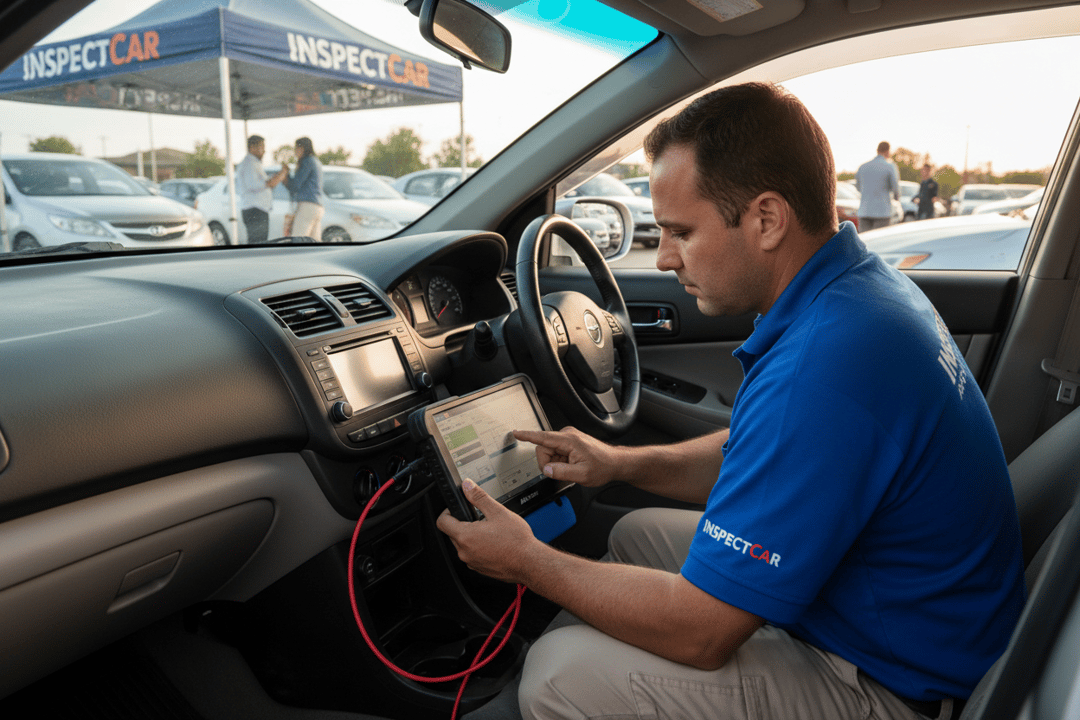
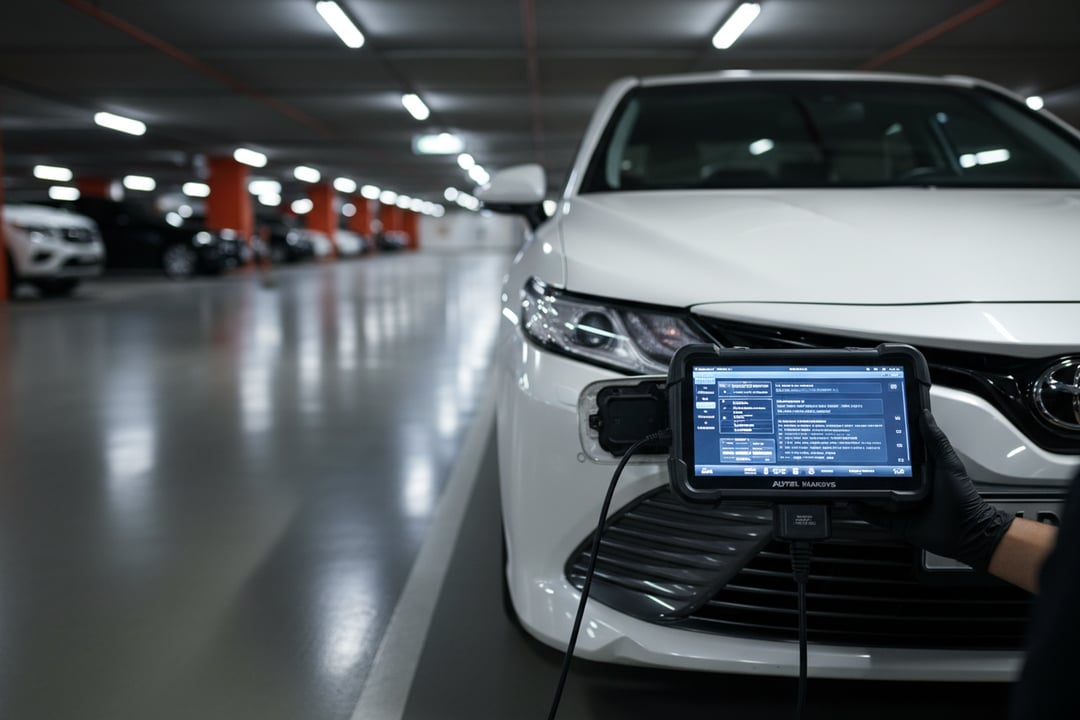
An OBD (On-Board Diagnostics) scan is essential to retrieve stored error codes. These codes provide a historical record of faults that the vehicle’s computer has detected, revealing intermittent issues that may not be occurring during the test drive.
Structural Integrity: Frame and Undercarriage Assessment
Desert driving often involves navigating unmarked obstacles, leading to undercarriage impacts that compromise the vehicle's safety structure. The identification of collision damage is critical, as a compromised frame can lead to alignment issues and accelerated tire wear.
Inspectors examine the frame rails, pillar beams, and floor pan for signs of welding, bondo application, or rust penetration. A mismatched paint finish on the vehicle’s underbelly often indicates a repair involving the chassis. The condition of the suspension mounts is also vital; cracked or torn rubber bushings allow unwanted movement, transferring road shock directly to the vehicle’s chassis.
Operational Checks: Brakes, Fluids, and Road Test
The braking system endures the highest thermal load in a vehicle, converting kinetic energy into heat. In the UAE, this is compounded by the frequent need for aggressive braking in stop-and-go traffic or high-speed highway merging. Worn brake pads reduce stopping distance, while glazed rotors can cause vibrations through the steering wheel.
Fluid inspection reveals the engine’s true health. Dark, smoky, or milky oil indicates burning components or coolant leakage. Transmission fluid should be bright red and have a clean smell; a burnt odor suggests the transmission has been subjected to excessive heat or fluid starvation.
- Brake Pad Percentage: Inspectors rate brake pad thickness against the minimum legal limit to determine if replacement is required.
- Tire Manufacturing Year: Checking the DOT code ensures the tires are not expired, which can lead to sudden tread separation.
- Road Test Metrics: Acceleration, braking distance, and noise levels are recorded to assess the drivetrain’s current health.
Strategic Inspection Packages for Used Honda Buyers
Investing in a professional inspection eliminates the guesswork associated with purchasing a pre-owned vehicle. Different inspection packages offer varying levels of depth to suit specific needs. It is vital to select a package that aligns with the potential value of the vehicle and the buyer's risk tolerance.
| Package | Features | Estimated Cost |
|---|---|---|
| Computer Diagnostic | Scans all vehicle ECUs for stored codes related to engine, transmission, ABS, and airbag systems. | AED 99 |
| Body & Computer | Includes the diagnostic scan, plus a detailed panel-by-panel paint inspection to check for accident repairs or overspraying. | AED 250 |
| Comprehensive | The most thorough option, covering the engine, transmission, chassis, suspension, brakes, and a full road test. | AED 299 |
For buyers of high-mileage Hondas, the comprehensive package provides the necessary data to negotiate a fair price based on the vehicle’s actual condition. The detailed report serves as an objective third-party assessment, preventing overpayment for hidden damage.
AutoFay inspects 410+ checkpoints with HD photos and PDF report. Book at autofay.ae or call +971542584458



0 Comments
No comments yet. Be the first to share your thoughts!