

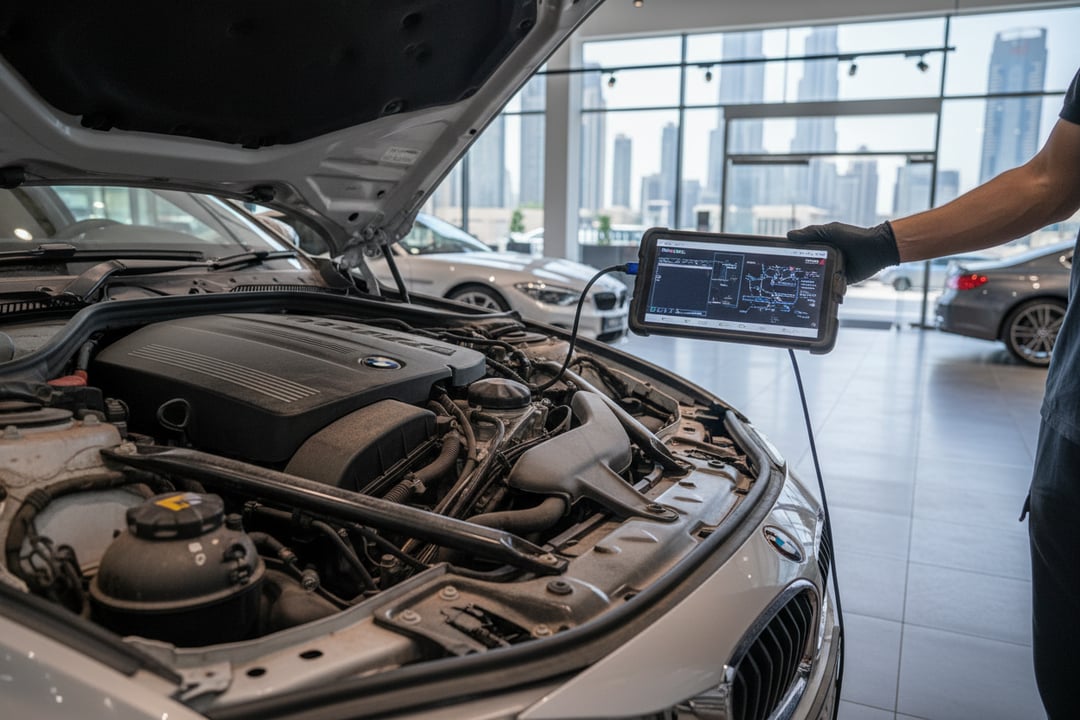
The UAE presents a unique environment for vehicle ownership, characterized by extreme thermal extremes and abrasive terrain. For enthusiasts choosing a BMW, the desert is not merely a backdrop; it is a constant stress test. The combination of relentless heat and sand exposure accelerates wear on specific components that remain relatively stable in temperate climates. A pre-purchase inspection in this region must go beyond standard checks to identify latent damage caused by local conditions. Understanding the specific fallout from desert driving is essential for maintaining ownership of a used BMW in the Emirates.
The Thermal Stress Test: Cooling and Engine Health
BMW engines are renowned for their robustness, but they rely heavily on precise thermal management to function correctly. In the UAE, ambient temperatures frequently exceed 45 degrees Celsius, placing immense pressure on the cooling system. The aftermath of desert driving often manifests first in cooling vulnerabilities. Overheating, even for short periods, can warp cylinder heads and blow head gaskets, leading to catastrophic engine failure. A used BMW in this market should be scrutinized for the history of thermal stress, as the consequences of a cooling system failure are irreversible and require a complete engine rebuild.
Specifically, the N54 and N55 twin-turbocharged engines found in many popular models are susceptible to temperature fluctuations. The oil coolers and thermostats are critical components that often fail after years of thermal cycling. When inspecting a used BMW, look for signs of coolant residue around the oil filter housing or the oil cap, which indicates a failure in the coolant-to-oil passages. Ignoring these symptoms leads to sludge formation and bearing failure. Therefore, verifying the proper function of the cooling system is non-negotiable when assessing a vehicle that has lived in the UAE market.
Sand Infiltration: The Intake and Vacuum System
Sand is the silent enemy of automotive hygiene. In a desert environment, vehicles are subjected to the ingestion of abrasive particles through the air intake, often exacerbated by driving with windows down or in dusty conditions. The aftermath of this exposure is typically found within the intake system and engine oil. A common symptom of sand intrusion is the characteristic smell of burning oil at the dipstick. This occurs when oil mist is drawn into the combustion chamber and ignited, leading to carbon buildup on spark plugs and valves.
Inspectors must pay close attention to the throttle body and the Mass Air Flow (MAF) sensor. Sand particles can coat these delicate sensors, causing inaccurate readings and poor fuel trims. The result is a rough idle, hesitation during acceleration, and increased fuel consumption. Furthermore, sand can work its way into the intake valves, causing a rough running condition that requires professional decarbonization. The consequences of neglecting a clogged intake system include reduced power output and increased emissions, making a thorough inspection of the intake tract vital.
Electrical Failures in High Heat
Heat is the enemy of electronics. The electrical architecture of a BMW is complex, with numerous sensors and control units managing everything from suspension damping to engine timing. Prolonged exposure to the UAE sun can degrade wiring insulation and corrode connections. The Multi-Stage Electronics (MSE) system, which manages active chassis components, is particularly prone to failure in hot climates. Once a sensor or control unit fails due to heat stress, it often leads to drivability issues such as the car entering "limp mode."
During an inspection, the OBD (On-Board Diagnostics) system must be checked for pending codes that might not trigger a warning light immediately. Heat-related electrical failures often manifest intermittently, making them difficult to diagnose without a professional scan. The consequences of ignoring electrical glitches can range from a malfunctioning iDrive system to total loss of power steering. Ensuring the vehicle’s electrical system has been stress-tested by a diagnostic scan is a critical step in the inspection process.
Chassis Integrity and Corrosion
While the desert is dry, the coastal areas of the UAE introduce salt spray, which accelerates corrosion in the undercarriage. Even inland, the vibration from desert driving can loosen suspension components over time. Frame rails and pillars are structural elements that, if compromised, pose a severe safety risk. A used BMW must be evaluated for damage to the frame, specifically checking the side girdles and the firewall for signs of accident damage or structural stress.
Suspension bushings and mounts are subjected to constant stress in a hot climate, as rubber degrades faster in high temperatures. A worn suspension bushing can lead to poor handling characteristics and uneven tire wear. Inspectors need to check for play in the suspension arms and listen for clunking noises during a road test. The consequence of a failed suspension component in high-speed driving is unpredictable handling, which can lead to loss of control. Therefore, the structural integrity of the chassis must be verified before purchase.
Targeted Inspection Services: What to Prioritize
To effectively uncover these issues, a comprehensive inspection strategy is required. AutoFay provides a on-location inspection across all 7 Emirates, covering 410+ checkpoints across 25 categories. When selecting a service package, prioritize those that include body analysis and computer diagnostics to address the specific faults mentioned above.
| Package | Service Inclusions | Price |
|---|---|---|
| Computer Diagnostic | OBD scan for engine, transmission, ABS, and airbag codes | AED 99 |
| Body & Computer | Panel-by-panel body inspection + Computer Diagnostic | AED 250 |
| Comprehensive | Full inspection: Body, Frame, Engine sound, Brakes, Suspension, Fluids, Road Test, HD photos, and PDF report | AED 299 |
The "Comprehensive" package is highly recommended for BMWs in the UAE market. It covers critical areas such as the brakes (pad percentage rating), tires (manufacturing year and wear), and fluids (level and condition). A road test is essential to assess acceleration, braking, noise, and vibration, which are key indicators of the vehicle's mechanical health. The inclusion of frame checks ensures that the structural soundness of the vehicle is verified, protecting against hidden accident damage.
Conclusion
Desert driving imposes specific stresses on a BMW that require a knowledgeable eye to identify. From overheating engines to sand-clogged intakes and heat-damaged electronics, the aftermath of the UAE climate can be significant. A professional inspection is the only way to separate a well-maintained vehicle from one that has been neglected. Utilizing a specialized service ensures that every potential failure point is identified before the vehicle changes hands.
AutoFay inspects 410+ checkpoints with HD photos and PDF report. Book at autofay.ae or call +971542584458





0 Comments
No comments yet. Be the first to share your thoughts!