

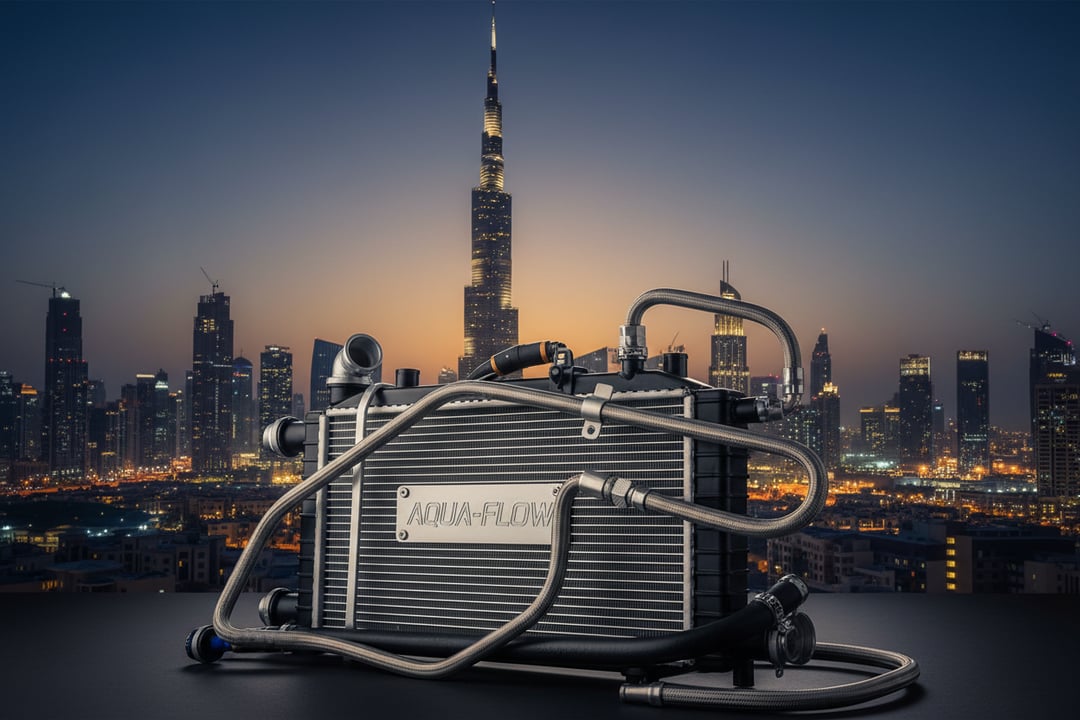
The cooling system is the biological system that prevents an internal combustion engine from self-destructing due to thermal expansion. In the UAE climate, where ambient temperatures routinely exceed 40°C, this system faces constant stress. A vehicle purchase is rarely just about the exterior appeal or the odometer reading; the engine bay often reveals the car's true history. Understanding what a professional inspection reveals about the cooling system is a prerequisite for avoiding a costly headache. This inspection focuses on the four primary components that regulate engine temperature: the radiator, cooling hoses, water pump, and cooling fans.
The Primary Components of the Cooling System
The cooling system operates on a simple principle of thermodynamics: removing excess heat generated by friction and combustion. If this system fails, the engine will enter a state of thermal runaway, leading to warped cylinder heads or seized pistons. A experienced inspector looks beyond the shiny metal surfaces to identify the degradation that accumulates over years of operation. The inspection process evaluates the physical integrity of the hardware and the performance of the electrical elements that drive the airflow.
- Radiator: The primary heat exchanger that transfers heat from the engine coolant to the air.
- Cooling Hoses: Flexible conduits that carry coolant between the engine, radiator, and heater core.
- Water Pump: The centrifugal pump that circulates coolant through the engine block under pressure.
- Cooling Fans: Devices that draw air through the radiator when the vehicle is stationary or moving slowly.
Radiator Inspection and Core Assessment
The radiator is the workhorse of the cooling system, consisting of a core filled with aluminum tubes and a honeycomb of fins. An inspector first assesses the end tanks for cracks, particularly where the plastic meets the metal. Plastic tanks often suffer from stress fractures due to extreme heat cycles and thermal expansion.
Next, the inspector examines the radiator core for blockage. Mud, sand, and debris can accumulate on the fins, drastically reducing the surface area available for heat dissipation. If the fins are bent or clogged, the engine cannot release heat efficiently, leading to overheating even under moderate loads. While a pressure test can reveal internal leaks, a visual inspection of the core is crucial to understanding the vehicle's history of off-road use or neglect.
Cooling Hoses: The Weakest Links
Coolant hoses are made of rubber, a material that degrades over time when exposed to high temperatures and coolant additives. Inspectors check the upper and lower hoses, as well as the heater hoses, for visual signs of deterioration. A healthy hose feels firm; a compromised hose feels soft, squishy, or spongy to the touch.
Critical indicators of hose failure include hairline cracks on the ribbed side of the hose or a shiny, glazed appearance on the rubber surface. If the inspector finds a hose that bulges when squeezed, it has lost its elasticity and is likely to burst under pressure. Replacing a single hose is a straightforward repair, but discovering a burst hose during a test drive often suggests that the driver neglected other maintenance intervals, increasing the risk of other component failures.
Water Pump Functionality and Weep Holes
The water pump is driven either by a serpentine belt or timing belt and circulates coolant throughout the engine block. A common failure point is the weep hole, a small drain hole located at the base of the pump housing. If coolant leaks from this hole, it indicates that the internal seals have failed and the water pump bearings are worn out.
Inspectors also listen for bearing noises. A failing water pump bearing will produce a whining or grinding sound, which usually becomes more pronounced as the engine RPM increases. If the pump is driven by the timing belt, replacing it requires significant labor to access the engine internals. A finding of a leaking weep hole or noisy pump signals a high probability of imminent mechanical failure that requires immediate attention.
Cooling Fans and Drive Belts
Cooling fans maintain airflow when the vehicle is stationary. Inspectors check for damaged fan blades, which can break off and become projectiles that damage the radiator core. For vehicles with electric fans, the inspector verifies the operation of the fan motor and the fan clutch (if applicable). A fan that does not engage or engages erratically will cause the engine to overheat at traffic lights.
The fan belt or serpentine belt drives the water pump, alternator, and power steering pump. Inspectors check for fraying, glazing, or cracks along the ribbed edge of the belt. A loose belt will slip, reducing the water pump's efficiency and potentially causing the air conditioning to fail. If the belt tension is insufficient, it is a sign that the tensioner pulley is worn, which will likely need replacement shortly after the belt.
AutoFay’s Standards for Cooling System Checks
Professional vehicle inspection goes beyond visual observation; it integrates these findings into a broader diagnostic context. AutoFay provides a rigorous assessment process that covers 410+ checkpoints across 25 categories. While a basic check might look for coolant leaks, an AutoFay inspection evaluates the Engine category, which includes checking for smoke color during the Road Test.
During the vehicle’s Road Test, the inspector listens for abnormal noises and monitors temperature gauges. If the vehicle exhibits a sweet smell of coolant or overheats during the test, it flags a critical issue. The OBD scan provided in the Computer Diagnostic package checks for coolant temperature sensors that may be reporting false data, even if the physical system appears intact.
Choosing the right inspection package is essential for transparency. The Computer Diagnostic AED 99 package provides a snapshot of electronic issues but may not cover a thorough physical inspection of the cooling hoses and radiator. The Comprehensive AED 299 package is recommended for peace of mind, as it covers Body/Paint, Frame, Engine, Brakes, and Suspension, ensuring that a cooling issue is not masking a deeper mechanical problem.
Inspection Findings Matrix
Understanding the severity of cooling system findings requires a clear comparison of common issues. The table below outlines the typical findings an inspector will observe and the implications for vehicle safety and reliability.
| Component | Inspection Finding | Implication | Action Required |
|---|---|---|---|
| Radiator | External coolant leaks at plastic tanks | Severe coolant loss leading to overheating | Repair or replace radiator immediately |
| Hoses | Squishy or bulging texture | High risk of sudden burst hose | Replace all coolant hoses immediately |
| Water Pump | Leaking weep hole | Internal bearing failure and coolant loss | Replace water pump and inspect timing belt |
| Fans | Noise or wobble during operation | Fan blade damage or bearing failure | Inspect fan assembly and electrical connections |
| General | White smoke from exhaust | Head gasket failure or coolant burning | Major engine repair required; consider walking |
When purchasing a vehicle, a cooling system failure is often a "ticking time bomb." Ignoring minor leaks or worn hoses can result in a total engine rebuild. A thorough inspection report serves as a baseline for negotiation, preventing the buyer from absorbing the cost of necessary repairs. By relying on a professional service like AutoFay, buyers obtain a detailed report that highlights the cooling system's condition alongside the vehicle's frame and engine performance.
AutoFay inspects 410+ checkpoints with HD photos and PDF report. Book at autofay.ae or call +971542584458





0 Comments
No comments yet. Be the first to share your thoughts!