
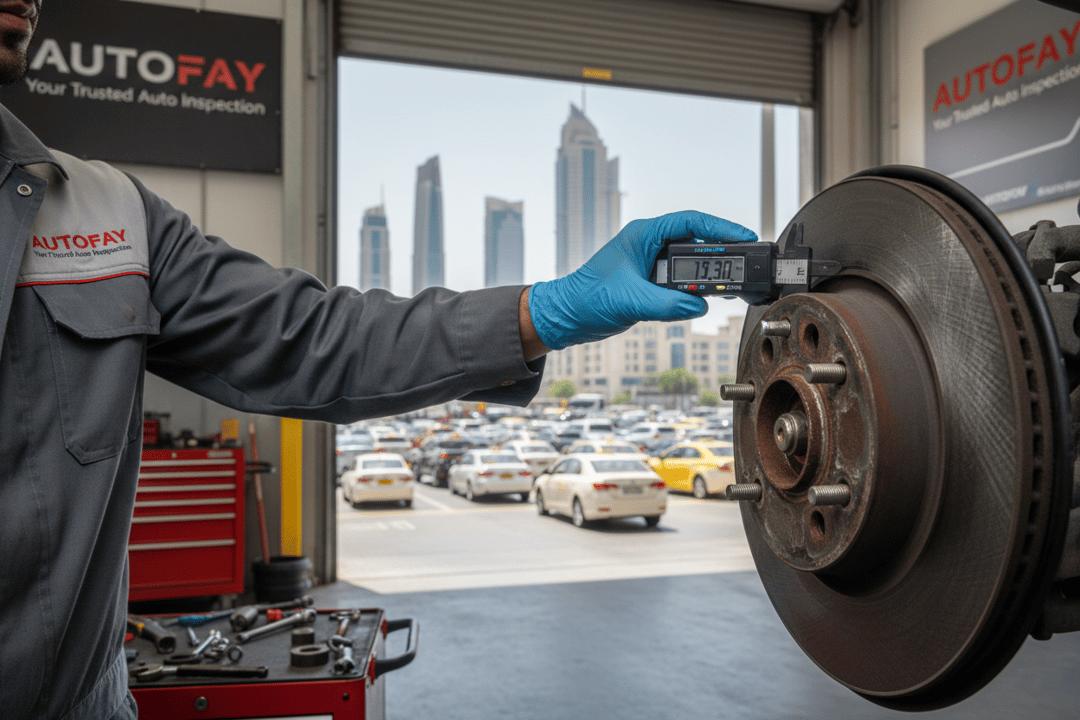
The brake system is arguably the most important safety system on any vehicle. It is also one of the systems most affected by UAE driving conditions — frequent stop-and-go traffic in city centers, high-speed highway driving that generates extreme heat, and sand that infiltrates brake components. AutoFay's brake inspection covers 16 individual checkpoints, and the findings frequently reveal problems that drivers have been living with without realizing the risk.
Worn Brake Pads: The Most Frequent Finding
Front brake pads are rated on a four-level scale: Good (above 50%), Average (25-50%), Worn (below 25%), or Needs Replacement. Rear brake pads use the same scale. Because most vehicles are front-heavy and use front brakes more aggressively during stopping, front pads wear faster than rear pads. It is common to find front pads rated Worn while rear pads are still Average or Good.
The issue is that brake pad wear is invisible from outside the car. A driver cannot see pad thickness without removing the wheel or inspecting through the caliper gap with proper lighting. Many sellers genuinely do not know their brake pads are nearly finished. An inspector measures this systematically for all four wheels, giving the buyer a clear timeline for replacement.
Warped and Scored Rotors
Front brake rotors and rear brake rotors or drums are rated Good, Scored, Warped, or Needs Replacement. Scoring happens when a brake pad wears completely through its friction material, and the metal backing plate grinds against the rotor surface. This creates visible grooves in the rotor face and produces a grinding noise when braking.
Warping is more subtle. A warped rotor causes brake pedal pulsation — the pedal vibrates under foot during braking. Warping occurs from extreme heat, often when braking hard at high speed or when a caliper sticks and keeps the pad in partial contact with the rotor. In the UAE, where highway speeds regularly exceed 120 km/h and summer temperatures push brake component temperatures even higher, rotor warping is a common inspection finding.
Sticking and Seized Calipers
Front brake calipers and rear brake calipers are rated Working, Sticking, Leaking, or Seized. A sticking caliper does not fully retract when the brake pedal is released, keeping the pad in partial contact with the rotor. This causes uneven pad wear, excessive heat, reduced fuel economy, and a pulling sensation when braking. A seized caliper does not move at all — the brake is either permanently applied or permanently disengaged on that wheel.
Caliper problems are identified through visual inspection and by checking for uneven brake pad wear between left and right sides. A car with a sticking caliper will often have one rotor that is significantly hotter than the others after a drive. The brake hoses leading to the calipers are checked separately — cracked, swollen, or leaking hoses can restrict fluid flow and cause the caliper to stick.
Brake Fluid: The Overlooked Component
Brake fluid level is rated Full, Low, or Empty, and condition is rated Clear, Dark, or Contaminated. Brake fluid is hygroscopic — it absorbs moisture from the air over time. In the humid coastal environment of Dubai, Abu Dhabi, and Sharjah, brake fluid absorbs moisture faster than in dry climates. Contaminated brake fluid has a lower boiling point, which means it can boil during hard braking, creating gas bubbles in the brake lines that cause a soft or spongy pedal feel.
Low brake fluid level can indicate a leak in the system or simply that the brake pads have worn thin — as pads wear, the caliper pistons extend further, drawing more fluid from the reservoir. The brake master cylinder is checked for leaks, and the brake booster is tested for proper function — a weak booster requires significantly more pedal pressure to stop the car.
ABS and Electronic Brake Systems
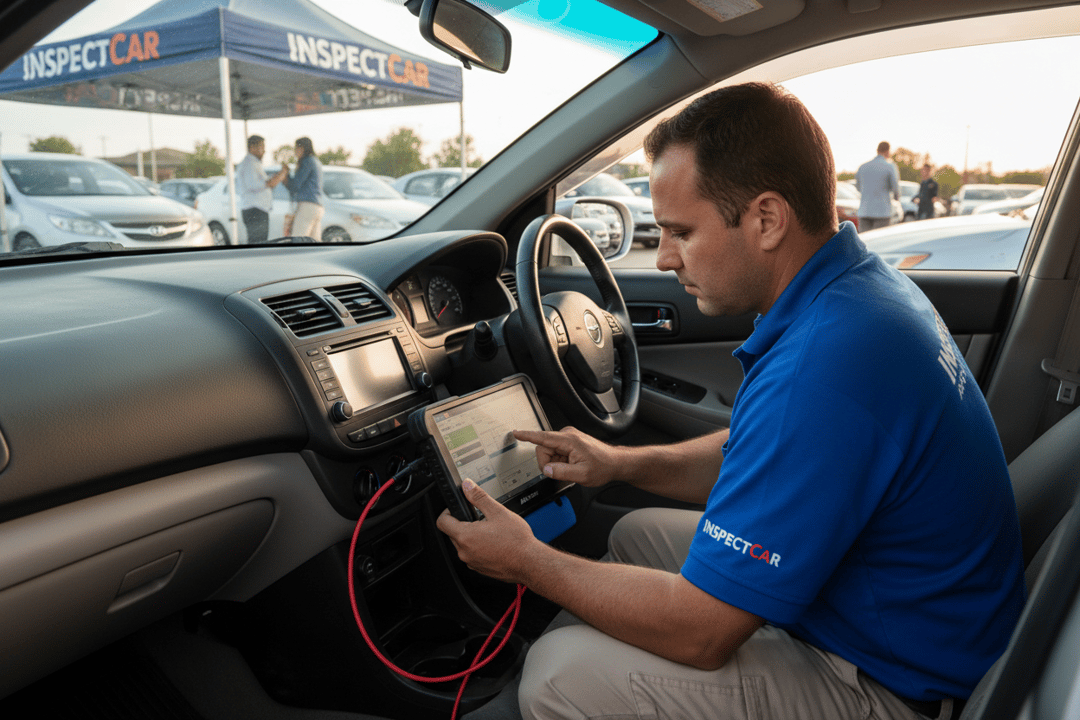
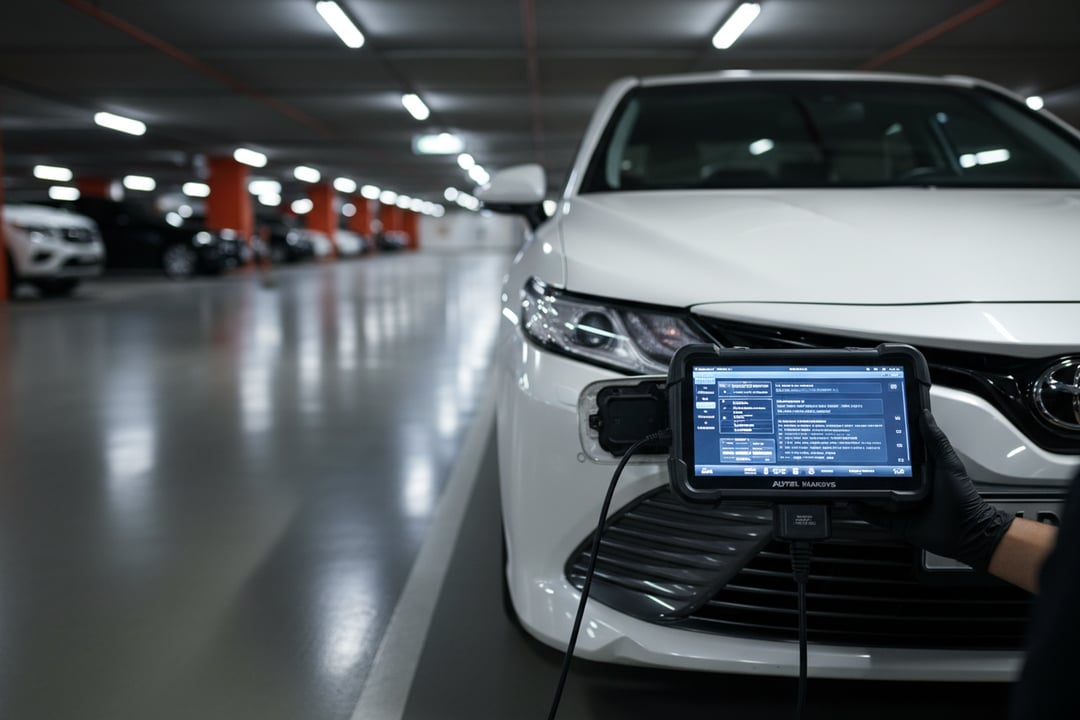
The ABS system is rated Working, Warning Light On, or Not Working. An ABS warning light does not mean the brakes do not work — conventional braking still functions — but the anti-lock feature that prevents wheel lockup during hard stops is disabled. The OBD scanner checks for ABS fault codes specifically, revealing stored or active problems with wheel speed sensors, the hydraulic pump, or the control module.
The parking brake is tested for holding force — Working, Weak, Not Holding, or Not Working. On vehicles with a cable-operated parking brake, the cable is checked for stretching, seizure, or breakage. A parking brake that does not hold is both a safety issue and a point of failure for RTA vehicle testing.
AutoFay checks 410+ checkpoints including 16 brake system checkpoints, with HD photos and a detailed PDF report. On-location inspection across all 7 Emirates. Book at autofay.ae or call +971-54-258-4458.

0 Comments
No comments yet. Be the first to share your thoughts!