

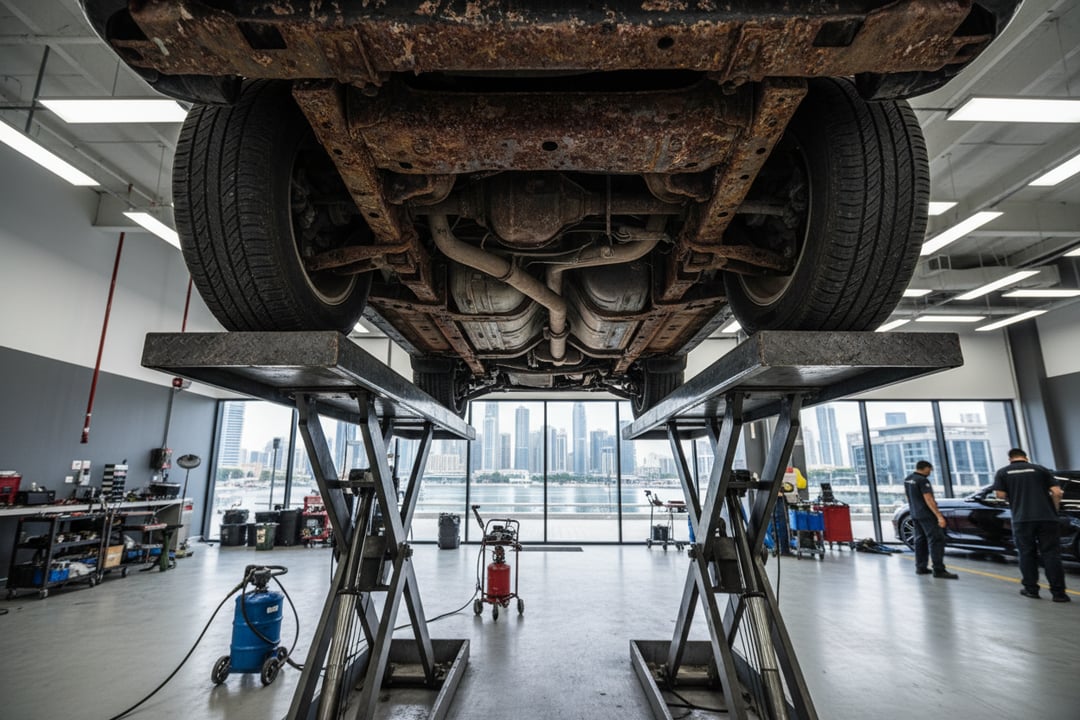
The UAE's coastal climate creates a corrosive environment that accelerates vehicle aging beyond what many drivers anticipate. High humidity levels coupled with airborne salt mist from the Arabian Gulf seep into the vehicle's most vulnerable seams, leading to premature degradation of mechanical and electronic components. While Toyota vehicles are renowned for their reliability, their parts are not immune to the specific stressors of the Gulf coast. Understanding how humidity interacts with vehicle materials is critical for anyone purchasing a used vehicle in the region. A standard visual inspection often fails to reveal the hidden damage occurring beneath paint and rubber seals, requiring a systematic approach to vehicle evaluation.
The Chemistry of Coastal Corrosion
Corrosion in the UAE is not merely about water; it is about the electrochemical reaction between salt, oxygen, and moisture. When a vehicle is exposed to coastal air, salt particles settle on the exterior surface and migrate into crevices through wind pressure and temperature fluctuations. This process compromises the metal, leading to rust that can compromise structural integrity and electrical connections. Unlike dry climates where rust forms slowly on the exterior, coastal humidity attacks from the inside out, often beginning in areas that are never exposed to the sun.
The primary enemy of vehicles in Dubai, Abu Dhabi, and the Northern Emirates is the battery tray area. This component sits directly beneath the battery, exposed to acid splashes and moisture accumulation. Once rust begins to form here, it spreads rapidly to the hood latch, the starter solenoid, and the vehicle's bolts. Similarly, rubber door and window seals degrade under prolonged salt exposure, losing their elasticity and allowing water to seep into the cabin and door panels, where it fosters rust on the door jambs and sills.
Model-Specific Vulnerabilities
While rust is a universal concern, certain Toyota models demonstrate specific susceptibility to humidity-related damage in the GCC market. The Toyota Camry, particularly second and third-generation models popular in the regions, frequently suffers from rust on the rear wheel arches and the lower sills. These areas trap water and road salt, leading to bubbling paint and hollow metal that can collapse under load. For the Toyota Land Cruiser, the battery tray and the chassis rails near the fuel tank are critical failure points that often require replacement rather than repair.
The Toyota Hilux is the workhorse of the region, but its undercarriage takes a beating. While the box body is generally rust-resistant, the chassis rails and leaf springs are prone to pitting if the vehicle was frequently driven on sandy or saline roads. Owners who wash their vehicles with high-pressure washers without rinsing the undercarriage first often accelerate this process, forcing salt deep into the suspension components. When inspecting a used Hilux, pay close attention to the leaf spring shackles and the differential housing for signs of white crystalline corrosion.
The Silent Killer: Electrical System Degradation
The most insidious damage caused by coastal humidity is often electrical. Moisture intrusion into connectors causes oxidation, leading to poor conductivity and intermittent faults that are notoriously difficult to diagnose. A vehicle may start fine in the morning but fail to register the airbag module or fail traction control sensors in the afternoon heat due to expansion of corroded circuits. This electrical degradation not only affects performance but can also trigger expensive warning lights and immobilizer failures.
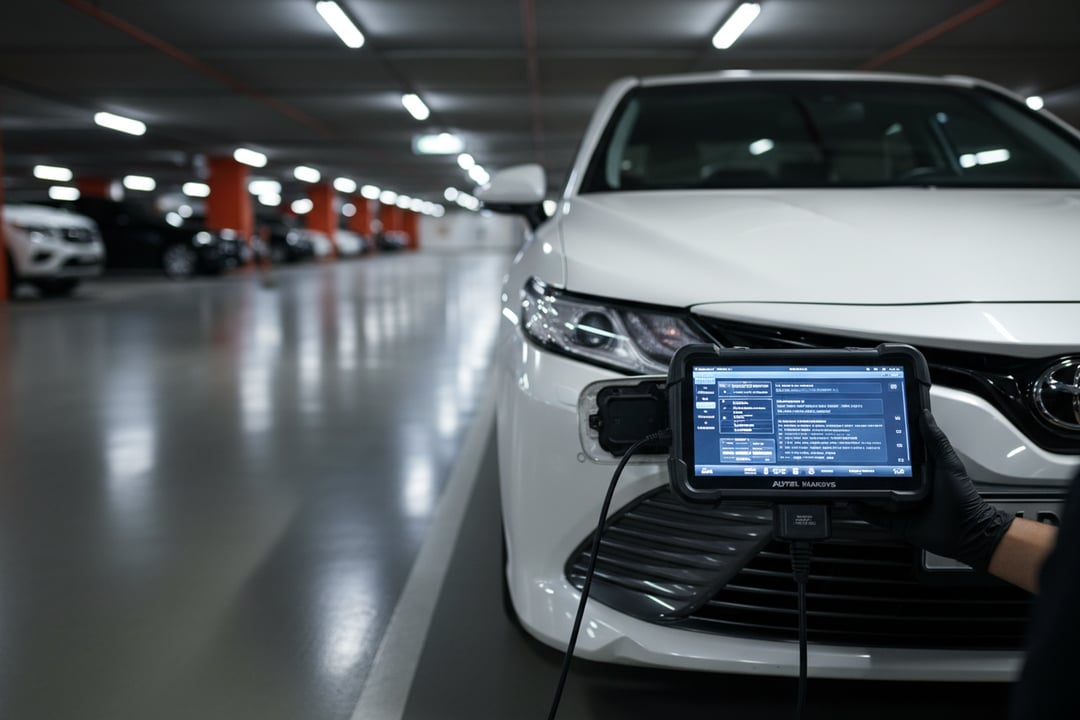
Humidity attacks the vehicle's sensors, particularly those located near the front bumper and the underbody, which are essential for modern stability control and emission systems. When these sensors corrode, they provide inaccurate data to the computer, resulting in erratic braking or acceleration behavior. A comprehensive inspection must include checking the condition of the OBD scan to identify codes that point to moisture-related sensor failures or short circuits in the wiring harness.
Prioritizing Inspection Categories
When assessing a used Toyota in a coastal environment, the inspection process must be rigorous and multi-faceted. It is insufficient to rely solely on a visual walk-around; one must dig deeper into the vehicle's history and condition. The following list outlines the critical categories inspectors prioritize when dealing with humidity-related wear:
- Fluids and Coolant Condition: Check the radiator for sediment and the coolant reservoir for oily residue, which can indicate a leaking water pump or heater core due to vibration and age.
- Suspension Bushings: Inspect for dry rot and cracking in rubber bushings, accelerated by the corrosive nature of road salts.
- Brake System: Verify the thickness of the brake pads and the condition of the calipers; rust buildup on rotors can lead to brake judder if not managed.
- Underbody Cleanliness: A heavily rusted underbody often hides significant structural damage, while a pristine underbody suggests the car may have been kept in a garage or recently repainted.
Structural Integrity and Frame Assessment
The frame of the vehicle is the backbone of safety, and coastal humidity is a primary threat to its longevity. Inspectors must look beyond the surface to identify rust that has eaten through the metal. Areas to scrutinize include the frame rails, the cabin floor pan, and the door pillars. Rust in these areas compromises the structural rigidity of the car, affecting handling and crash safety.
When inspecting the frame, check for "rust blisters" under the paint, which indicate active corrosion. Use a magnet to test the thickness of the metal; if the magnet slips or slides easily over a thick frame section, the metal has likely thinned significantly due to rust. Additionally, inspect the spare tire well, which is often damp and neglected, leading to severe rot in the vehicle's structural support.
The Value of Professional Inspection
Given the complexity of detecting humidity-related damage, a professional inspection offers a layer of analysis that a standard test drive cannot provide. Expert inspectors utilize specialized tools to assess the mechanical condition and visual data to document the bodywork accurately. For a detailed evaluation of a used Toyota, relying on professional services ensures that no corrosion goes unnoticed.
AutoFay provides a on-location inspection service covering all seven Emirates, delivering detailed reports based on 410+ checkpoints across 25 categories. Their packages are designed to suit different needs. For a quick assessment of engine health and error codes, the Computer Diagnostic package is available for AED 99. For a more holistic view including bodywork and computer systems, the Body & Computer package costs AED 250. For the highest level of assurance, the Comprehensive package, priced at AED 299, covers the vehicle's frame, suspension, and all critical systems.
| Inspection Package | Focus Areas | Price (AED) |
|---|---|---|
| Computer Diagnostic | Engine codes, Transmission faults, ABS, Airbag history | 99 |
| Body & Computer | Panel-by-panel paint check, Computer analysis, Fluid levels | 250 |
| Comprehensive | Full frame inspection, Suspension, Road test, HD report | 399 |
These services provide HD photos and a detailed PDF report, allowing buyers to make informed decisions based on factual data rather than assumptions. Professional inspection is the only way to truly account for the hidden cost of humidity damage in a pre-owned vehicle.
AutoFay inspects 410+ checkpoints with HD photos and PDF report. Book at autofay.ae or call +971542584458




0 Comments
No comments yet. Be the first to share your thoughts!