

The Gulf coast presents a unique challenge for vehicle longevity, specifically regarding corrosion caused by high humidity and saline conditions. For used Kia owners and buyers in cities like Sharjah, Ajman, and Dubai’s coastal fringes, understanding the chemical reaction between salt, moisture, and steel is crucial. Kia vehicles, while generally durable, rely on galvanized steel and specific paint formulations to combat this environment. When these protective barriers fail, the consequences extend beyond cosmetic blemishes to structural integrity.
The Science of Salt-Induced Corrosion
Coastal humidity accelerates the electrochemical reaction that leads to rust, often occurring in hidden areas where water accumulates but does not evaporate. The saline environment acts as an electrolyte, facilitating the transfer of electrons between the metal and the surrounding environment. This process, known as galvanic corrosion, does not require standing water; it thrives in the microscopic moisture trapped within the body panels.
For a used vehicle inspection, the primary focus must shift from surface rust to hidden structural degradation. The chassis rails, battery trays, and subframes are the most susceptible areas because they are rarely exposed to sunlight for drying. Ignoring these zones during a pre-purchase inspection can lead to expensive repairs that compromise the vehicle’s safety and resale value.
Model-Specific Vulnerabilities
While corrosion affects all metals, certain Kia models are prone to specific fatigue points due to their design and manufacturing materials. The Kia Seltos, Sportage, and Cerato have all shown significant susceptibility to underbody rust in the UAE market.
- Kia Seltos: Owners frequently report rust accumulation in the wheel arches and the lower subframe. These areas trap sand and water during daily commutes, leading to pitting that eats through the protective coating over time.
- Kia Sportage (older generations): The battery tray is a critical weak point. The acid leaks from corroded terminals can seep into the metal tray, initiating rust that spreads to the floor pan and suspension mounts.
- Kia Cerato: Door sills and the rear bumper reinforcement bars often show early signs of bubbling paint, indicating metal expansion due to internal oxidation.
The Inspection: What to Prioritize
A visual inspection is rarely sufficient to detect the full extent of humidity damage. A professional inspection must go deeper to assess the health of the chassis and electrical systems. When evaluating a used Kia, the following areas require immediate attention:
- Undercarriage Chassis: Inspect the rails and crossmembers for flaking paint or structural pitting. Rusted chassis components can lead to alignment issues and unsafe handling.
- Wheel Wells and Arch Liners: Look for bubbling paint or black grease stains, which indicate trapped moisture and salt spray.
- Electrical Harnesses: Salt corrosion on wiring is a silent killer. It can cause intermittent electrical failures, dashboard warning lights, and short circuits.
- Brake Lines and Suspension: Rust can compromise steel brake lines, leading to leaks. Corroded suspension bushings may rattle or fail to dampen road shock effectively.
Leveraging Diagnostic Tools for Corrosion Detection
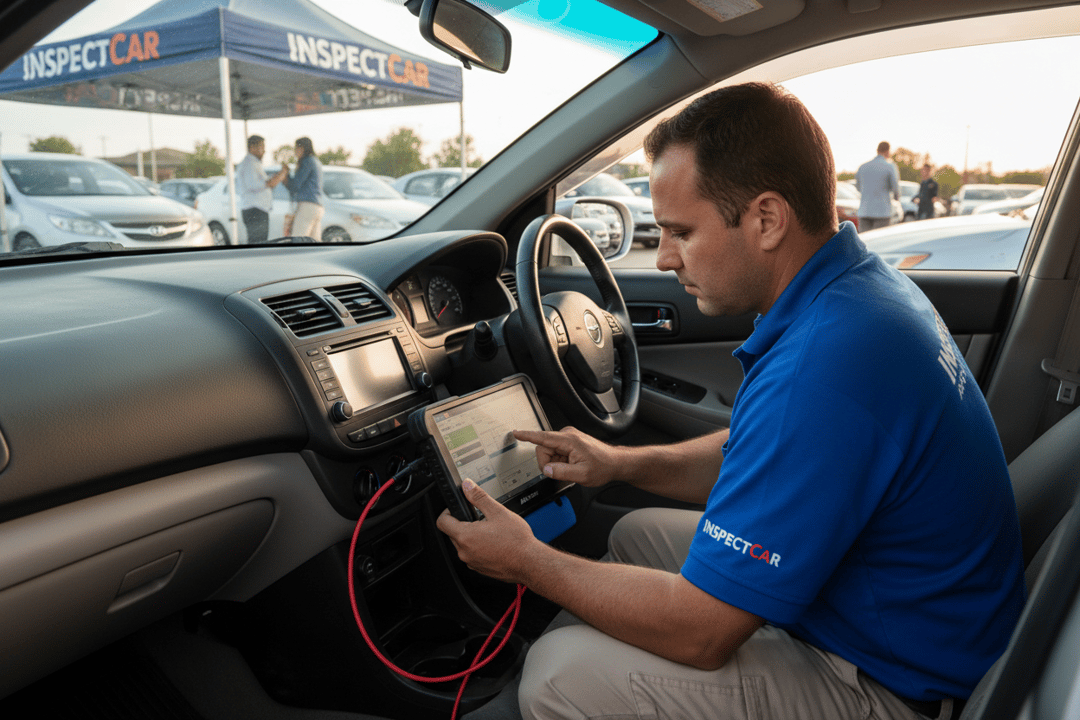
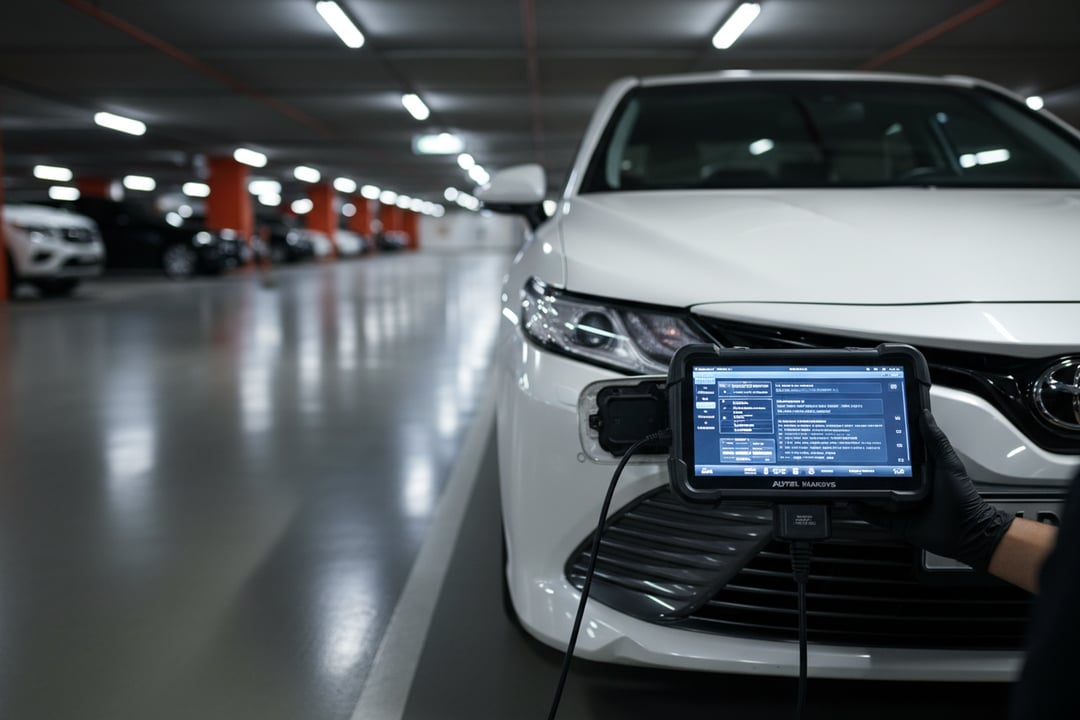
Modern vehicles rely on complex electronic systems that are sensitive to moisture. Water ingress can cause sensors to malfunction, triggering false error codes on the dashboard. Utilizing a computer diagnostic scan is essential for uncovering these hidden electrical faults. Corrosion related to humidity often manifests as a history of airbag module faults, ABS sensor errors, or erratic transmission behavior.
For a detailed analysis of the vehicle’s electronic health and physical condition, on-location inspection services are the most efficient solution. Services like AutoFay provide a comprehensive diagnostic scan covering engine, transmission, ABS, and airbag systems. By booking a Computer Diagnostic service for AED 99, buyers can identify whether moisture-related electrical failures are present before signing the dotted line.
Structural Integrity and Frame Assessment
The structural health of a vehicle determines its safety and longevity, especially in coastal regions. The frame, or unibody, must be free from rot, especially at the rocker panels and B-pillars where rust often begins internally. When buying a used vehicle, a full-body inspection is necessary to determine if panels have been replaced or welded to repair rust damage.
Structural repairs are complex and can affect the vehicle's crash safety ratings. A professional inspection package, such as the Body & Computer inspection for AED 250, offers a detailed assessment of panel originality and frame straightness. This is vital for ensuring that humidity damage has not necessitated structural welding that could weaken the vehicle.
Fluids and Under-Bonnet Health
Under the hood, humidity can lead to rapid degradation of rubber components and electrical connections. Coolant reservoirs, radiator caps, and battery terminals often show the first signs of mineral buildup caused by moisture condensation. Furthermore, oil contamination from leaking valve covers or gaskets can accelerate engine wear.
During the inspection, technicians check fluid levels and condition to gauge the engine's general health. A Comprehensive inspection package for AED 299 covers these fluids alongside a road test to verify that the engine runs smoothly despite any potential humidity-induced wear. This package covers 410+ checkpoints across 25 categories, ensuring that no aspect of the vehicle’s condition is overlooked.
| Inspection Focus | Risk Level | Visual Indicator |
|---|---|---|
| Chassis Rails | High | Peeling paint, rust dust, soft spots |
| Wheel Arch Liners | Medium | Bubbling paint, black residue |
| Electrical Harnesses | High | >Corroded connectors, brittle wiring|
| Battery Tray | Medium | White crusty deposits, rust stains |
| Door Sills | Medium | Raspy sound when tapping (hollow feel) |
Why a Road Test Matters
Visual inspection reveals what can be seen, but a road test reveals how the car handles the environment. Rust in the suspension system can cause clunking noises over speed bumps and uneven handling. Brakes affected by salt corrosion may suffer from reduced stopping power or a spongy pedal feel due to fluid contamination.
The road test component of an inspection evaluates acceleration, braking, and vibration. It confirms that the vehicle’s mechanical components are functioning correctly despite the harsh coastal climate. Professionals use this phase to listen for unusual noises that indicate suspension bushings or ball joints have been compromised by rust.
Coastal humidity damage is a silent but critical factor in the longevity of a used Kia. Relying on a visual inspection alone is insufficient; a detailed assessment of the frame, undercarriage, and electrical systems is necessary to ensure the vehicle is safe for the road. Trusting a professional inspection service provides the necessary data to make an objective purchasing decision.
AutoFay inspects 410+ checkpoints with HD photos and PDF report. Book at autofay.ae or call +971542584458.


0 Comments
No comments yet. Be the first to share your thoughts!