

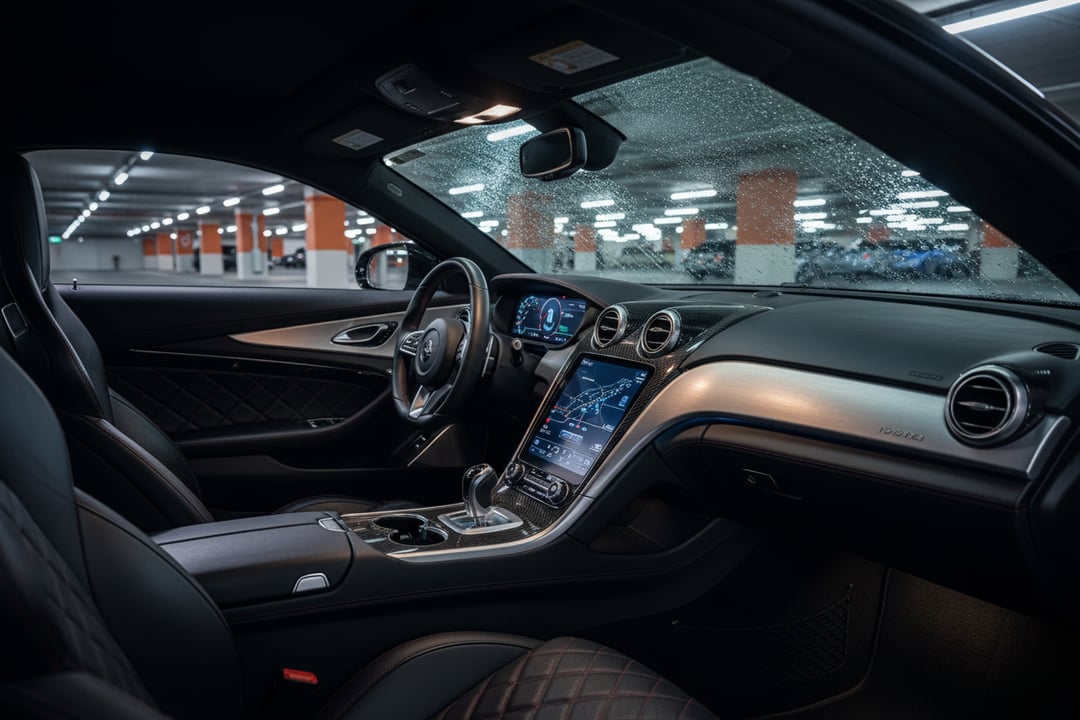
Coastal humidity in the UAE presents a unique corrosion challenge that differs significantly from the arid conditions found inland. Salt-laden air particles embed themselves into microscopic pores of vehicle paint and metal, initiating a chemical reaction that degrades structural integrity over time. A vehicle exposed to these conditions requires a rigorous inspection protocol to identify moisture intrusion before it compromises safety or value. Understanding the specific vulnerabilities of each automotive system is essential for accurate assessment and preservation. This checklist outlines the critical checkpoints every inspector must evaluate to determine the true condition of a coastal vehicle.
Exterior Bodywork and Paint Integrity
The exterior paint serves as the first line of defense against salt and moisture, but it often fails to seal perfectly over time. Inspectors must look for "orange peel" texture, which can trap moisture against the underlying metal, or areas where the clear coat has lifted due to differential expansion caused by heat and cold. Blistering paint is a primary indicator of moisture trapped beneath the surface, leading to accelerated rust formation. Panel gaps are another critical metric; excessive variance suggests collision damage that may have compromised the protective coating.
- Rust Bubbles: Raised, crusty spots on the hood, trunk lid, or doors indicate electrolysis caused by trapped salt water.
- Peeling Clear Coat: The glossy top layer fading away leaves the base coat exposed, making the metal susceptible to direct salt attacks.
- Wheel Wells: The inner fender wells are designed to shed water, yet they become hiding spots for rust that spreads to the mounting points.
Professional inspections, such as those offered by AutoFay, utilize a panel-by-panel examination to categorize each section as original, repainted, or repaired. This distinction is vital because repairs often use less weather-resistant materials compared to OEM coatings.
Undercarriage and Structural Assessment
Once the paint barrier is breached, the undercarriage becomes the most dangerous area of the vehicle. The frame rails, pillars, and floor pans are the skeleton of the car, and their corrosion dictates the vehicle's lifespan. Coastal vehicles frequently suffer from rust in the wheel arches and rocker panels where water accumulates and drains slowly. Failure to identify rust in these areas can lead to structural failure during high-speed maneuvers or under heavy braking forces.
- Frame Rails: Inspectors must check the main structural members for "sacrificial" rust, which eats away at the metal thickness.
- Floor Pans: The bottom of the cabin is a common collection point for road splash and humidity, often leading to perforation.
- Exhaust System: Heat accelerates oxidation, causing exhaust hangers to rust through and the pipes to collapse.
AutoFay’s inspection process includes a detailed frame check, examining rails, pillars, and the floor pan for any signs of compromised structural integrity. This assessment is a standard component of their comprehensive package, ensuring that the vehicle's safety cage remains intact.
Electrical Systems and Diagnostics
Moisture and electricity are a volatile combination, making the electrical system the most vulnerable component in a coastal environment. Salt acts as a conductor, causing corrosion on battery terminals, relay switches, and fuse boxes. Issues often manifest as intermittent failures—lights flickering, windows sticking, or the engine stalling without warning—because the electrical pathways are intermittently disrupted by corrosion. A thorough inspection must go beyond visual checks to verify the electrical system's stability.
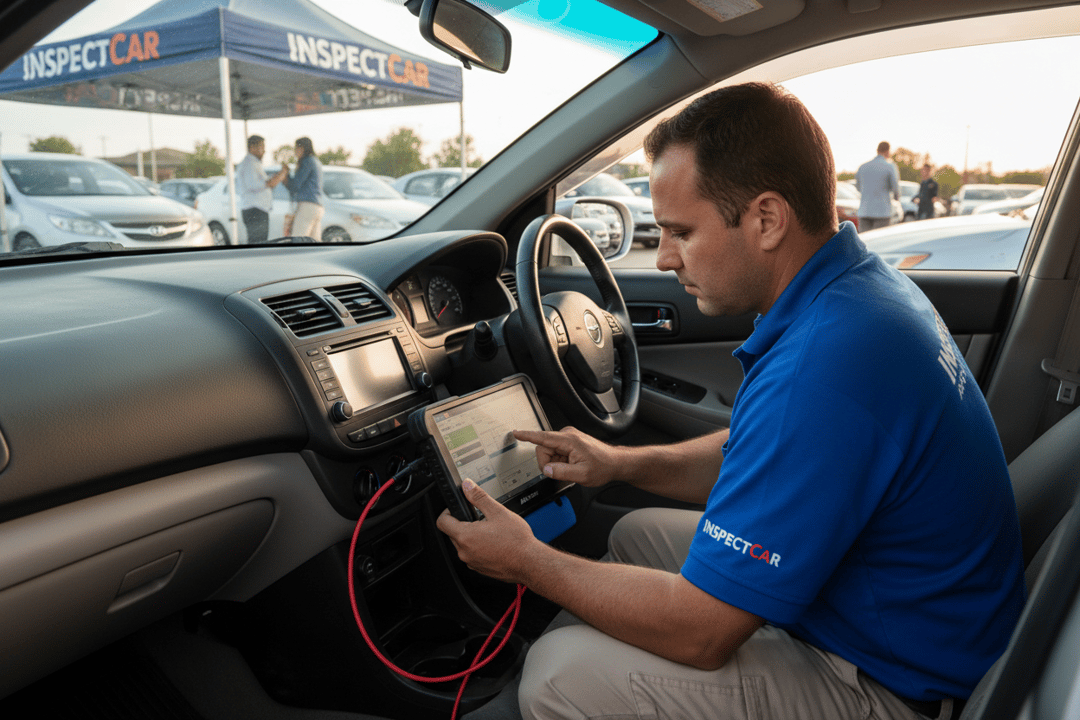
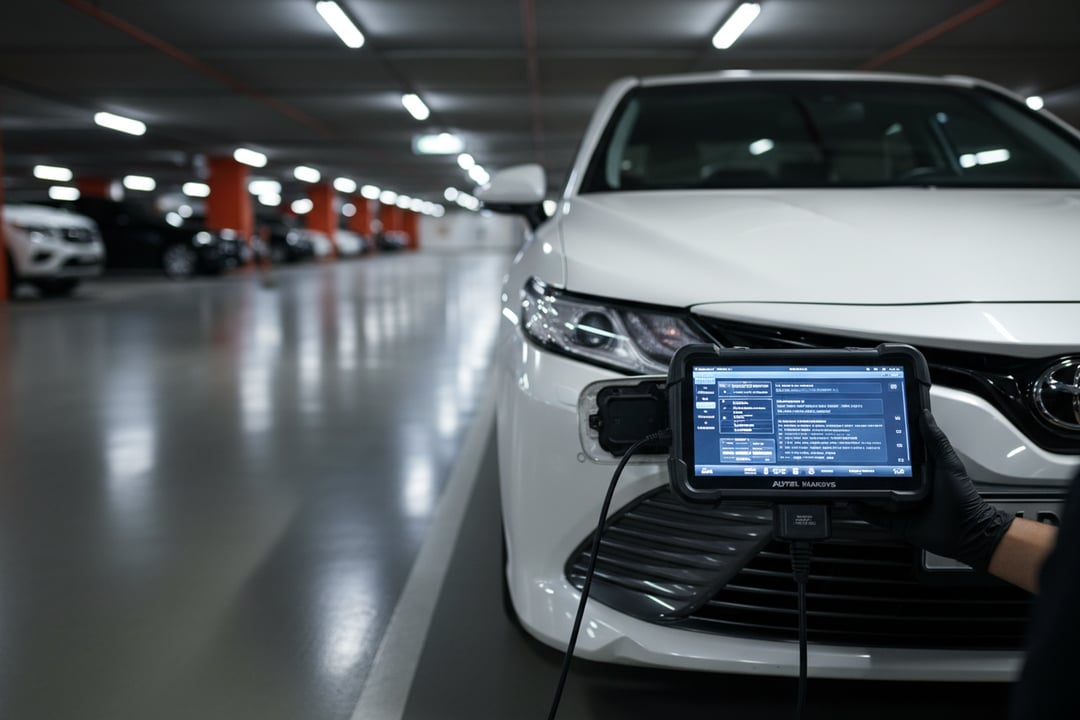
The primary tool for this phase is an On-Board Diagnostics (OBD) scan. This process reads the vehicle's computer logs for error codes related to the engine, transmission, ABS, and airbags. For a general electrical health check, the Computer Diagnostic service is available for AED 99. This affordable entry point provides immediate insight into whether the vehicle's computer is flagging any moisture-related sensor failures or grounding issues.
Mechanical and Suspension Components
Rust does not limit itself to the body; it propagates through the suspension and steering systems, which are under constant stress. Ball joints and tie rod ends are coated with grease to prevent friction, but rust penetrates this lubrication, seizing the moving parts. A seized suspension component can cause the steering wheel to vibrate or pull to one side, creating a hazardous driving experience. Additionally, brake lines are prone to corrosion, which can lead to sudden fluid leaks during emergency stops.
In a comprehensive inspection, suspension health is verified through a road test to detect abnormal noises, vibrations, or play in the steering wheel. Tires are also scrutinized for uneven wear patterns caused by misalignment resulting from worn suspension bushings or ball joints. The inspection report will note the percentage of brake pad remaining and the manufacturing date of the tires to ensure they are not dry-rotted by the relentless coastal sun combined with moisture.
Fluids and Internal Humidity
Internal humidity can be just as damaging as external moisture, particularly for the engine and transmission. Water contamination in engine oil occurs when condensation builds up in the crankcase during short trips, mixing with oil and reducing its lubricating properties. Transmission fluid can also degrade faster in humid conditions, losing its viscosity and cooling efficiency. Coolant systems are tested for pH levels to ensure the anti-corrosive additives are still effective against internal rust formation.
Fluids are checked for level and condition during the inspection process. Inspectors look for a milky appearance in the oil or coolant, which signals a blown head gasket or severe water ingestion. While fluids cannot be "repaired" in a simple inspection, identifying their condition provides a baseline for the vehicle's maintenance history and current health.
Interpreting the Inspection Report
A high-quality inspection report must translate technical findings into actionable data. The report should distinguish between cosmetic imperfections and critical safety failures. The report will define "Original" as paint and panel work matching the manufacturer's specifications, while "Repainted" indicates previous repair work that may not match the original finish quality. "Repaired" denotes parts that have been replaced due to damage, which may or may not be as durable as OEM parts.
The following table illustrates the correlation between coastal humidity exposure and the specific warning signs that must be documented in the report:
| System Component | Coastal Humidity Warning Sign | AutoFay Inspection Point |
|---|---|---|
| Body & Paint | Rust bubbles or peeling clear coat on hood/doors. | Panel-by-panel original/repainted/repaired assessment. |
| Electrical | Corroded battery terminals or flickering dashboard lights. | OBD scan for engine/transmission/ABS codes. |
| Chassis | Rotting frame rails or floor pan holes. | Frame rails, pillars, and floor pan structural check. |
| Brakes | Rusted brake lines or seizing calipers. | Pad percentage rating and road test for stopping distance. |
| Mechanical | Play in steering wheel or squeaking suspension. | Tire manufacturing year, wear, and suspension noise test. |
Coastal driving in the UAE demands vigilance to prevent the silent degradation of vehicle components. A professional inspection provides the necessary data to understand the extent of this exposure and plan for necessary repairs. AutoFay inspects 410+ checkpoints with HD photos and PDF report. Book at autofay.ae or call +971542584458.



0 Comments
No comments yet. Be the first to share your thoughts!