
Braking systems are the most critical safety component in any vehicle, yet they are frequently overlooked during the pre-purchase inspection of used SUVs. The heavy mass of an SUV requires significantly more stopping power than a compact sedan, placing immense stress on brake components. A visual inspection is rarely sufficient to uncover the hidden degradation that compromises vehicle safety. Professional evaluation requires a systematic approach to identify wear patterns and hydraulic failures before a driver loses control in high-speed traffic. Vehicle inspection services in the UAE must adhere to rigorous standards to ensure that buyers are not sold vehicles with compromised safety systems.
The Unique Dynamics of SUV Braking Systems
SUVs possess higher center of gravity and significantly greater vehicle mass compared to passenger cars. This increased momentum means that kinetic energy builds up much faster during acceleration and must be dissipated rapidly during deceleration. Standard automotive brake pads and rotors designed for sedans often fail to handle the thermal load generated by an SUV, leading to premature thermal deformation. Inspectors must understand the specific load-bearing requirements of heavy-duty vehicles to accurately assess brake life. Neglecting these differences can result in the purchase of a vehicle that reacts sluggishly to braking commands, especially under the high-temperature conditions common on UAE highways.
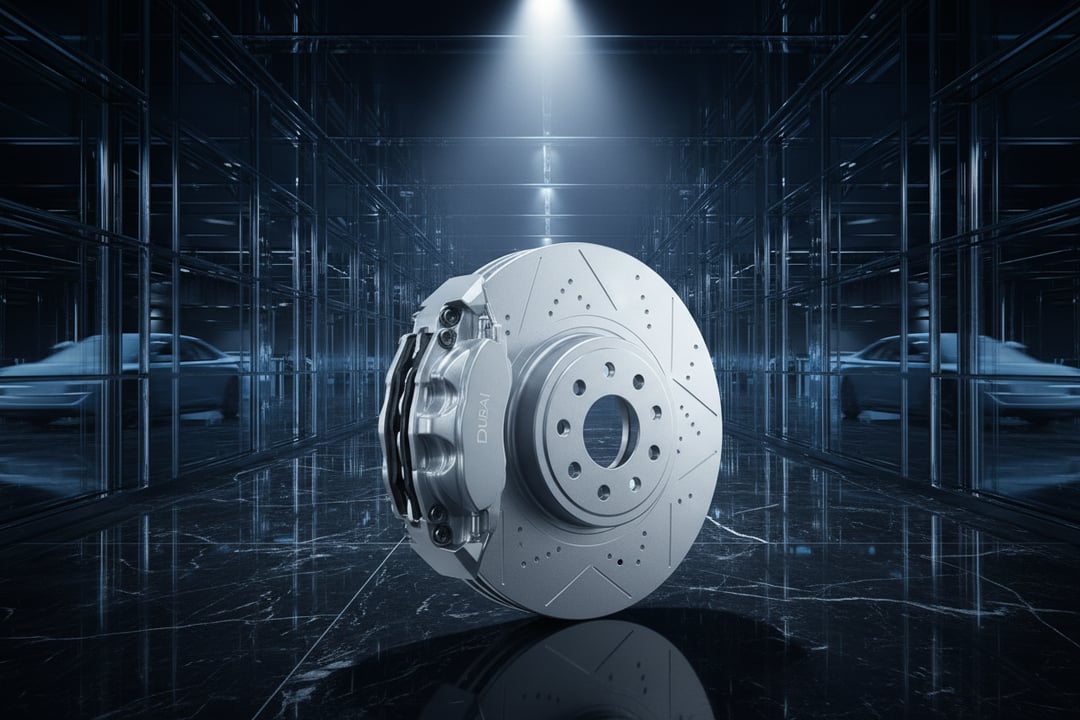
Modern SUVs utilize larger diameter rotors and multi-piston calipers to manage this thermal load effectively. When purchasing a used model, a experienced inspector checks whether the braking hardware matches the vehicle’s original specifications. A mismatch in braking components can cause vibrations, pulling to one side, and uneven pad wear. Understanding the relationship between vehicle weight and brake system capacity is the first step in a thorough inspection process. This foundational knowledge dictates the depth of the checks performed on the specific components of the braking assembly.
Inspecting Brake Pads: Material Thickness and Wear Patterns
The brake pad is the primary interface that creates friction against the rotor to slow the vehicle down. On SUVs, front pads typically wear twice as fast as rear pads due to the higher distribution of braking effort toward the front wheels during standard driving conditions. Inspectors look for a minimum friction material thickness, usually measured in millimeters, to determine the remaining service life. A pad that has worn down to the metal backing plate will scrape directly against the rotor, causing catastrophic damage and expensive repairs. The inspection report should note the thickness percentage relative to the original specification.
- Visual assessment of the pad thickness through the wheel spokes or removal of the wheel.
- Checking for uneven wear, which indicates a sticking caliper or issues with the caliper slide pins.
- Measuring the "pad percentage rating" to quantify remaining life accurately.
- Identifying the presence of "glazing," a hard, glass-like surface on the pad caused by excessive heat that reduces friction.
Inspectors must also examine the condition of the brake pad shims and anti-rattle clips. These small hardware components ensure that the pads move freely within the caliper bracket. If these clips are corroded or missing, the pads will not articulate correctly, leading to uneven pressure and premature failure. A professional inspection, such as those offered by AutoFay, categorizes brake health based on these specific wear metrics to provide an objective assessment of safety.
Evaluating Rotors: Thickness, Warping, and Surface Finish
While pads provide the stopping force, the rotor (or disc) is the surface that the pads clamp onto. Rotors on SUVs are subjected to extreme temperatures, often reaching several hundred degrees Celsius during heavy braking. Over time, this thermal stress causes the metal to expand and contract unevenly, leading to "warped" rotors. A warped rotor creates a pulsating sensation in the brake pedal, signaling that the surface is no longer perfectly flat. Inspectors measure the minimum thickness specification stamped into the rotor's edge to ensure it has not worn down to a dangerous limit.
Surface finish is another critical factor in rotor inspection. Rust staining or heavy scoring indicates that the brakes were either neglected or misapplied. Heavily scored rotors cannot be resurfaced effectively and must be replaced to prevent damaging the new brake pads. Inspectors also look for "heat spots," which appear as discolored patches on the rotor surface. These spots indicate localized overheating and can cause the vehicle to pull to one side when braking. The condition of the rotor surface directly impacts the stopping distance and the longevity of the replacement pads.
Diagnosing Brake Calipers: Piston Function and Sealing Integrity
The brake caliper houses the piston that applies pressure to the brake pad. A failing caliper can render an entire braking system useless, even if the pads and rotors appear new. In the UAE climate, high humidity and road salts accelerate the corrosion of caliper slide pins, causing them to seize. When the pins seize, the caliper cannot center itself over the rotor, leading to one-sided braking and rapid, uneven wear on the pads and rotor. Inspectors test the caliper's ability to move freely by shaking the wheel while the vehicle is lifted.
Inspectors also check for signs of hydraulic fluid leakage, which appears as oily residue around the caliper piston or boot. A leaking caliper will lose hydraulic pressure, resulting in a soft or spongy brake pedal. In severe cases, a stuck caliper can drag the brake, causing the wheel to overheat, smoke, and potentially catch fire. Inspecting the caliper seals and boots ensures that the hydraulic system remains airtight and pressure-efficient. This component is often the hidden failure point that turns a simple brake job into a major repair.
The Role of Brake Fluid and ABS Diagnostics
Brake fluid transfers the force from the brake pedal to the caliper pistons. Over time, brake fluid absorbs moisture from the air, which lowers its boiling point. When the boiling point drops, the fluid can vaporize under heavy braking, creating air bubbles in the lines. This phenomenon, known as "brake fade," causes a significant loss of stopping power. Inspectors check the fluid level and clarity, looking for a dark, murky color that indicates contamination or water absorption. The fluid should be clear and golden or pink to maintain proper hydraulic function.
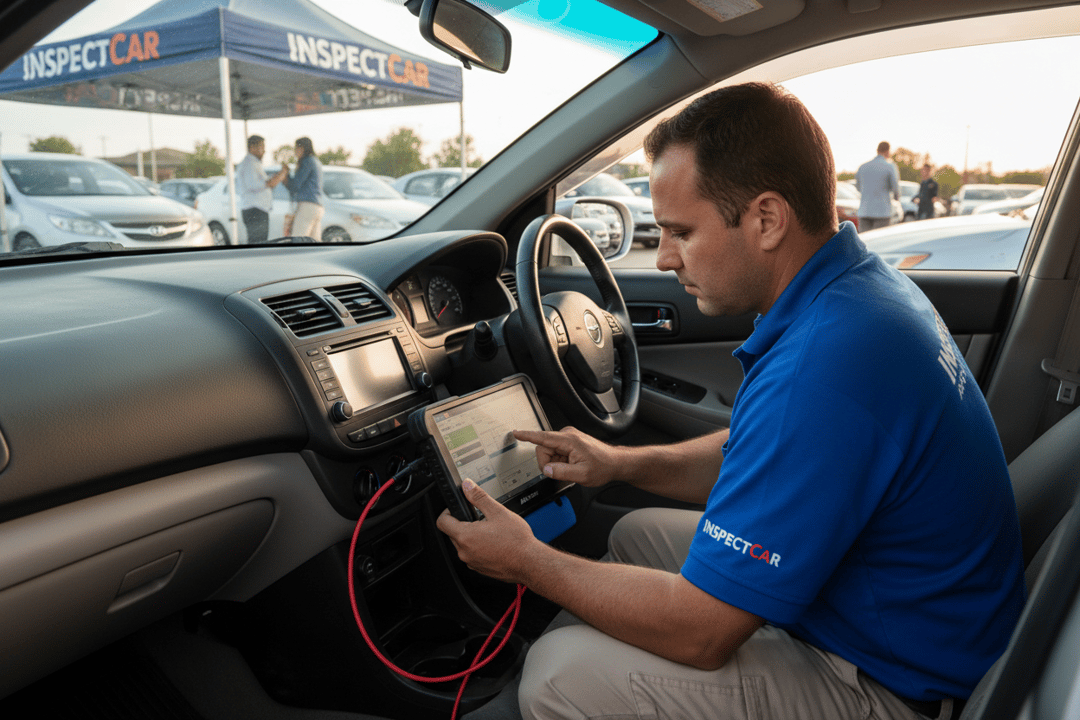
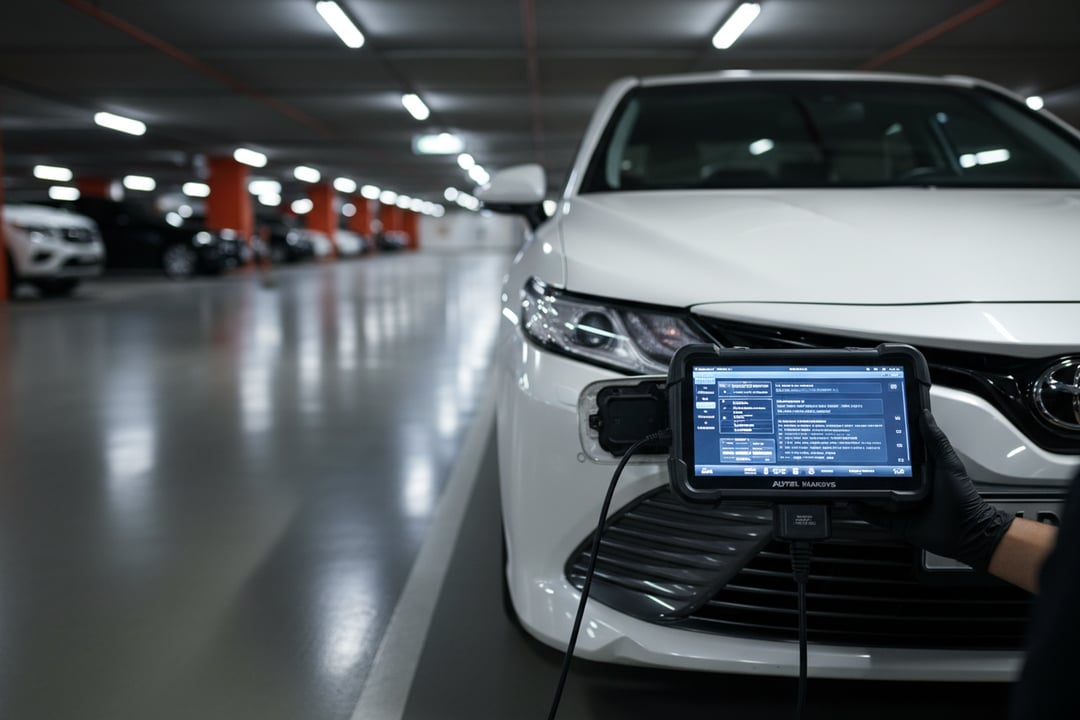
Electronic stability control and anti-lock braking systems (ABS) rely on wheel speed sensors and hydraulic modulators. A malfunction in these systems often triggers an ABS warning light on the dashboard. Using an OBD scanner, inspectors can retrieve diagnostic trouble codes related to ABS, wheel speed sensors, and hydraulic control units. Ignoring these codes can lead to a loss of stability control during emergency maneuvers. A comprehensive inspection package must include an OBD scan to verify the integrity of these electronic braking components.
The Value of Professional Inspection vs. DIY Assessment
Visual inspections performed by an untrained individual often fail to identify subtle hydraulic or thermal issues that compromise safety. A professional inspector brings specialized tools and a checklist of over 410+ checkpoints to evaluate the vehicle's integrity. For instance, a simple visual check might miss a caliper that is slightly stuck, which will only become apparent during a dynamic road test. The investment in a professional inspection is a necessary safeguard against purchasing a vehicle with latent mechanical failures.
| Package | Price (AED) | Key Inclusions for Brakes & Safety |
|---|---|---|
| Computer Diagnostic | 99 | Engine, Transmission, ABS, Airbag codes. |
| Body & Computer | 250 | Panel-by-panel body check + OBD scan + Brake pad % rating. |
| Comprehensive | 399 | Full 410+ checkpoint: Body, Frame, Engine, Brakes, Suspension, Tires, Fluids, Road Test. |
The consequences of skipping a professional inspection can be severe, ranging from the cost of new brake pads to the total replacement of the braking system and potential damage to the vehicle's frame from a collision caused by brake failure. Relying on a service like AutoFay provides a standardized report with HD photos and a detailed PDF, allowing the buyer to make an informed decision based on factual data rather than seller assumptions.
The Road Test: Verifying Hydraulic Feedback and Noise
Visual inspections cannot replicate the dynamic interaction between the driver, the pedal, and the hydraulic system. A controlled road test allows the inspector to evaluate the pedal feel, stopping distance, and noise generation under real-world conditions. A firm, consistent pedal response indicates a healthy hydraulic system with adequate fluid pressure. Conversely, a soft or spongy pedal suggests air in the lines, a fluid leak, or worn brake calipers. Inspectors monitor for any unusual noises, such as squealing, grinding, or groaning, which often indicate component failure.
During the road test, the inspector assesses the vehicle's stability during emergency deceleration. The vehicle should not pull violently to the left or right, which would indicate a caliper imbalance or a seized brake line. Vibration through the steering wheel or brake pedal points to warped rotors. These symptoms are often temporary and can worsen as the vehicle heats up. A comprehensive inspection package must include a rigorous road test to validate the mechanical condition revealed during the static inspection. This final step ensures that the vehicle performs safely when it matters most.
AutoFay inspects 410+ checkpoints with HD photos and PDF report. Book at autofay.ae or call +971542584458


0 Comments
No comments yet. Be the first to share your thoughts!