
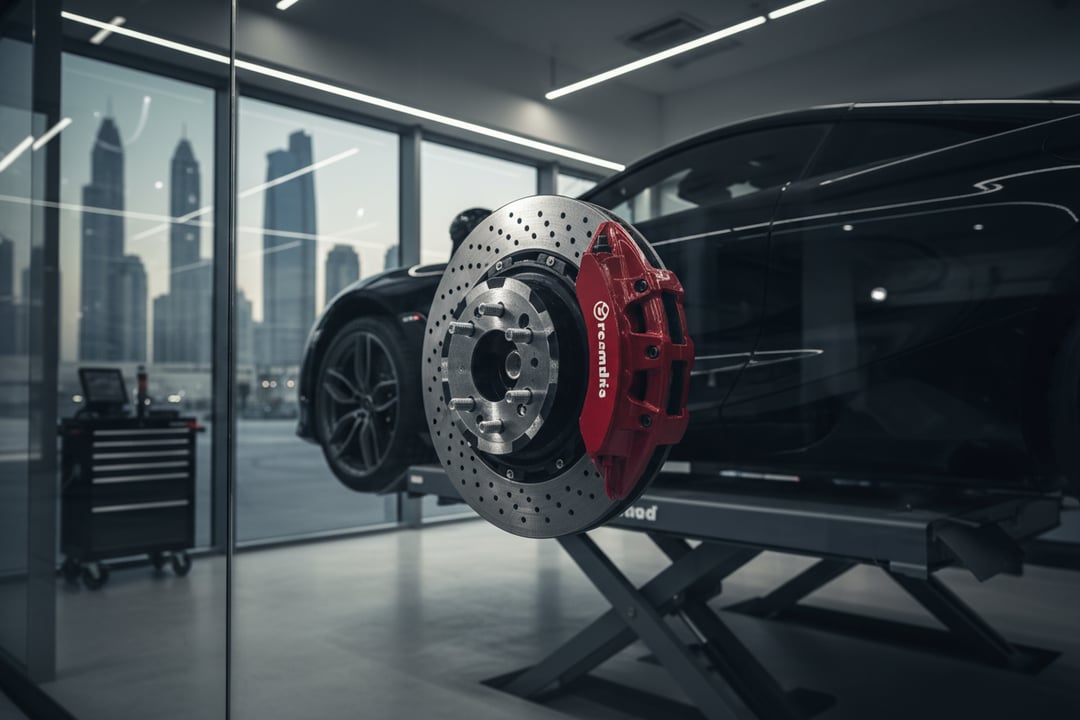
Driving a sedan in the United Arab Emirates demands a high degree of mechanical reliability, particularly regarding the braking system. The extreme ambient temperatures in the region significantly accelerate the chemical and physical degradation of brake components. Continuous exposure to high heat and frequent stop-and-go traffic in major cities like Dubai and Abu Dhabi places immense stress on the hydraulic and friction elements of the vehicle. A malfunction in this system does not merely result in a mechanical inconvenience; it poses a severe safety risk to the driver, passengers, and other road users. Therefore, a thorough inspection of the braking hardware is a prerequisite for purchasing any used sedan.
The Criticality of Brake System Integrity in the UAE Context
The braking system functions as the primary means of deceleration and collision avoidance. In the context of the UAE, where highway speeds are high and traffic congestion is common, the efficiency of the brake system directly impacts reaction times. A worn brake system can lead to longer stopping distances, which is critical in sudden traffic situations or during inclement weather. Furthermore, the intense solar radiation prevalent in the Emirates causes brake components to expand and contract, potentially leading to premature warping of rotors and fluid degradation. Inspecting a used sedan requires a focus on how these components withstand the specific environmental and driving conditions of the region.
Inspecting Brake Pads: Thickness and Material Composition
Brake pads are the friction interface that transfers force from the caliper to the rotor to slow the vehicle. During a professional vehicle inspection, the inspector measures the remaining thickness of the friction material relative to the backing plate. Manufacturers typically install minimum thickness indicators, often referred to as "wear buttons" or "sensors," molded into the pad itself. These features alert the driver when the pad has worn down to an unsafe level. Sedans, being generally lighter than SUVs, may experience different wear rates depending on the driver's habits and the vehicle's weight distribution.
- Organic Pads: Made from glass, rubber, and Kevlar, these offer a smooth ride and low noise but wear down faster under heavy, high-heat usage common in UAE highways.
- Semi-Metallic Pads: Contain copper, steel wool, and graphite, offering superior durability and heat dissipation, though they may produce more brake dust and noise.
- Ceramic Pads: Designed for quiet operation and reduced dust, these provide good stopping power but may not be as effective as metallic options in extreme thermal cycling.
Assessing Brake Rotors: Thickness, Runout, and Warping
Brake rotors act as the disc against which the pads clamp. If the rotor surface is uneven or too thin, it disrupts the smooth transfer of friction, leading to vibrations felt through the brake pedal and steering wheel. Inspectors measure rotor thickness against the manufacturer's specifications to ensure it can withstand the heat generated during braking without cracking. Lateral runout, or the wobble of the rotor while spinning, must also be checked. Visual inspection reveals deep scores, heat discoloration (blueing), or scoring marks that indicate surface damage. If the rotor cannot be resurfaced to remove these imperfections safely, replacement is mandatory to restore braking performance.
Evaluating Brake Calipers: Functionality and Seals
Brake calipers house the pistons that force the pads against the rotor. A sticking caliper prevents the pads from retracting fully after braking, causing the wheels to drag. This condition leads to overheating, reduced fuel economy, and uneven tire wear. Inspectors check for hydraulic leaks around the caliper seals, as fluid loss compromises the hydraulic pressure required for effective braking. Additionally, rust accumulation on the caliper slide pins can seize the caliper, preventing it from moving freely. Ensuring the calipers operate independently without binding is essential for consistent braking force across all four wheels.
The Role of Fluid and ABS Systems
Brake fluid is a hydraulic medium that transmits force from the pedal to the calipers. It is hygroscopic, meaning it absorbs moisture from the air over time. This moisture lowers the fluid's boiling point, leading to vapor lock (causing a spongy pedal feel) and reduced braking efficiency. A professional inspection checks the fluid level and condition; old or contaminated fluid cannot effectively transfer force. Furthermore, the Anti-lock Braking System (ABS) sensors monitor wheel speed to prevent wheel lock-up during emergency stops. Inspectors verify the functionality of ABS sensors and their associated wiring to ensure the electronic safety systems are operational.
Why a Professional Inspection is Non-Negotiable
Visual inspections of brakes are often misleading because wear patterns can be affected by driving habits and road conditions. A professional inspection company utilizes a standardized checklist to evaluate the entire braking system comprehensively. Unlike a general visual check, a professional service assesses the internal condition of the calipers, the thickness of rotors, and the composition of the brake fluid. Choosing a qualified service provider ensures that no critical safety component is overlooked.
| Package Name | Key Features | Price |
|---|---|---|
| Computer Diagnostic | OBD scan for engine, transmission, ABS, and airbag codes. | AED 99 |
| Body & Computer | Panel-by-panel body paint and panel check combined with OBD diagnostics. | AED 250 |
| Comprehensive | Full inspection including frame, suspension, engine, tires, 410+ checkpoints, and brakes. | AED 299 |
AutoFay inspects 410+ checkpoints with HD photos and PDF report. Book at autofay.ae or call +971542584458



0 Comments
No comments yet. Be the first to share your thoughts!