
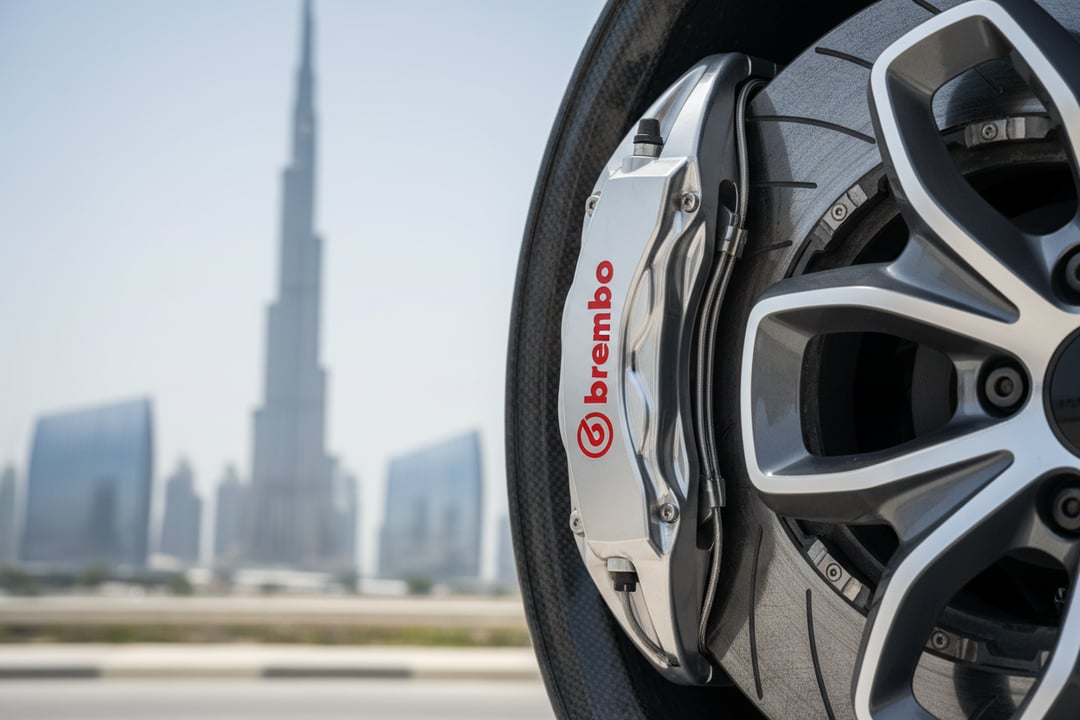
Purchasing a pre-owned luxury vehicle in the UAE provides significant savings compared to new inventory, but it introduces complex mechanical risks that require expert scrutiny. The braking system serves as the primary safeguard in high-speed environments, particularly on Emirates Road and Sheikh Zayed Road. Luxury sedans and SUVs utilize larger, multi-piston calipers and ventilated rotors to manage the significant heat generated during rapid deceleration. A failure in these components does not merely result in a longer stopping distance; it can lead to catastrophic loss of control. Therefore, a detailed inspection of the brake pads, rotors, and calipers is non-negotiable before finalizing any transaction.
The Physics of Stopping: Why Luxury Brakes Differ
Standard vehicles often utilize lighter components designed for economy and fuel efficiency, whereas luxury vehicles prioritize mass and comfort. This added weight places a higher demand on the friction materials to generate enough stopping force to overcome inertia. The brake pads on a Mercedes-Benz S-Class or a BMW 7-Series are often thicker and composed of different composite materials than those found in entry-level economy cars. Inspectors must understand that a "good" brake on a standard sedan may be considered worn on a heavy-duty luxury SUV. The thermal efficiency of the braking system is also paramount; in the scorching UAE climate, the cooling efficiency of the rotors can degrade faster, leading to brake fade during repeated hard stops.
Inspection of Brake Pads: Thickness and Composition
The brake pad is the component directly responsible for creating friction against the rotor to slow the vehicle. On luxury vehicles, pads are frequently made of ceramic or semi-metallic compounds to minimize dust and noise, yet these materials wear down under heavy use. A visual inspection requires removing the wheel to measure the remaining friction material against the metal backplate. If the thickness falls below the manufacturer’s minimum specification, the pads must be replaced immediately.
Failure to replace worn pads results in significant downstream damage. Once the friction material is completely consumed, the metal backing plate makes direct contact with the rotor surface. This contact causes scoring or grooves in the rotor, which are permanent and cannot be repaired by simply replacing the pads. Consequently, the buyer would be forced to replace both the pads and the rotors to ensure the vehicle stops safely. Furthermore, uneven wear patterns on the pads indicate that the caliper is not sliding freely, suggesting a more expensive repair involving caliper bracket refurbishment or replacement.
- Check for the presence of wear indicators or squealers designed to alert the driver to low levels.
- Measure pad thickness against the specific manufacturer’s minimum service limits.
- Inspect the surface of the pads for glazing or uneven wear patterns.
- Verify that the anti-rattle clips and shims are present and not corroded.
Rotor Condition: Warping, Scoring, and Thickness
The rotor acts as a heat sink, absorbing the energy of the vehicle to keep brake temperatures manageable. During the inspection, the rotors must be checked for thickness to ensure they have not worn down to the discard limit. If the rotor is too thin, it can no longer dissipate heat efficiently, leading to brake failure under extreme conditions. Inspectors use a micrometer to measure rotor thickness at several points and compare them to the factory service limits.
Visual inspection reveals surface defects such as cracks, glazing, or deep heat spots. Glazing occurs when the surface becomes smooth and shiny due to overheating, reducing friction. Cracks, particularly in drilled or slotted rotors of high-performance luxury models, can lead to rotor failure while driving. Another critical check is lateral runout, which is the amount of wobble the rotor exhibits when spun. Excessive lateral runout causes the brake pedal to vibrate or pulsate when applied, creating a jarring sensation for the driver. This vibration is not merely annoying; it accelerates the wear of wheel bearings and steering components if left unaddressed.
Caliper Functionality and Hardware
The caliper houses the pistons that clamp the pads onto the rotor. In luxury vehicles, calipers are often performance-oriented, featuring larger diameter pistons for greater clamping force. A sticking caliper is a common failure point where the piston seizes inside the bore or the slide pins corrode, preventing the caliper from releasing. This scenario causes the brake pad to remain in contact with the rotor even after the driver lifts their foot from the pedal. The result is constant heat generation, rapid pad wear, and a significant drop in fuel economy due to the drag on the vehicle.
Inspectors must verify that the caliper slides freely on the guide pins and that the rubber boots are intact to prevent dirt and debris from entering. Leaking brake fluid from the caliper piston or the rubber hoses indicates a breach in the hydraulic system. Since modern luxury vehicles rely on complex Anti-lock Braking Systems (ABS) and Electronic Stability Control (ESC), hydraulic leaks can disable these critical safety features. Addressing caliper issues immediately prevents the heat-induced damage that can warp the brake discs and ruin the wheel hub mating surface.
The Diagnostic Edge: OBD and ABS Codes
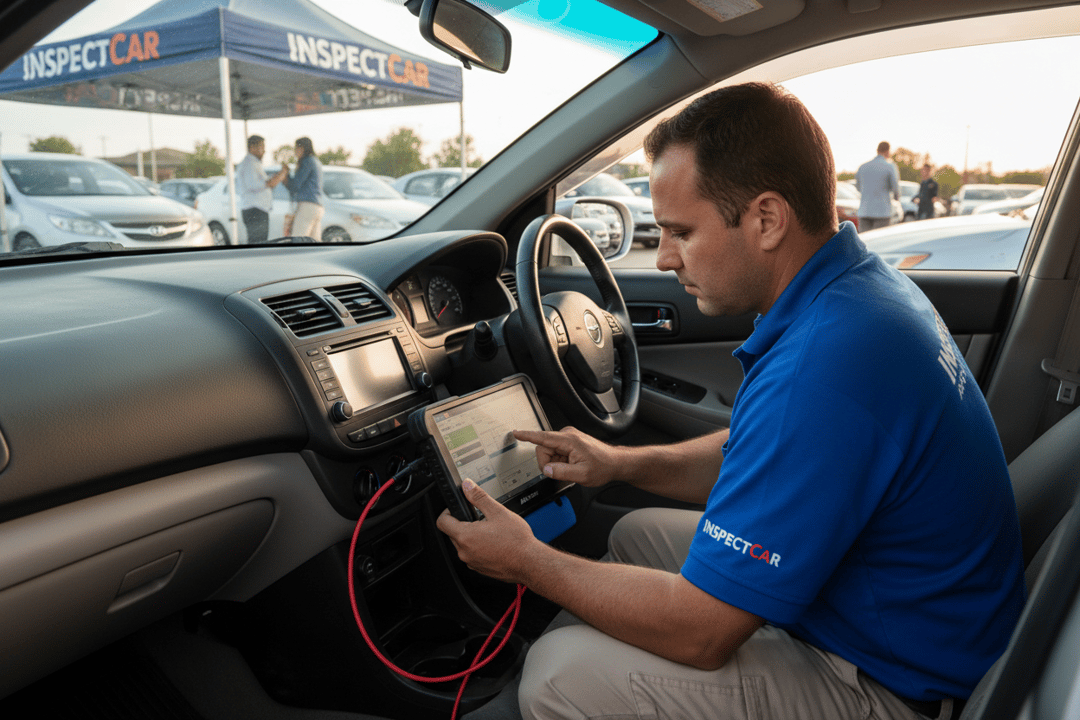
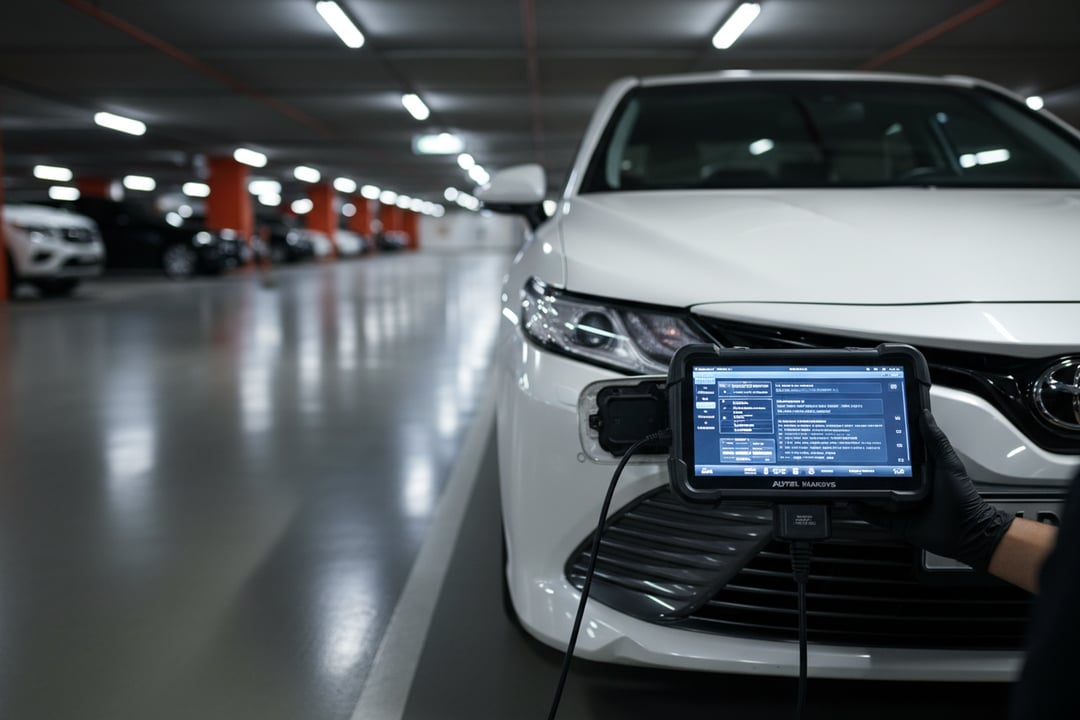
Visual inspection of brakes is insufficient without electronic verification. Modern luxury vehicles utilize electronic sensors within the brake system to monitor pad wear and hydraulic pressure. An OBD scan is essential to detect any stored fault codes related to the ABS module or the brake light circuits. Sometimes, a vibration in the brake pedal is not mechanical but electronic, caused by a faulty speed sensor or a calibration issue with the ESC system.
A professional inspection service like AutoFay includes a comprehensive OBD scan to identify these hidden faults. This digital analysis ensures that the electronic components of the brake system are communicating correctly with the engine and transmission control units. Ignoring an electronic brake fault can lead to the ABS system failing to engage during an emergency stop, increasing stopping distance on slippery roads.
Professional Inspection Packages in the UAE
Ensuring the safety and value of a luxury vehicle requires a systematic approach that covers mechanical, structural, and electronic systems. A comprehensive inspection must go beyond just the brakes to include the entire vehicle's history. AutoFay provides a rigorous service that covers 410+ checkpoints across 25 categories, ensuring no aspect of the vehicle is overlooked.
Whether the client requires a quick diagnostic check or a deep dive into the vehicle's condition, AutoFay offers tailored packages to suit different needs. The services are mobile, meaning they can be conducted at the buyer’s location or the seller’s office across all 7 Emirates.
| Package Name | Service Inclusions | Price (AED) |
|---|---|---|
| Computer Diagnostic | Engine, Transmission, ABS, Airbag system scanning | 99 |
| Body & Computer | Panel-by-panel body check, Accident damage assessment, OBD scan | 250 |
| Comprehensive | All mechanical, structural, and electronic checks; Road test; HD photos | 399 |
The "Comprehensive" package is particularly vital for luxury vehicles, as it includes a detailed road test to evaluate braking performance, acceleration, and noise levels while driving. It also provides a PDF report with HD photos documenting the condition of the brakes, the frame, the engine mounts, and the tires. This documentation serves as an objective record of the vehicle's condition, protecting the buyer from unexpected repair costs.
Relying on a trusted entity ensures that the intricate components of a luxury vehicle are evaluated by experienced professionals. The combination of mechanical expertise and digital diagnostics provides a complete picture of the vehicle's health.
AutoFay inspects 410+ checkpoints with HD photos and PDF report. Book at autofay.ae or call +971542584458.

0 Comments
No comments yet. Be the first to share your thoughts!