

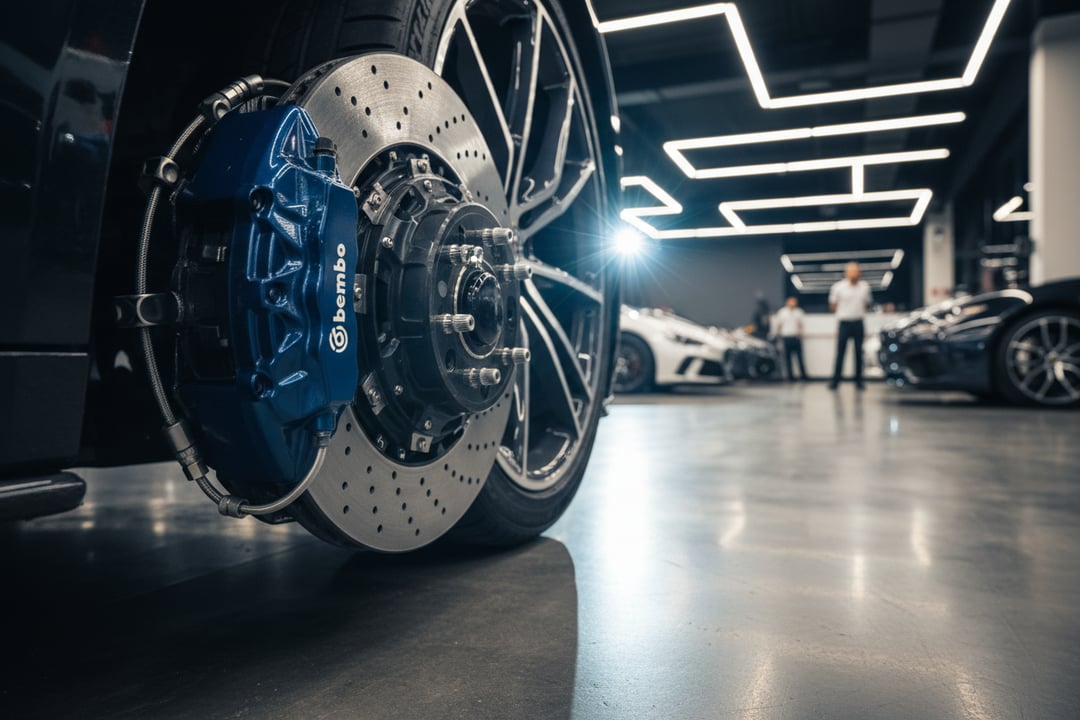
Effective braking is the single most critical safety system in any vehicle, especially in the demanding driving environment of the UAE. The intense summer heat and heavy stop-and-go traffic in the Emirates place immense stress on brake components. A failure here results in immediate loss of control, making a thorough pre-purchase inspection non-negotiable. Buyers must verify the condition of these parts before handing over cash to ensure the vehicle can handle the local road conditions safely.
The Critical Role of Braking Systems in UAE Conditions
Modern vehicles rely on a complex interaction between hydraulics and friction to slow down or stop. When driving in the UAE, brake systems endure higher temperatures than those in temperate climates. This thermal stress accelerates wear on components and can compromise brake fluid performance. Understanding the specific parts involved allows buyers to interpret inspection findings accurately and avoid purchasing a vehicle with hidden safety liabilities.
Automotive professionals categorize brake systems into four primary components. Each component has a distinct function, and failure in one area often propagates to damage the others. An inspector evaluates these parts individually to determine the overall health of the stopping power.
Inspecting Brake Pads: Thickness and Material Integrity
Brake pads function through friction to slow the vehicle. They are consumable items that wear down over time as they press against the rotor. Inspectors check the thickness of the friction material using a caliper gauge or by measuring the pad thickness with a micrometer. If the pad material is below the safe threshold, the metal backing plate will grind directly against the rotor.
This metal-on-metal contact causes rapid, expensive damage to the brake discs. It also creates a high-pitched screech, which is the built-in wear indicator alerting the driver to a problem. Worn pads lead to longer stopping distances and reduced braking efficiency. If pads are left completely worn out, the caliper pistons may extend too far, damaging the dust boot and potentially leading to fluid leaks or master cylinder failure.
- Minimum Thickness: Most manufacturers specify a minimum safe thickness for replacement.
- Uneven Wear: Pads wearing faster on one side indicate a caliper or suspension issue.
- Glazed Pads: A shiny, hard surface on the pad means it has overheated and lost stopping ability.
Rotors (Discs): Identifying Glazing, Warping, and Scoring
Rotors work with the pads to create the friction necessary to stop the car. They are large metal discs attached to the wheels that absorb the heat generated by friction. During inspection, experts check the surface condition of the rotor. A shiny, glazed surface indicates overheating and a loss of friction, requiring the pad material to bite harder to stop the vehicle.
Inspectors also look for physical damage such as scoring, which appears as deep grooves or scratches on the surface. Scoring is usually caused by worn-out pads that have deposited metal particles onto the rotor. Severe scoring means the rotors must be resurfaced or replaced entirely. Furthermore, warped rotors can cause brake shake or vibration through the steering wheel, particularly when braking at highway speeds.
Vehicle owners should understand that rotors cannot be resurfaced indefinitely. If the rotor becomes too thin due to machining, it may warp easily or crack under thermal stress. Replacing rotors is often required when they fall below the minimum discard thickness specifications.
Calipers: Checking for Sticking and Uneven Wear
Calipers house the pistons that push the brake pads outward with high pressure. If a caliper fails to retract after braking, it drags the pad against the rotor continuously. This drag causes the wheel to overheat, which can lead to brake fluid boiling and a loss of braking power. It also causes the tire on that axle to wear down rapidly, creating bald spots on the tread.
An inspector tests the caliper slide pins to ensure they move freely. If the pins are seized or the rubber boots are torn, debris and moisture can enter, causing the caliper to stick in the open or closed position. Uneven brake application, where the vehicle pulls to one side when braking, is a primary symptom of a faulty caliper. In some cases, the piston inside the caliper may be seized, preventing the pad from releasing fully.
Brake Lines and Fluid: The Hydraulic Connection
Hydraulic brake fluid transfers the pressure from the pedal to the calipers. It is hygroscopic, meaning it absorbs moisture from the air over time. Old or contaminated fluid has a lower boiling point. In the intense UAE heat, this fluid can boil, creating air bubbles in the lines. Air bubbles compress under pressure, resulting in a spongy brake pedal and a delay in stopping.
Inspectors check the brake fluid level and condition. Dark, brown fluid indicates moisture contamination and oxidation, which can damage internal rubber components in the master cylinder and ABS module. They also inspect the rubber brake hoses for cracks, bulges, or soft spots. A swollen hose can expand like a balloon under pressure, causing a soft pedal and uneven braking. Metal brake lines should be checked for rust and corrosion, particularly in vehicles exposed to coastal salt air.
AutoFay Inspection Packages: Ensuring Full Coverage
Visual inspection of brakes is insufficient to guarantee safety. The AutoFay inspection service integrates a dedicated Road Test category to evaluate real-world performance. The company offers specific packages designed to cover various levels of scrutiny.
| Package | Price (AED) | Primary Focus | Brake Check Scope |
|---|---|---|---|
| Computer Diagnostic | 99 | Engine & Transmission Codes | Basic visual check + Road Test |
| Body & Computer | 250 | Body Condition & Diagnostics | Visual inspection + Road Test |
| Comprehensive | 399 | Full Mechanical & Frame | 25 Categories including Pads, Rotors, Calipers, Lines |
The Comprehensive AED 299 package provides the highest level of detail, covering 410+ checkpoints across 25 categories. This includes a thorough visual examination of all four wheels, brake fluid analysis, and a rigorous Road Test. Inspectors verify brake pad thickness percentages and look for signs of fluid leaks or rust on brake lines. The Road Test component confirms that the brakes are responsive, quiet, and free of vibrations under actual driving conditions.
The Road Test: Validating Performance in Real Conditions
Looking under the hood is only half the equation; driving the car is the other half. The inspection includes a controlled Road Test to assess how the brakes perform under load. This involves accelerating and braking simultaneously to test heat dissipation. Inspectors listen for abnormal noises such as squealing, grinding, or hissing, which indicate specific component failures.
Drivers should also feel for vibrations or pulsing in the brake pedal, which suggests warped rotors. The inspector checks for the vehicle pulling to one side during braking, a sign of a caliper issue or




0 Comments
No comments yet. Be the first to share your thoughts!